Tag: technologyPage 4 of 4
The idea that writing transmutes our spatial thinking towards progress has been apparent in the skill and pride of scholarly author’s material. In this project, I challenge the cultural operating system of erudition strictly from a written narrative. As we read, we are engineering a deictic shift experiencing a connection to an author’s mental maps, nonetheless how accurate is our spatial analysis? What if a classroom used GIS as a forum for discussion, a place where our mental maps and background knowledge met. I simply ask the question, can GIS produce alternated realities to evoke inquiry altering our predispositions on a topic?
During student teaching LIS 690 Claudio and his cooperating teacher created a portable makerspace called the Maker Basket for the school’s library. The basket has laminated cards with projects ranging from making a friendship bracelet to coding Scratch. The project has been a huge success in the library and Claudio has a thoughtful presentation that includes findings from his review of the maker basket’s first semester and a literature review as well.
For this project, we wrote Python scripts to manipulate data from the Spanish Artists Dictionary, a research resource created by the Frick Art Reference Library. The first portion focused on distilling and organizing data in order to create visualizations using Tableau Public, while the second portion involved using Python to clean and enrich the dataset by matching names against an authority list of subject headings. This presentation will outline the two parts of the project and explain how Python was applied to a cultural heritage dataset.
This project centered on the creation of a linked-data friendly JSON-LD schema for storage and retrieval of cemetery records. I used python scripts to query a crowd-sourced database (BillionGraves.com), normalize the data and ingest it in the JSON-LD schema.
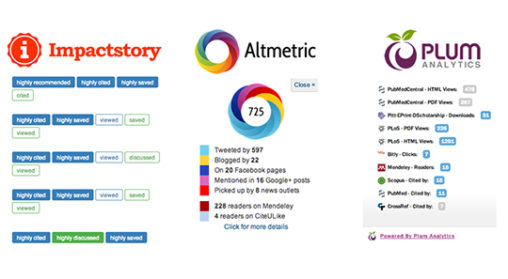
I will be presenting my academic blog post on the emergence of altmetrics as an alternative to traditional journal impact factor ((http://bit.ly/1O46zd5). I’ll address the arguments both for and against altmetrics and discuss my brief examination of the impact of one scholar’s research via traditional citation metrics versus via altmetrics.
This video was created as if I were giving an academic job talk for a position at the University of North Texas Libraries. The topic I was assigned for my presentation was, “current and emerging trends in digital media preservation and how libraries have/can/should address these needs.”
A survey of the practice of digitization of archival collections, how it is being accomplished, what the benefits of it are, and what concerns need to be kept in mind.
My paper is centered on digital literacy, digital inclusion, the challenges public libraries face in becoming more digitally inclusive (e.g., funding), the importance of access to broadband, and examines libraries’ central roles in bridging digital divides in the United States.
This is a paper addressing current concerns in legal libraries and librarianship, particularly those arising from the rise of digital resources. My presentation itself focuses on the technology-driven push for innovation, particularly issues presented by legal blogs.
WeReaders A Case Study of the Use of Twitter in a Research Survey ewillse We tested Twitter as an instrument for recruiting participants and generating research data,…
Take Me, Buy Me, Read Me and Overheard Fans are two physical special collections created for a train-themed exhibit Commuting and Communing, the final project for the Museum…
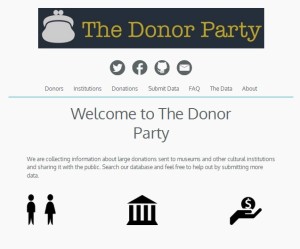
The Donor Party, www.thedonorparty.com, is a linked open data website created by Pratt SILS students in The Museum and the Network class. It contains a home-made database and…
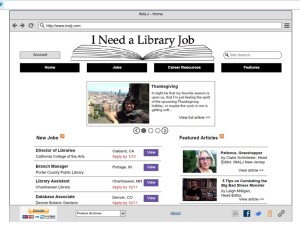
IA Works proposed redesigning the I Need A Library Job website. Our goal was to make the website more user-friendly with a greater emphasis on showcasing job listings,…
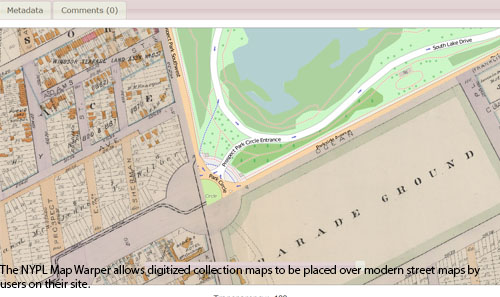
The New York Public Library’s Map Warper is an open-source program for integrating scanned copies of historical maps from the NYPL’s collections with digital maps. Our tutorial, selected…
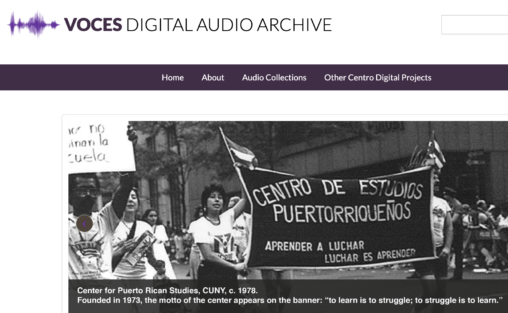
CentroSILS showcase Presentation Laura Marte Piccini and Alexandra O’Hara will present on Voces Digital Audio Archive, which is a digital archives created by students in LIS 665 Projects…
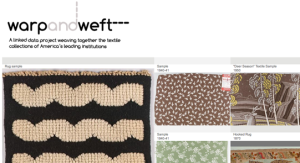
Warp and Weft is a linked data website collecting textiles from the Met and Cooper-Hewitt. We will cover the stages of a LOD-LAM project, from the underlying data model, to converting records into RDF triples, and building the Drupal website.
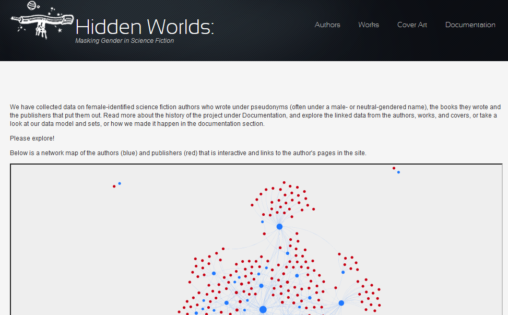
This project conducted network analysis research on an online database of female-identified science fiction writers who wrote under pseudonyms, focusing particularly on those that used pseudonyms that were…
This session will explore several uses of video for instruction in library settings. Students in LIS 680 created a few varieties of instructional videos and reflected on both…