For this paper, I will examine the current state of prison libraries and offsite library services across New York State, with an eye towards recommending best practices and identifying critical issues in the provision of prison library services. I will begin with an overview of New York State’s prison libraries as they exist today, reviewing their structures, services offered, and apparent limitations. I will also examine outreach services offered by library systems including New York Public Library’s Correctional Services Department, as well as efforts by grassroots organizations such as Books Through Bars NYC to deliver books and other materials to incarcerated people. I hope to speak with library staff who help coordinate these services, including NYPL Correctional Services staff Emily Jacobson and Sarah Ball, and will also reach out to fellow students in Pratt’s Prison Library Support Network to learn more about their volunteer efforts and their thoughts on these issues.
In examining library services in New York State’s prisons, I will look at the funding structures and bureaucratic and legal hurdles that enable or limit them, and suggest ways that these services might be strengthened going forward. In seeking a theoretical grounding for this paper, I will explore whether Critical Librarianship might usefully inform work being done in prison libraries. I will also seek out research on the relationship between prison library services and recidivism rates, the role of public libraries for individuals re-entering society, and any publicly accessible feedback from incarcerated people on existing prison library services in New York State.
Throughout the course of this paper, I plan to rely on literature review, government information, and actual conversations with local library staff and volunteers working in relevant areas. I anticipate a couple possible challenges. The first is scope. Focusing on prison library services across New York State might prove to be too broad; if this is the case, I will limit my inquiry to prisons libraries in and around New York City. The second is the potential dearth of research on the impact of library services on incarcerated people. If I am unable to find much information on this, I might consider how such research could be successfully designed and carried out in the context of New York State. I will also emphasize research that outlines relationships between higher education programs in prisons (such as the Bard Prison Initiative) and recidivism rates, as well as research concerning the impact of Pell Grants in prisons. In recommending best practices, I will look to the efforts of Scandinavian prison libraries.
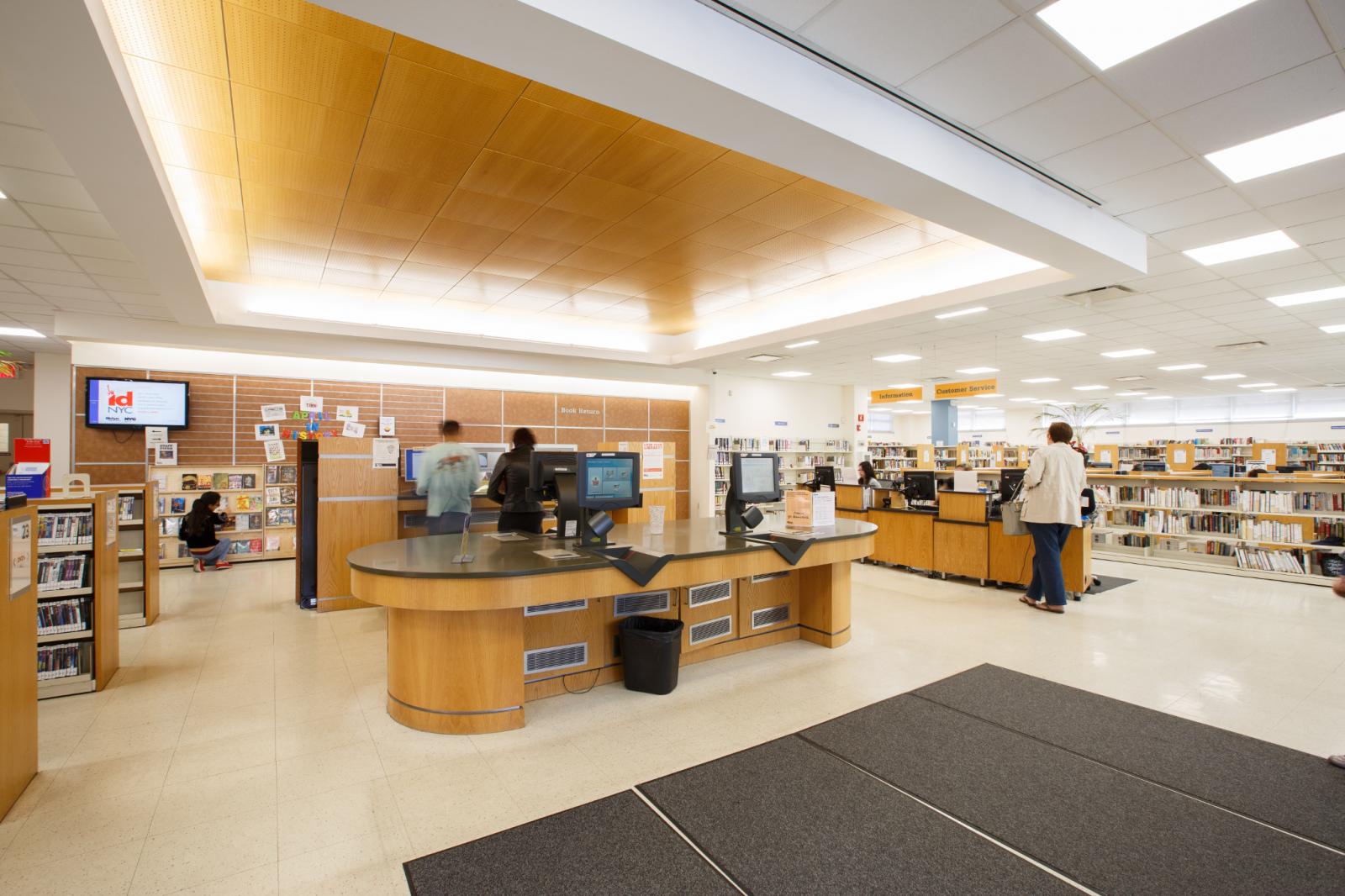
I recently spoke with Jennifer Gellmann, Assistant Division Manager of the Society, Sciences, and Technology (SST) division at Brooklyn Public Library’s (BPL) Central Library. Given my interest in adult services and reference librarianship, I was eager to learn about Jennifer’s work and the day-to-day challenges and rewards of her job.
Jennifer began by giving me a brief
overview of SST’s scope and collections, and explaining its relationship to the
greater Adult Services department at Central Library. SST is staffed by 8-full
time “Adult Librarians,” and has a large and diverse physical collection with books
on philosophy, psychology, social sciences, science, technology, and industry.
SST also has digital collections, special collections containing government
publications and legal documents, and a small reference collection.
SST is but one of four divisions making
up the Adult Services department at Central Library. Other divisions include “Languages
& Literature,” “History, Biography, & Religion,” and “Art & Music.”
Related adult-centered divisions include BPL’s Business and Career Center,
which offers services for jobseekers and small businesses, the Information
Commons, which delivers technology-related programs and services in lieu of a
physical collection, and the Brooklyn Collection, a local history archive. BPL’s
Central Library is also home to an Adult Learning Center, which provides ESOL
classes, test prep, and related educational services to adults. In Jennifer’s
view, the various divisions and distinctions among adult service oriented
departments are “unnecessarily complicated” and a vestige of prior administrations.
For the most part, these departments stand alone, with little inter-departmental
communication and collaboration (more on this later).
Jennifer described her role as involving a combination of supervisory, administrative, and public facing duties, with the ratio among these tasks varying depending on particular staffing and library needs. However, she did emphasize that public service is the most significant aspect of her job and the work of her department more generally, with all other responsibilities following from this priority.
Public service duties in SST include working at its reference desk and contributing to virtual chat and email reference services. When I asked about the typical information needs of her patrons, Jennifer told me the “vast majority” of patrons visiting SST are looking for a book on a particular topic. She pushed back on the notion of print being less important in today’s digitally connected age, despite circulation statistics dropping slightly each year.
For the most part, SST is able to successfully meet patron requests, but Jennifer did mention a couple of common issues her department runs into. For one, certain popular books are always in demand to an extent that BPL can’t accommodate. This means patrons often have to place holds and wait several weeks to get materials they need. SST also receives occasional requests for textbooks, but does not purchase them for their collection; as a result, they have to refer patrons to local universities and academic libraries. Despite having one of Central Library’s most expansive physical collections, “you can’t make everybody happy.”
Contrary to many branch libraries that serve fairly defined and specific local communities, Jennifer explained that Central Library serves people from all over Brooklyn. As a result, SST does not serve any one particular demographic. Jennifer emphasized that her work experience varies from branch library service in a couple important ways. For one, there is a great deal of segmentation between different departments at Central Library, with many patrons never stepping foot in the SST division. Because of this, Jennifer’s staff is less familiar with their information needs, which is usually more apparent in smaller branch libraries. In addition, Jennifer explained that branch library staff tend to “wear a lot of hats”, whereas staff at Central Library by and large have a narrower set of responsibilities.
Jennifer was refreshingly honest
when describing the challenges of her work. In her view, SST’s primary public
service challenge is dealing with the anger and confusion of patrons with undiagnosed
and untreated mental illness. “It’s a problem no one has really solved yet,”
she told me. Though her staff takes a patient and tolerant approach in these
moments, and does their best to regard every request as legitimate, “there’s
only so much we can do.” And while SST staff occasionally refers homeless
patrons to local service agencies, they choose not to refer mentally ill
patrons due to their lack of expertise with mental health issues. Interestingly,
BPL hired a full-time social worker a few years ago to help respond to this
need, but are currently without one. Until a new social worker is hired,
Jennifer and her staff will continue to be seen by some patrons as “de facto
social workers,” without the necessary training, expertise, or support. From
what I have heard, this appears to be a major unsolved problem for many
public-facing library staff around the country.
In further describing the
challenges of her job, Jennifer highlighted a general lack of communication
between higher administration and the rest of BPL’s staff. I witnessed the same
dynamic firsthand during my time at Cleveland Heights Public Library system,
and in Jennifer’s opinion this problem plagues most other larger library
systems. Though I’m sure it’s easier said than done, I find it both strange and
deeply ironic that institutions built to efficiently organize and distribute information
suffer from such poor inter-departmental communication.
Jennifer also acknowledged the
difficulties of finding and retaining good staff on a limited budget. As she
put it, “it’s hard to make a life and have a family in New York City on a
particular salary level.” This unfortunate fact this has led to a sharp
distinction between “lifers” (Jennifer’s term)— those Jennifer’s age and
older who have worked in libraries for decades and live with relative financial
stability — and younger staff who are unable or unwilling to commit to the
field indefinitely for financial reasons.
Though very frank about the
challenges of her position, Jennifer expressed a very clear enthusiasm for her
work. She described the main benefits of her job as providing good public
service and helping people locate materials that are meaningful to them. Jennifer
also expressed contentment with working in “middle management,” citing the mix
of public service, committee participation, and administrative roles inherent
to her work, as well as the increased “headaches” that seem to come as one
moves higher up in library administration.
Significantly, Jennifer told me that the information needs of her patrons have remained relatively stable over time, with the main change being a gradual decline in “reference ready” questions. Erik Bobilin, an Adult Librarian at SST I briefly spoke with, spoke to a more general decline in reference transactions in his experience, likely due to the ease of independently using information technologies. However, both Jennifer and Erik claimed that their division still regularly receives open-ended and more involved research-related reference questions.
When I asked Jennifer what qualities she thinks are needed to succeed in adult services, she emphasized soft skills, including communication skills, the ability to work with a wide range of people, a willingness to answer a variety of different questions, and, above all, patience. This last quality is so important “because the patron doesn’t always know what they want,” and so public-facing staff may need to spend significant time interviewing a patron before unearthing their ultimate question.
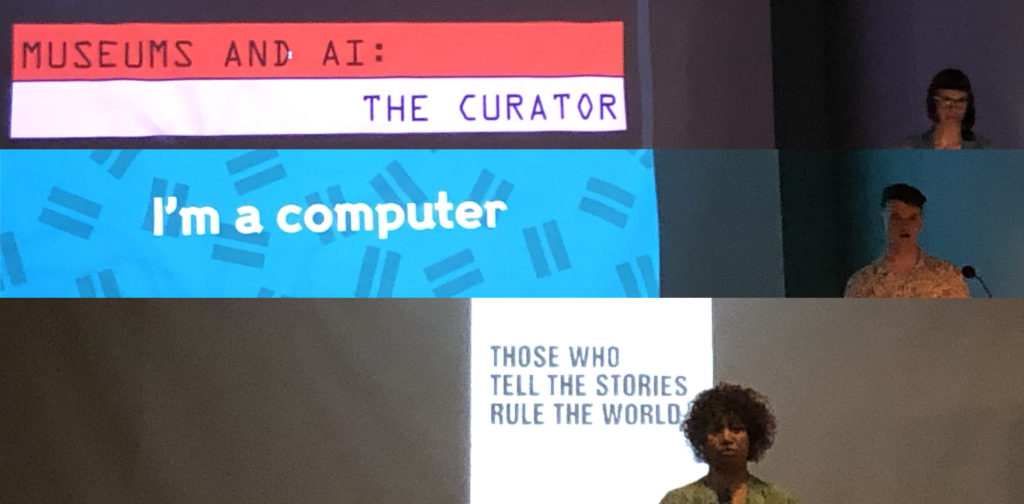
The event taken place at Cooper Hewitt, Smithsonian Design Museum on Sep 16, 2019 mainly discussed the applications of Artificial Intelligence now and future and highlighted the role of museums as making people more self-aware. There were three talks in the event given by three different perspectives (a curator, a computer and a future teller) and a free Q & A session afterwards.
Curator: Andrea Lipps, an associate curator of Contemporary Design, Cooper Hewitt
The talk given by a curator from Cooper Hewitt first discussed the impact of AI on our lives right now. As is known to all that AI could be used in different kinds of fields like education, recreation, medical treatment, marketing automation, etc. AI could analyze large amounts of data in a short period of time and help make quick decisions. The benefits of AI are undoubted and visible. However, the curator also pointed out some questions that could not be ignored:
1.How can we ensure diversity, inclusion, safety and human rights are maintained with AI?
2.What role would AI play in our future?
3.How could museum use AI to represent new things?
There is no
right or wrong to these questions and we could interpret the questions from
different angles. The curator also provided some frameworks that we could use to
think about AI:
1.Is it active or passive? If it is active, do you have a choice? If it is passive, is it being disclosed?
2.Is it being linked to a real-world identity or just used as anonymous ID?
3.Which methods being used when connecting AI with museums?
It’s true that we could only predict the influence and applications of AI in the future but what we should pay attention to right now are our own values and priorities. Because the use of AI is designed by human beings and design is just the externalization of our own desire. “If we use, to achieve our purposes, a mechanical agency with whose operation we cannot efficiently interfere once we have started it… we had better be quite sure that the purpose put into the machine is the purpose which we really desire.” Said Norbert Weiner in 1960.
Computer: Harrison Pim, a Data Scientist
from Wellcome Trust
The data scientist who represented a computer talked about his work content, that he used machine learning in dealing with loads of images, texts and collections quickly but not analyzing users or visitors, since AI in current period was parasitic on data. He also pointed out that AI was not designed to replace human beings but as tools to be used by people. So, the main point is how to use the tools to better serve people’s needs. The talk given by “the computer” reminded me of what I read in What is Computer Ethics: we are in a conceptional vacuum and policy vacuum world and we need to reexamine the regulations in the past world, from how to define tech-based concepts to create a relatively neutral algorithm. It is impossible to create something absolutely neutral but by creating diversity, the “fundamental vulnerability” could somewhat be relieved.
Creator:
Karen Palmer, a storyteller from the future
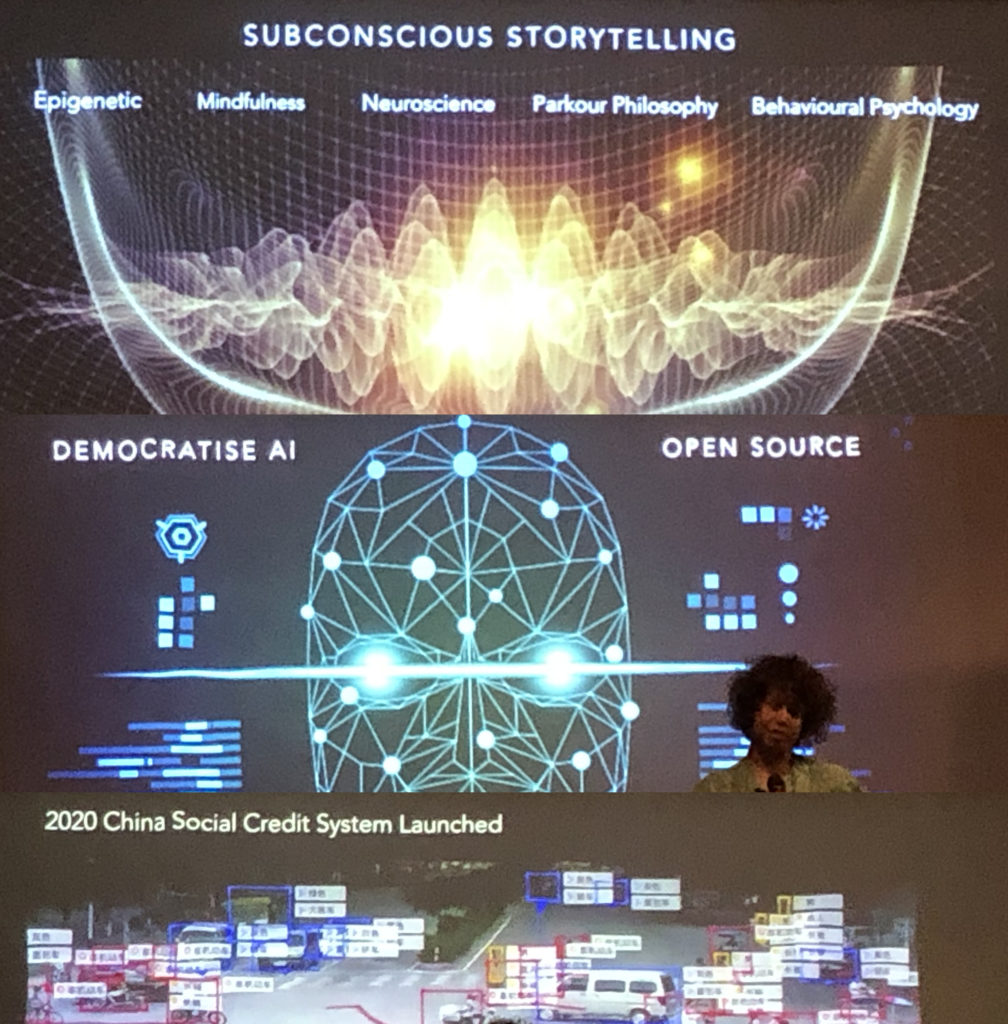
The future teller first warned everyone that the technology would take over everything and individuals would find themselves lack privacy or security in the near future if we did nothing. We would be derived of the right of telling our own stories and the world was going to be consist of auto-self surveillance, weaponized technology and biased networks.
She used the example of criminal justice system
to confirm us that bias would be the biggest problem in AI applications. An
example used to support was the UK police using AI to inform custodial
decisions which could be discriminating against the poor. Most assumptions made
by AI right now were based on false theory while these assumptions are trend to
take over our lives. Thus, she concluded that democratizing AI should be what
we fight for in the near future.
What she highlighted was the necessary to turn the information age to an age of perception. “Those who tell the stories rule the world.” What museums should do is to make people more self-aware and create more opportunities to arouse citizens’ insights to social issues.
Q & A
session
Q: How to apply machine learning in the
field of design?
A: To begin with, the interactions between
users and products would be changed by new technologies but the role of
designers should not be overshadowed by AI. We could use AI to produce products
or test prototypes faster. In a word machine learning should serve us but we
should not be slaved by it.
Q: What would justice be like in the future
and what is the role of machine learning in it?
A: Neither machine learning or artificial intelligence could answer future justice problems. Those concepts should be determined by human beings but not computer technologies. What would happen in the future is the living space AI help to create and people could better understand culture issues in the museums.
Conclusion
Though we have to admit human’s dominant role in the applications of AI, there are other problems about surveillance, power and constraints that could not be ignored. “In an era of extractivism, the real value of that data is controlled and exploited by the very few at the top of the pyramid.” Said Crawford & Joler. The event did not predict how the regulations could be established but just pointed out museums’ future role in arousing people’s awareness, which I think lack enough support and overly optimistic to some extent. Anyway emphasizing museums’ social responsibility is quite necessary right now and all museum practitioners should be prepared for the transformation of exhibition modes.
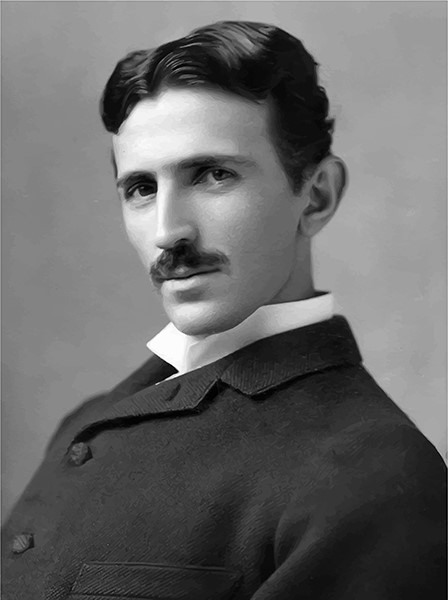
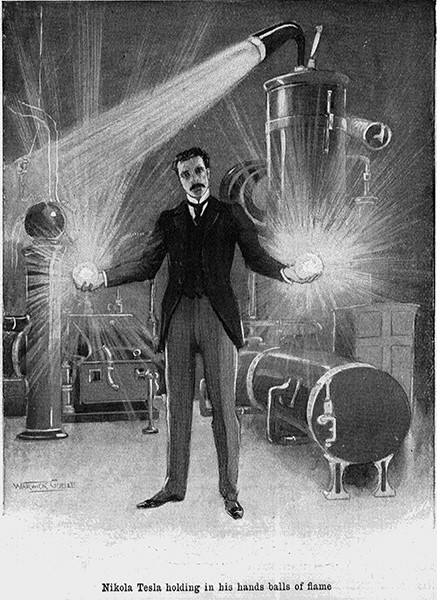
In his lifetime, Nikola Tesla was overshadowed, and even undermined, by his peers in the field we now refer to as STEM. His creations and theories, however, have endured beyond the twentieth century to significantly influence our modern methods of telecommunication, while his legacy of sensational experiments has come to epitomize what it means to be an innovator in the minds of many around the world. Through his ingenuity, and mastery of the alternating current, Tesla was crucial to ushering in the age of electricity. His advances in power transmission revolutionized the public’s accessibility to energy, light and heat, and paved the way for a host of life-altering conveniences we now take for granted.
Though he recognized the significance of his work, and the great technological strides he was making, Tesla never became complacent in his achievements. His AC motors fed into the development of the powerful Tesla coils, which in turn were the catalyst for his breakthroughs in artificial illumination and X-rays. Those experiments would then spurn him on to his loftiest of aspirations: the wireless transmission of information and power.
While this grand goal ultimately eluded Tesla, his total body of work and overall vision of technological progress is remarkable nonetheless. In the same vein as Jules Verne in the generation before him, and George Orwell in the generation after, Nikola Tesla possessed such a prescient mind that he seemed to know the future. To theorize, and nearly implement, a global wireless network over 100 years ago is an astounding feat, and leaves little wonder as to why so many people have been captivated by his accomplishments.
The Future is Now
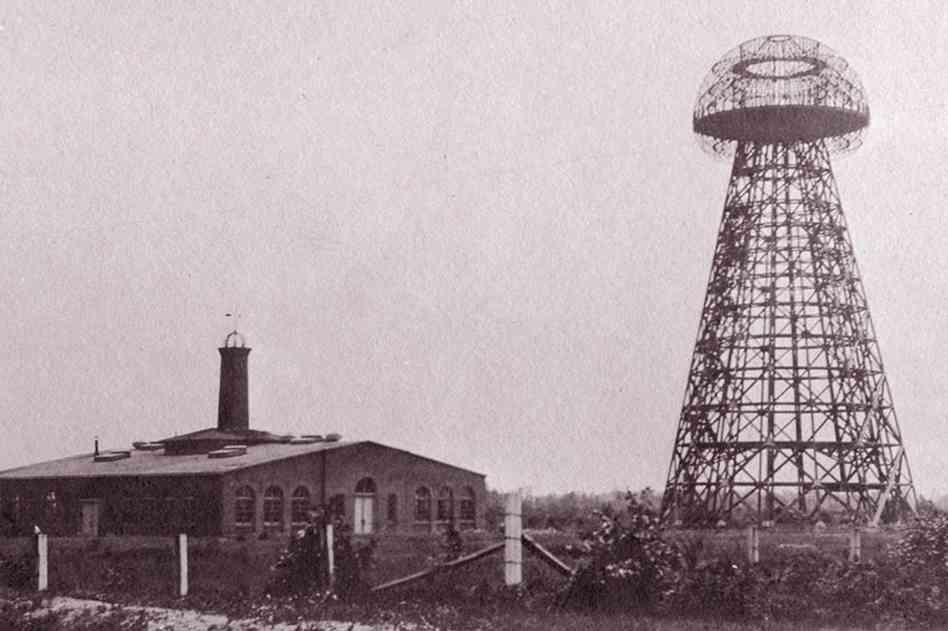
It should come as no surprise that scientific endeavors tend to take place in a laboratory, but what is not as well-known is the fact that Tesla’s sole surviving facility is here in New York. Erected near the Atlantic Ocean because of the proximity to England for transmission tests, Wardenclyffe was designed by prominent architect Stanford White (who is also responsible for the Washington Square Arch) and financed by banker J.P. Morgan. Situated 50 miles East of Manhattan, the brick structure was completed in the early years of the twentieth century.
Wardenclyffe Laboratory located on Long Island, in Shoreham, New York
The Tower at Wardenclyffe was a literal apex of Tesla’s imagination and engineering prowess. Though he had achieved success and numerous patents addressing radio wave transmissions, he was not satisfied with mere wireless communication, and became increasingly focused on developing a means of relaying usable electrical power through the atmosphere. This obsession of sorts unfortunately led to Tesla’s professional downfall. Instead of continuing his progress on telecommunications, his affinity for wireless power caused funding to dry up and in only a few short years the laboratory and tower were vacated.
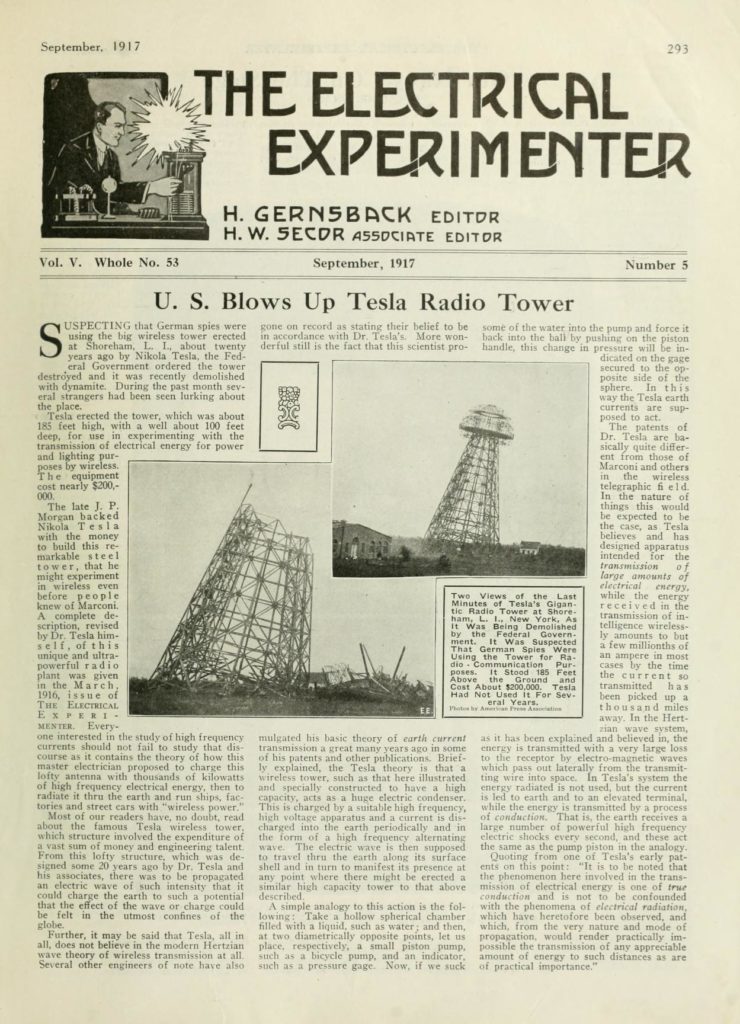
The Tower was destroyed in 1917 under suspicion of involvement in espionage
Though Wardenclyffe was abandoned and neglected for much of the previous century, it has been given a second life as the Tesla Science Center in recent years, and the site earned entry into the National Register of Historic Places in 2018. As a not-for-profit organization, the Center’s mission is to serve as both a museum and practical teaching environment. By preserving the laboratory and legacy of Nikola Tesla, while also hosting local scholastic physics competitions, guest lecturers and community events, the Center honors the historical contributions of its namesake as it strives to enrich the education and development of future generations.
The Tesla Science Center at Wardenclyffe hosts its Inaugural Gala in 2019
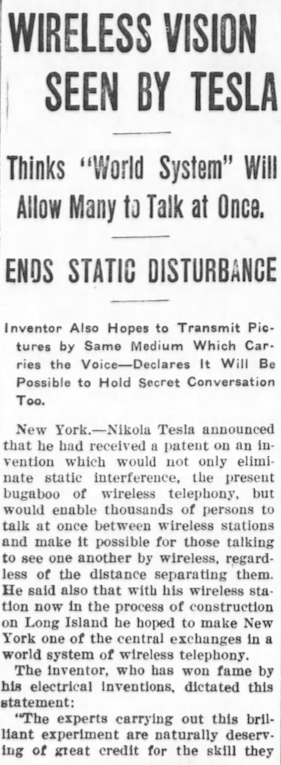
Wireless World System
“As soon as completed, it will be possible for a business man in New York to dictate instructions, and have them instantly appear in type at his office in London or elsewhere. He will be able to call up, from his desk, and talk to any telephone subscriber on the globe, without any change whatever in the existing equipment. An inexpensive instrument, not bigger than a watch, will enable its bearer to hear anywhere, on sea or land, music or song, the speech of a political leader, the address of an eminent man of science, or the sermon of an eloquent clergyman, delivered in some other place, however distant. In the same manner any picture, character, drawing or print can be transferred from one to another place. Millions of such instruments can be operated from but one plant of this kind.”
– Nikola Tesla c. 1901
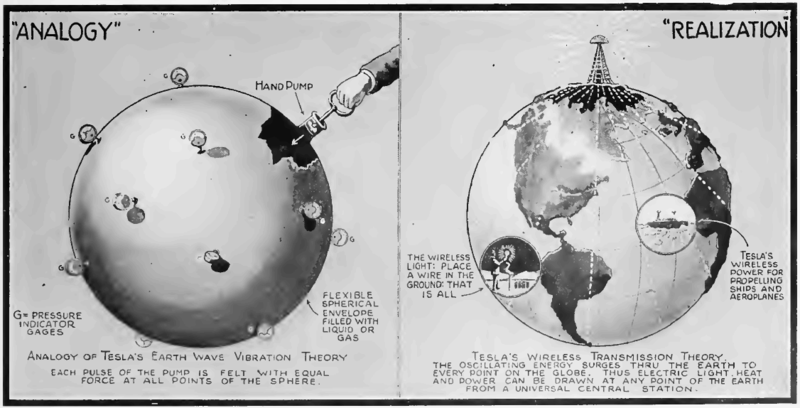
Believing he could tap into the resonant frequencies and conductivity of the Earth itself, Tesla envisioned a system which could relay energy in a myriad of forms around the globe using highly elevated transmission and reception towers. This “cloud” of wireless signals could serve as the conduit for text, images, audio, video and even electrical power for motors or light bulbs, according to his theories. While the funding and feasibility of putting such a network into practice did not materialize before his death in 1943, unfettered access to data and reliable energy is a brass ring we still have not completely reached. Poor wifi reception, drained batteries, dropped calls, broken chargers and network dead-zones are all modern symptoms of the same problem Tesla was attempting to resolve those many decades ago. What thoughts might cross his mind if he were to interact with our latest smart phones? Would he marvel at the quantity of content available? The speed with which he could access it all? Would he be impressed by our “wireless” charging pads or the ability to exchange battery power by simply holding two compatible phones adjacent to each other?
Though the potential of his experimentation was never fully realized, Tesla’s concept of a ‘Wireless World System’ serves both as a rudimentary precursor to our current global networking capabilities, and also as an advancement in technology still worth striving for.
Tesla’s global transmission theories have manifested to a degree in terrestrial cell towers and geosynchronous satellite networks
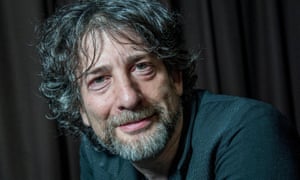
The person is Neil Gaiman. My favorite author going back almost a decade and a half, someone who wrote (and still writes) fiction that felt truer than life to me. He showed me the importance of stories, how they shape us and the world around us. He writes for both children and adults, so there was a feeling of him growing up with me (even though I was reading his books out of order of publication). I have always been a sucker for thematic cohesion, and his books had themes that appealed to me when I was young and continue to appeal to me today. Things like the importance of stories, finding truth when things seem dark, and the idea that even when things seem hopeless there is always something that can be done. Cleverness, compassion and luck seemed to be the three traits one needed to succeed in Gaiman’s world, and those were the traits I aspired to. When I knew little of him as a person and only knew him as an author, I still felt a connection, which proved to be a good instinct. I learned that Gaiman is an advocate for truth and the accessibility of information, he championed libraries in a way that resonated with me, a young woman who spent more time in a library than almost any other place. While I was reading a recent collection of his nonfiction writing, The View from the Cheap Seats, I realized just how much his writing had shaped my mindset and how much that meant to me. Even the way I write tends to be influenced by him, with many parenthetical asides (though one could cite Lewis’s influence on him becoming his influence on me for that) and a strong voice that may sometimes border on rambling being associated with him as a narrator, as well as being hallmarks of my own writing, though I have much less honed skill than Mr. Gaiman does. His use of language and clear love of words is what drew me to him all those years ago, and what keeps me coming back to him. To this day, if he releases a new book or even recommends one, it immediately goes to the top of my To Read Next list, and his books are among the first I recommend to people who are looking for something a little unusual.
The Entrance of the King’s Highway Branch of the Brooklyn Public Library
The place is always the Brooklyn Public library. Generally, it’s the King’s Highway branch but I’m not exclusive. I’m sure that it’s not a shock that someone whose goal is to be a librarian is choosing the library, but it was the place I grew into my own. I have been a part of the BPL system as a patron for the majority of my life, and living walking distance from a branch gave me much needed space in my angsty tween to teen years. I attended children’s shows there when I was very young, brought myself to poetry clubs and craft clubs when I was older, and on the days in between I stayed comfortably at a table between the YA and Graphic Novel section. I settled into a rhythm of arriving home, having a snack of some sort, and heading to the library until it closed every day after school from 7th-12th grade. Summers it was common for me to spend the whole day there several days in a row. Some of this was because we had no internet at my house until May of this year (2019), but even now, when I need to spend time working on homework and not getting distracted by my cats or chores that somehow get more appealing when I sit down to work on assignments, I pack up my backpack with my laptop and a pair of headphones and trek the three blocks to get some focus. It would be hard to overstate how much the Brooklyn Public Library shaped me growing up. When I had very little disposable income, I didn’t have to spend it on books, those were accessible to me for free (the benefit of going to the library almost every day is that it is very hard to end up with high late fees). I was able to experiment with the books I wanted to read without any financial investment, so there was no shame if I did not finish a book. This, I think, is the main strength of a library to help people become readers. There is no up front cost, there is no monetary risk or expectation, there are just stories here that want you to find them and people here who want to help you look. These long days spent wandering shelves, asking librarians questions (generally questions of what to read next) and learning how to share space for long periods of time with many people are what made me consider a career in libraries. It started as a desire just to want to be around books, but it became more than that. People refer to the library as a sacred space, but I disagree. It is the place where we are the most human, the most communal. The unique way that the library fosters both solitude (in allowing for a space where focused work to get done or self discovery to take place) and community (a shared space where everyone’s needs must be navigated) is what draws me to them now, and what inspires me to be a part of that space as a librarian.
A black Nintendo GameCube, released in Japan and North America in 2001
My thing is a little more abstract, old game consoles. In my who, I talked about the importance of stories to me, and I found those stories not just in books but in video games as well. The stories in games are often well crafted and told beautifully with art, music, and interactive elements highlighting their plots, characters, and themes. I was lucky enough to either receive or save up to buy many consoles through my life, and I’ve held on to all of them and have worked hard to keep them in working condition. Why? Well, games are a quickly evolving medium. Console generations last about 7 years on average, and when a company shifts to a new console hundreds of games get left behind. If you get rid of your old console, all those games become unplayable unless the company decided to reboot or remaster them. This was what caused my first realization that conservation of art is not guaranteed. Games could be considered classics and yet still be left unplayable for the rest of time, and unlike other media like books or films, the vast majority of games would suffer this fate. Some people (I sometimes like to refer to them as unlicensed game archivists) created emulators and ways for the games to be made playable on computers so that they can be accessed by those who don’t have these old consoles, but those are often shut down by game companies who worry that these will cannibalize their profits. Until there is a better solution to all of this, I will just have to hold onto my old consoles (though even those are slowly becoming technologically obsolete due to a move to HD televisions). They are like small time machines or even tiny archives of their own, and those that own them are small scale archivists for themselves, deciding what games from the past they wanted to be able to pull out one day to play and refer to.
Through the historical gates of Barnard College, under the shadow of Riverside Church, and down the stairs of the Milstein Center Library, Columbia University’s Oral History Master of Arts program held the second event in a series of oral history and story-telling workshops. Tim Raphael, co-founder and director of the Newest Americans oral history and story-telling project, presented about the origins and scope of the project. Despite being a talk geared towards historians and story-tellers, there stood out a few interesting connections to preservation and representation in archives and story-telling.
Raphael, a newly appointed Arts, Cultures, and Media Professor at Rutgers University, displayed his theater background with the ease in which he handled a few technical difficulties. Through video clips not cooperating, his laptop having died hours ago, and being emailed the wrong and out-of-order slide presentation, Raphael handled himself well and showed only a slight nervousness at speaking to Ivy League students and professors. Personally, I felt at ease upon overhearing several students discuss their confusion over an assignment, and one students’ phone going off mid-presentation. Ivy League-ers, they’re people too.
A few sharply worded digs at archivists early on brought to mind Michelle Caswell’s impassioned discussion of the “intellectual rift between archival studies scholarship and humanities scholarship” in her article for Reconstructionism (Caswell, 2016, p. 15). Speaking casually with Columbia’s director of OHMA, Amy Starecheski, Raphael uttered the phrases, I’m paraphrasing, “the archives as chambers of death,” and “archives are where no on who’s not an academic dare to tread.” As I wondered if this is what it feels like to be an information professional, to feel peeved when someone speaks down on archives, Raphael began his presentation.
Before introducing the main event, Dr. Starecheski started by acknowledging the land. She acknowledged that Columbia and Barnard sit on the stolen land of the unseated Lenape People, and that indigenous stories are rarely seen in archives. Inspired by the hyper-diverse community of the area, Newest Americans is a multimedia oral history and story-telling project at Rutgers University focused on telling the stories of immigrants and first generation Americans in and around Newark, New Jersey. It works through collaboration between film makers, photographers, artists, historians, journalists, faculty, and students.
It all started when a cardboard box of tapes from the 90s was found in the corner of a library, “and the librarian didn’t even know it was there” mused Raphael. These tapes were found to contain over 120 interviews with people who moved to Newark during the Great Migration between 1916 and 1970. Interviews with people of African heritage and descendents of slaves, the stories inspired Raphael to tell, what he calls, “local narratives with national and global implications.” The stories told are all examples of the preservation of cultural heritage, and the attempt to collect the stories of often ignored Americans. The goal of the format is to, as Raphael explained, “activate the archive” by creating engaging, entertaining, and informational short videos that new dimension to the american story.
Raphael showed one of the first projects produced by Newest Americans: an 8 and a half-minute documentary about current Newark mayor, Ras Baraka, his father, and his grandfather. The two voices heard in We Came and Stayed: Coyt Jones/Ras Baraka, are that of Baraka and his grandfather: Coyt Jones, who was the grandson of a slave and whose interview was one of the over 120 found in a box. Jones was asked over 14 pages of questions for an oral history project organized by the Krueger-Scott Cultural Center in the 90s.
The Mayor of Newark Ras Baraka answers questions in an interview with Marcia Brown at City Hall, in Newark, New Jersey, on March 13, 2015. (Photo by Ashley Gilbertson / VII Photo)
This is a long quote but it perfectly summarizes the documentary: “In his interview, Coyt Jones reflects on his arrival in Newark [in 1927] and the city in which he raised his family. […] Ras Baraka sat down with Marcia Brown to share his own memories of growing up in Newark, and to answer some of the same questions posed to his grandfather twenty years ago. Together these interviews describe how the Great Migration transformed a family and a city (Newest Americans, 2015).” This is an entertaining way to preserve cultural heritage and I can envision a museum exhibit dedicated to the projects inspired by these tapes. In a way, this story is an example of Macdonald’s ‘difficult heritage.’ It is a way for people who lived through the civil rights era and were victims of injustice to further take ownership of their history and identity.
After We Came and Stayed, Newest Americans expanded into stories of people of many different backgrounds and U.S. cities, and recently began projects in Guatemala, Malta, and Lebanon. There was a tense moment towards the end of the question and answer part of the event when Raphael was asked about his role as a storyteller who is a white male and the inherent power imbalance. He appeared a bit shaken and shifted to the importance of story-telling and how much he loves the stories and that with the “access to all these amazing people” how could he not want to tell their stories. He finished his non-answer by stating, “if we only told our own stories, what a f—-ing boring world it would be.” Miriam Posner addressed this issue at the end of her keynote speech . She said, “it’s incumbent upon all of us […] to push for the inclusion of underrepresented communities […] (Posner, 2015). But, as Joan Shwartz noted towards the end of an introduction to two issues of Archival Science, and referencing Verne Harris, “It is important […] not to romanticize the marginalized, or feel elated for saving them from historical oblivion” (Schwartz, 2002, p. 17). There is a trend among archivists to collect previously unheard or underrepresented voices and stories, but inherent bias exists even if unintentional. For example, Indigenous Cataloging is the process for organizing information of indigenous people, but to have a separate phrase possibly further marginalizes the community. However, these stories need to be preserved and told as well, even if they are told by an outsider. It’s a difficult issue with a lot of ongoing discussion.
Representation and preservation in archives and oral history will continue to focus more on the underrepresented voice and I think the best thing to do is, like Dr. Starecheski, acknowledge that we are on stolen land and acknowledge the power imbalance of a white male producing a documentary about the those underrepresented voices. Newest Americans is an admirable example of activating archives to bring stories alive.
Heidi Klise
Sources:
Caswell, Michelle. (2016). “The Archive’ is Not An Archives: Acknowledging the Intellectual Contributions of Archival Studies” Reconstruction 16(1). http://reconstruction.eserver.org/Issues/161/Caswell.shtml.
Macdonald, Sharon. (2015). “Is ‘difficult heritage’ still difficult?” Museum International 67: 6–22
My person is Suhair Khan, project manager at Google Arts & Culture. A click on the link will immediately pull up the world’s array of art collections, stories, and cultural sites onto your screen. You can check out the local Guggenheim Museum to see what exhibitions are happening or hop over to Vienna to see your favorite painting of ‘The Kiss.’ If you’re feeling adventurous, you can use one of Google’s VR tools to stroll down the murky paths of the Catacombs of San Gennaro in Naples and discover a new collection of mosaics. The beauty of this platform is everything is up to the viewer to decide where they want to go, what they would like to see, and how long they want to be there for. And the best part? This viewing experience is free and meant to be enjoyed in the comfort of one’s home (or in my case, a tiny coffee shop in Greenwich Village).
So
what is Google Art and Culture? Simply put, it is a platform launched in 2011
to “provide access to art and culture to everyone and everywhere” (Gajardo
& Lau, 2017).
Google Art and Culture has kept this mission true. So far, Suhair and her team
of engineers have partnered with over 1200 non-profit cultural institutions,
galleries, and artists across 70 countries to share, preserve, and present some
of the most beautiful artworks and curated stories online.
Suhair is no stranger to multicultural experiences. She grew up in Milan, London, and South Asia and have led projects in the UK, Australia, Indonesia, and Korea. Her mission is to have art and culture accessible to people who can’t travel and “make sure distance and culture doesn’t get in the way of resources and sharing” (Appleby, 2018). This is what technology has allowed us to do: break down the barriers and show art no longer needs to be confined to a physical space but can be made accessible anywhere online. Suhair is reconstructing the way people engage with art by making the experience easier and less intimidating. Instead of traveling to a particular place, the artwork is brought to the viewer. This reminds me of the ‘armchair traveler’ when early photographers would send souvenir photo albums to loved ones back home so they can feel like they were visiting these faraway places without leaving their seat. Technology has allowed us to revitalize the role of a digital ‘armchair traveler’ by making the experiences even more realistic and interactive.
So how can we relate Suhair’s work to the information field? First, Google Art and Culture is showing us a way we can present digitized information meaningfully by “creating networks of connections with context” (Appleby, 2018). We can see this with museum curators’ taking the role of digital storytellers as they now need to consider writing stories for audiences outside of the typical museum-goer realm. Second, we can take note of Google Art and Culture’s broad ways of searching for information. Categorizing artworks by color, popular topics, place, time, historical movement, etc., can inspire us to think outside of our usual groupings and be more ambitious in the pathways we create. Third, a look into Google’s features such as shared birthdays or their famous art selfie app that matches viewer’s face with an artwork provides more intimate and personal ways of engagement that IXD professionals can consider. Finally, the biggest takeaway is the multidisciplinary approach to sharing information. By collaborating with institutions and including tools that compare artworks from various cultures, the information no longer exists as a single narrative in support of one view but is transformed into a collection of narratives in support of cultures around the world. Thereby, viewers are able to get a well-rounded understanding of society and adopt a different cultural perspective.
Place: The Street Museum of Art
I decided to take a more unusual and unconventional route by picking The Street Museum of Art (SMoA) as my place of interest. I would say this is unusual than the rest because SMoA isn’t actually a physical museum, but it is an international, public art project that takes their exhibitions onto the streets and uses the city’s urban environment as their canvas. So far, the exhibitions have been held in New York, London, and Montreal. A look on SMoA’s website reveals their projects have transformed city streets into gallery walls where “admission is always free and the hours are limitless”(“The Street Museum of Art”, n.d.).
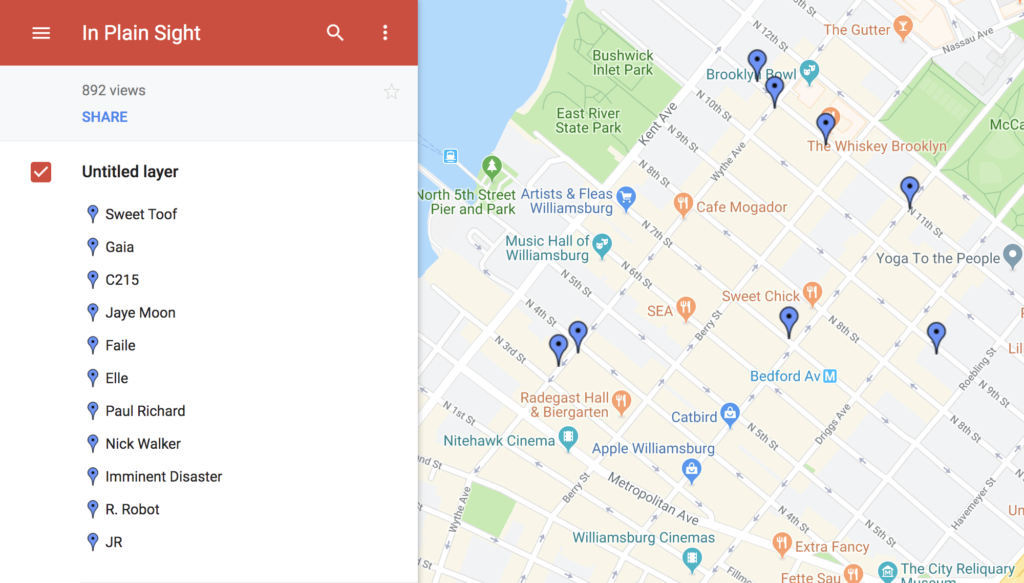
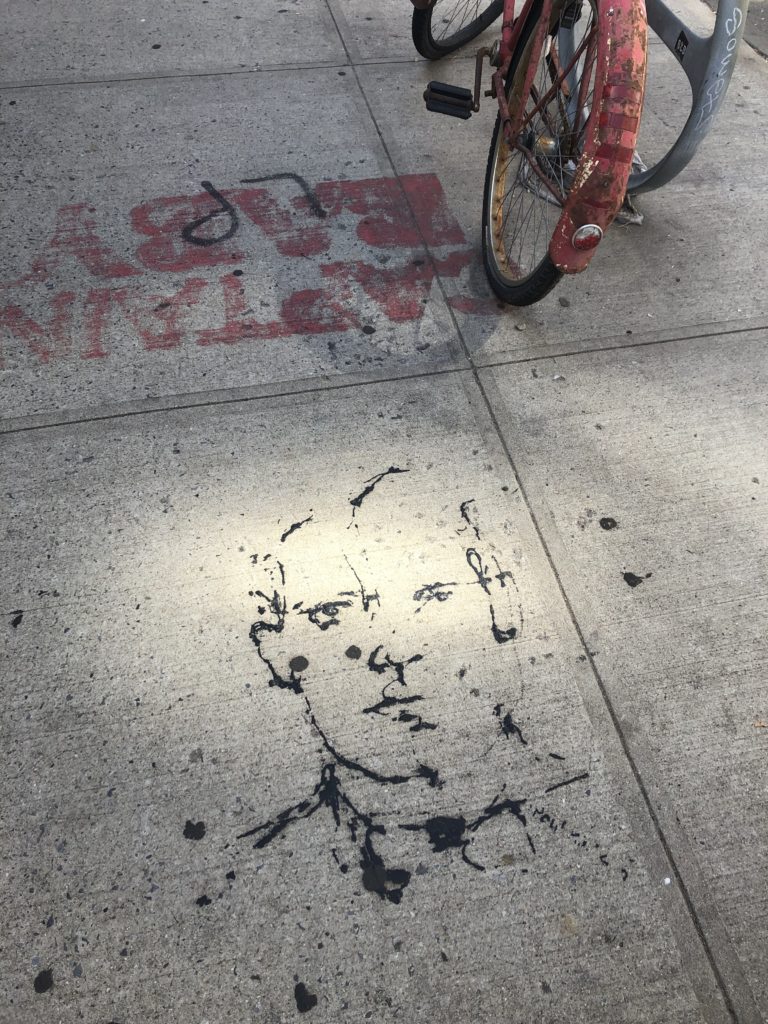
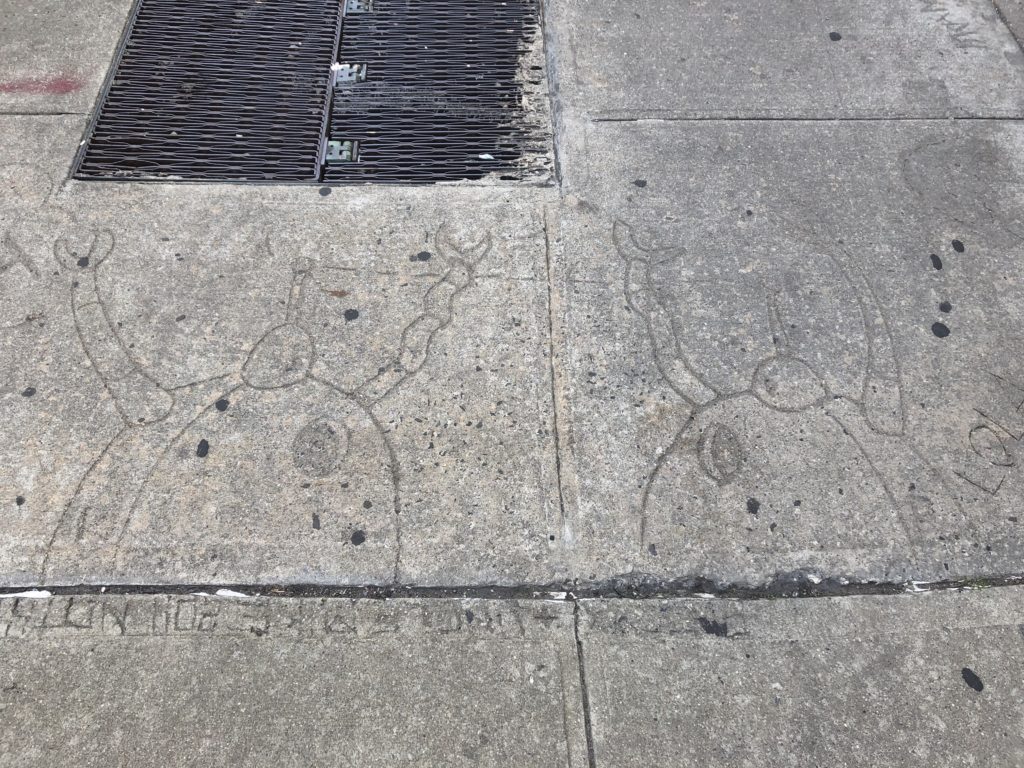
‘In Plain Sight’is an exhibition held in Williamsburg, Brooklyn and features the works of eleven artists “to encourage visitors to rediscovery this city through a street artist’s perspective…. And imagine the artists on their search for the ideal urban canvas” (“In Plain Sight,” n.d.). As mentioned, most of the artworks are hidden or have been cleverly positioned so the viewer would pay attention to sites that are usually ignored and thereby, ‘rediscover’ the urban city. This won’t apply to me as much as I have never been to Williamsburg before. With nothing but a digital Google map, I took the subway to Williamsburg on a sunny Friday afternoon to embark on my urban scavenger hunt.
While searching for these artworks, it made me think about some of the topics discussed in class, such as the concepts of permeability and permanence. What happens when these places don’t exist anymore, will the artworks still be archived? How will it be archived – through photographs snapped and shared? I was only able to find two out of eight artworks and gave up on the last three. It may have been partly my fault, as I chose to go with the exhibition from 2012. However, this exhibition made me also think about the art world- how does this experience differ from an exhibition at a museum or gallery setting? In my opinion, the biggest difference was that this urban museum experience became much more personalized. I wasn’t confined to a physical space, I didn’t feel intimidated, and I loved how customizable the guide was. I could listen to music, pause the exhibition and grab a bite to eat, or even complete it over a span of a few weeks. It was also nice to know that my exhibition journey is unique in the sense that there was no specific path given to see the artworks, while museum settings usually give viewers a direct path to follow.
Photo: Janet Liu 2019
This exhibition also varies greatly from the online ‘In Plain Sight’ on Google Art and Culture. Instead of having everything presented at once on a single platform, SMoA was completely opposite: I had to physically go out and search for all these places myself. Unlike the ‘armchair traveler’ experience that Google Art and Culture provides, SMoA builds upon the ‘in situ’ concept of experiencing the art at its original place. Even though most of the artworks are no longer on view, I would say art in situ becomes more of a valuable experience because I had to physically travel and search for the places. Not knowing what to expect, then being incredibly amazed to find the artwork became a much more memorable, emotional, and personal experience than it would have been seeing it as a digital exhibition.
Thing: Little Robot Friends
I chose the Little Robot Friends (LRF) for my thing. I was searching for fun gift ideas for my nephew when these little tiny adorable creatures caught my attention. Hours later, I found myself still watching their YouTube videos and I ended up almost buying a robot myself.
LRF are programmable, customizable robots that teach kids aged seven or higher how to code. For $49.99, you can purchase a DIY kit or already assembled kit, which also comes with its own coding software filled with open-source-code to program new robot behaviors.
“They can sense the amount of light in a room, they can hear with a small integrated microphone, they can detect your touch and they can also communicate with other Little Robot Friends using infrared light (like your TV remote). They have two RGB LED eyes and a 250mW speaker for expressing their current mood. The brain is an 8-bit 32K microcontroller that provides a lot of space for coding behaviours and storing memories.”
This project is similar to Google Art and Culture and SMoA because of the flexibility of customization for its users. For instance, you are welcome to alter LRF’s personality. I would say LRF is able to create an even more engaging experience than the rest because of the emotional connect. They are robots that are personalized, tangible, meant to be held in one’s hand that can elicit empathy with the robots, and empathy with coding.
“Each interaction with your Little Robot Friend is stored as a memory, and changes how it will behave over time. We are working hard to make this a profound experience, one that can surprise you and make you smile as you watch your Friend grow up.”
(“Little Robot Friends,” 2016)
This makes me think of our previous discussions of provenance, and the idea of treating archives as objects. If we are able to adopt this view and see archives as tangible, living objects such as the little robot friends, then perhaps we will be more mindful and remember that our interaction with the objects will also affect its context and memory.
References:
Appleby, E. (Producer). (2018, May
03). Episode 33: The Art of Connectivity: Suhair Khan from Google Arts & Culture.
[Audio podcast]. Retrieved from http://sotapodcast.com/episodes/33
This past Friday on September 20th, 2019 I attended the Made in Africa Tech Conference which took place in Silver Springs, Maryland. Organized by Leslie Tita who’s background is in UX Design, he is also the founder of the Made in Africa Conference and I/O Spaces , where the event was held. Taking place from 9 a.m. to 7 p.m., attendees were able to hear and learn from industry leaders in the African community.
The conference began with keynote speaker Will Jawando, Montgomery County Council member. He gave spoke briefly on the immigrant’s population in Silver Springs, shining light on the African Community and their work along with discussing identity within the Black Community. Also coming from a Nigerian background, a powerful statement from Jawando that stood out to me is “We can be fully African and fully American, we need to normalize our combined culture.”
Following Jawando’s introduction, the panel discussions began with the topic African Fin Tech Temperature: Are Accelerators and Incubators Ready for Business?The speakers of this session were Chinedu Enekwe and Rebecca Enonchong. The session discussed the growth of Africa’s Fintech companies along how the owners of these companies are not seeing their own profit. There has been an increase of startups on the continent with the leading countries being South Africa, Nigeria, and Kenya. A major factor in the increase of startups is due to high investor confidence from foreign investors. Despite the positive results of an increase of fintech startups, the foreign investors are taking advantage of this business owners, hence why profits are not being seen.
The session that really caught my attention and that was relatable to my future career in the field of User Experience to is Perspectives on Reframing Patient Care and management via Tech Apps. The speakers wereMohamed Kamara, Tawani Anyangwe, and Dr. Nkobena. Kamara and Anyangwe both come from a computer science/software engineering background while Dr. Nkobena is a pharmacist. They discussed the outcomes of combining technology and healthcare, resulting in telemedicine and telehealth apps, how it can improve the healthcare system, and why Africa needs to utilize these methods more. Some of the positives discussed were managing chronic conditions, prescribing medication, reducing hospital readmissions, and overall lowering costs.
Through these healthcare applications patients can have a doctor available to them immediately despite location. Patients have the option of video calling, sharing images, or texting their physician. It is determined by preference and urgency. The applications are required to be HIPPA compliant in order for medical diagnosis and treatment to be offered. According to PC Magazine, with the increase of telehealth and telemedicine applications, it is creating a competitive marketplace resulting in lower health care costs. By reducing time to access and fuel consumption, along with increasing preventative care, these applications are transforming health care. Dr. Nkobena discussed the benefits of telehealth and telemedicine from the doctor’s perspective also. Due to E-Prescriptions, she is able to receive prescriptions electronically and fulfill prescription request in a much faster time. This is a prime example of enhancing quality patient care.
In my research of creating these kinds of applications, I came across Science Soft Professional Software Development also known as scnsoft.com. it as an IT consulting service that creates custom and platform-based solutions for Healthcare companies. They develop a range of patient applications such as patient engagement, telemedicine, medication, mental health, rehabilitation, and wellness. Their approach to creating to creating patient applications consist of many factors. First, they believe in creating in creating condition-based applications rather than one-size-fits-all. The application should address specific patient needs. Next, it should provide secure date exchange options meaning two-way communication. SCNSOFT emphasizes guaranteeing the integrity of protected health information. They also emphasize the importance of a user-friendly interface, stating that all their applications combine performance, style, and usability. With a focus on their end-users, creating easy to navigate applications that have practical value and appealing design is priority. Medical device integration is the fourth factor. Being able to integrate all types of medical tracking and medicine devices results in the better health outcomes and allows systematic care. Some examples are instant glucometers, heart rate monitors, and smart asthma inhalers. Last but not least, the final factor is support. ScienceSoft has a support team available at all times to assist with issues regarding the application.
Rebecca Enonchong was the closing keynote speaker and ultimately who I was most thrilled to hear speak. She is mentioned previously but I did not describe who or what she does because I wanted to discuss her last. She is a Cameroonian technology entrepreneur and the founder of AppsTech. She is also an investor and part owner of I/O Spaces. Her donations to the field of technology in Africa is what she is best known for. Enonchong spoke on the development of her business AppsTech which provides enterprise applications solutions. Her company turned twenty years old this year, originally being based in Marlyland. It has now expanded to having several offices in different locations across the United States, Europe, and Africa, including her home country of Cameroon along with consumers in over forty countries. She also discussed her non-profit The Africa Technology Forum which is dedicated to helping startups in Africa.
This conference opened my eyes so much to the impact I want to leave in the field of technology, especially in regards to Africa. The creators of this conference being from Cameroon inspired me tremendously because I am also Cameroonian. I learned an extreme amount of beginning a startup and creating applications that are usable not only here in the United States but also in Africa. It was a reminder that my vision is bigger than myself. My future career in the field of User Experience is also for the betterment of my people. From the organizer of the event, Leslie Tita to Dr. Nkobena and Rebecca Enonchong, and many others mentioned and not mentioned, I was inspired to not forget my roots once I reach my destination.
Duffy, J., Duffy, J., & Duffy, J. (2015, February 11). 10 Apps That Are Changing Healthcare. Retrieved from https://www.pcmag.com/article/331934/10-apps-that-are-changing-healthcare
Home. (n.d.). Retrieved from https://www.scnsoft.com/healthcare/mobile/patient-apps
During my years as an undergraduate at the University of New Hampshire, I was unsure what I wanted to major in. I began taking courses that interested me, to see if it was something I wanted to study long term. My first two choices were art history and mythology.
When I walked into my mythology course that semester, a class that must have been over 40 students, I was handed a quiz that was intended to give the professor a better understanding of how much you knew about myths already. Amidst may serious questions, that I can hardly remember now, there was one question that stood out: “Who was the king of all Greek gods? A: Apollo, B: Hera, C: Zeus, D: Bill Clinton.”
It was because of Professor Smith’s mythology course that I graduated with a minor in classics, and why 2 years later I traveled abroad to Rome and Pompeii on a one week course he taught in conjunction with another Professor. He even wrote me a recommendation to get into my graduate program.
Professor Smith is not only a professor at the University of New Hampshire, but he also has a Ph.D. from the University of Illinois, and is an author with a plethora of publications. He has written many anthologies regarding myths, Ancient Rome, and translations from primary sources. At UNH he teaches classes on classical mythology, ancient Rome, hieroglyphs, Greek, Latin, and a course that reads only classical books in their original Latin. While teaching all of these courses and editing a book on Greek and Roman Mythography for Oxford University Press, he is also creating a digital platform called “Putting Greek Myth on the Map” which intends to show a relationship between mythical figures with real places.
One of Professor Smith’s publications is Anthology of Classical Myth: Primary Sources in Translation. In this publication he and two others translated and anthologized over 50 texts. The authors include an appendix of evidence from Papri and Linear B tablets, as well as a thematic index, a mythological dictionary, and a genealogy.
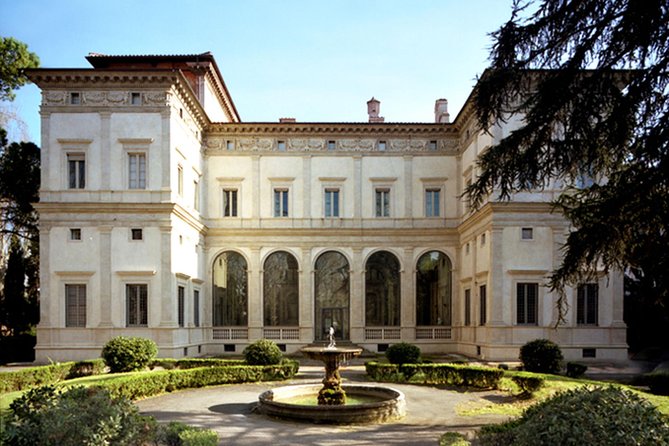
Place: Villa Farnesina
While on my trip abroad in Rome, I was given an afternoon off to go see one of my favorite pieces of artwork: Raphael’s Cupid and Psyche Loggia. I credit this one visit as what inspired me to go into the Museum field.
If you research for your visit ahead of time, you will find the Villa’s website where you can learn the history of the building. Farnesina was built for Agostino Chigi by a pupil of Bramante. Inside you will find artworks by Raphael, Sebastiano del Piombo, Giulio Romano, and Il Sodoma. but it will also tell you that the Villa is located in Trastevere, a more suburban area of Rome just over the Tiber River. This location unfortunately makes it easy to miss, and I can tell you from experience that the Villa itself is very hidden. Still the Villa as a Museum is extraordinary.
I did not do any research before going, before the trip had even started, I wasn’t sure if I would find the time to go. I was fortunate enough to be on a trip that was already scheduled for me. One day, after spending the morning in the Jewish Ghetto of Rome, my professor told me it was alright to take off the afternoon and go see it. Since I hadn’t had the chance to plan, I ended up getting there with only an hour until closing because I had gotten lost, and on the wrong bus.
The Villa is beautiful and large, and ridiculously quiet. I’m not sure if it was because there were only a hand full of people inside, or if it was because of the state of awe everyone inside was in. The first room of the Villa is Raphael’s famous Galatea, larger than I expected, and much higher up the wall. I wish I had stayed longer, but I moved on quickly. The next room was the Psyche and Cupid Loggia. A Loggia is a ceiling, so the room was empty except for a few chairs so people could sit and look up at it. Everything you might’ve heard about it is true, the fruit looks like it is real and could fall right on you at any moment, the colors are as vibrant as if he had painted them yesterday. I spent a good half hour under the Loggia, amazed beyond believe and having trouble actually believing I was there. I was urged onto the next section of the Museum, which I passed through quickly, until I came to a section that described the restoration process on both the Galatea and the Psyche and Cupid pieces. From what I can remember the Museum show cased exactly how the restoration team took samples of the paints used in each fresco and how they recreated it. I had never before seen this side of art history that examined how painters created paint, or how it was applied. It was a scientific side I was obsessed with.
When I returned from my trip I excitedly told my advisor about the Villa, and about the exhibition on the restoration. When I went online and tried to find information on it, I found little to nothing. The Farnesina website details the restoration process focusing on keeping the artwork looking the way it looks, for example restoring the adhesion between the plaster and artwork. They quickly mention testing the “traditional materials” with CIR and “experimenting with new approaches and materials.” I was heartbroken that I wasted so much time staring at the piece, that I ran out of time for this interesting side of the Museum, and that I could not find much information about it later.
Being at the Villa Farnesina inspired me to want to work in restoration in museums, but on a much different side of it than taking a brush to the artwork myself. I want to study the artwork and figure out how they were made and how they can be fixed. I also want to work to make places like the Villa Farnesina more accessible to the people who can’t get there physically. Everyone should be able to experience their favorite artwork, even if they can’t fly to Rome.
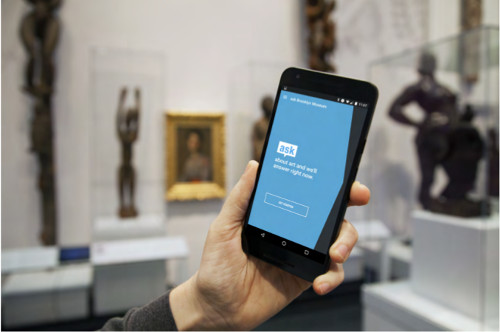
Thing: Brooklyn Museum’s Ask App
I am fortunate enough to be taking a class taught by Professor Devine, titled Museums and Digital Culture. Last week we had our class at the Brooklyn Museum, where Professor Devine is the Director of Visitor Experience and Engagement. We began the class with a presentation Professor Devine gives to investors and those interested about the app. It was created in three different phases. The first sent “Gallery Hosts” into certain exhibitions with vests telling visitors to ask them questions. The response was good, people would ask them questions about art, among other things. Phase two had “Gallery Hosts” in front of certain pieces of art, who would answer questions, but who would also hand out cards that showed visitors how to get to another piece of recommended art. This backfired, as most people wanted something more personalized than a preprinted card. Finally the last phase began, which is what inspired the Ask App. Ipods were given to members and select test groups upon entering the Museum with imessage that was sent to the Curator. With this phase the team was concerned the most with “screen suck” or that people would be too involved with their screens to actually look at art. They found that this wasn’t the case, especially when the curator could prompt visitors to look at specific pieces of the art he was describing.
From the third phase, the Ask App was born. Now, anyone who walks into the Brooklyn Museum can download it off of the App store, and speak to an art historian about art. During this class we were sent loose in the Museum to try it out, and I had a fantastic discussion with one of the team members about their Egyptian art exhibit. After this, we got to meet the team and see how the system worked.
While the only thing a visitor sees is a screen similar to imessage, the team sees a screen full of coded numbers asking them questions. One team member showed us how she would split her screen between the incoming conversations and the Brooklyn Museums Wiki, something she updated when no one was asking questions.
I had never been to the Brooklyn Museum before, but I couldn’t believe how fun it was to experience it with the Ask App. It’s a really cool tool to keep visitors interested that I believe all Museums should start to use. Not only does it get you to look at art closer, it also encourages you to see more of the Museum and stay engaged with it.
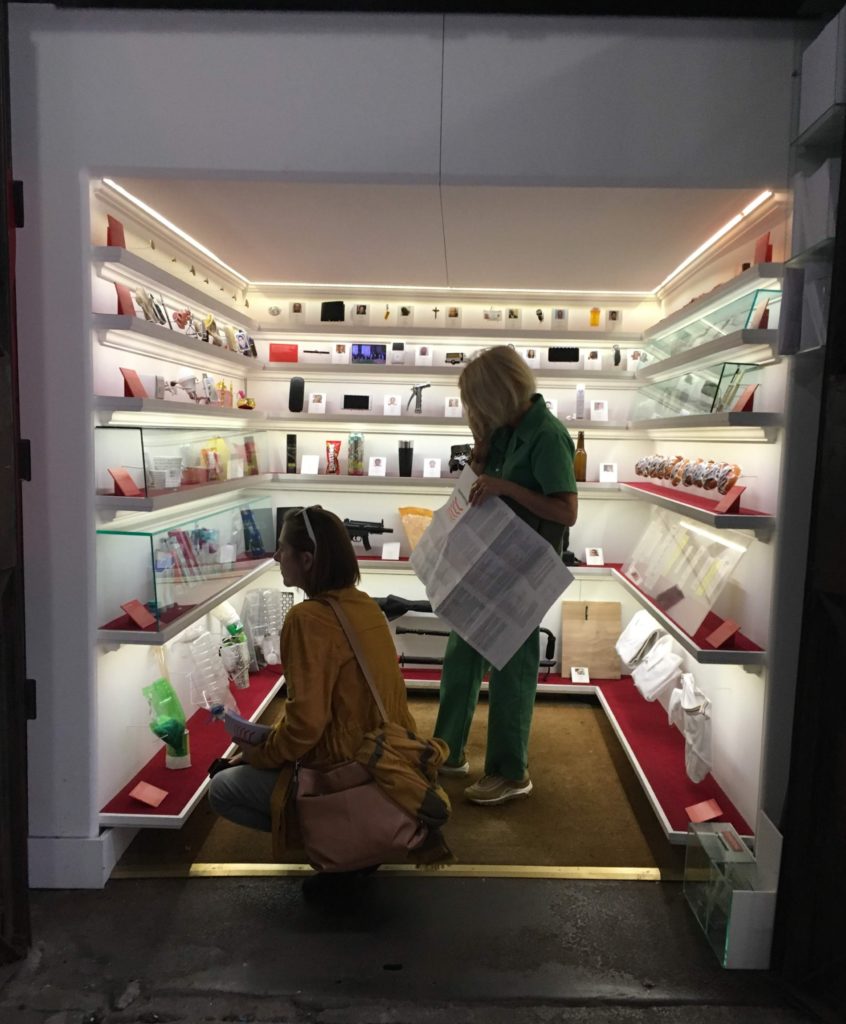
My Place is New York City’s smallest museum, the Mmuseumm, housed in a decommissioned freight elevator shaft at 4 Cortlandt Alley. Free to the public.
The Mmuseumm is a “style of storytelling about the modern world. It is a contemporary natural history museum. It is a design museum about people. It is Object Journalism.” Founded by Alex Kalman, Benny and Joshua Safdie in 2012, the Mmuseumm frames itself as a contemporary Wunderkammern composed of artifacts, ephemeral objects, and evidence of human existence. Every shelf is a curated collection of objects accompanied with a red label noting provenance and a collection statement.
These objects are like records “disembedded from their creation and extracted into systems that allowed them to be used,” in this case viewed within a museum setting (Caswell, 2016, p.5). As information professionals we create networks of relationship between documents within collections and fonds. We assess the value of documents and attempt to predict its usefulness for an imagined future user. One of the exhibitions, Objects of Collapse, in collaboration with Patricia Laya (2018), features items purchased in Venezuela. When isolated, the knock-off Oreo cookies (Oieo Cookies) seem like an endearing rip-off. However, when placed on a shelf amongst fourteen other knockoff products, the visual evokes a darker narrative about counterfeits, economics, and social-political environments.
My fascination with the Mmuseumm model is their focus on curating “non-art objects,” questioning the value of artwork displayed in traditional institutions of authority. Is this form of radical cataloging? Mmuseumm turns the lens to banal objects that once placed amongst a collection become imbued with meaning and significance. The elevator shaft becomes a microcosm of the world as well as an actualized metaphor of an archive, instead of a database, users step into an elevator shaft and visually scrolls through the rows of documents.
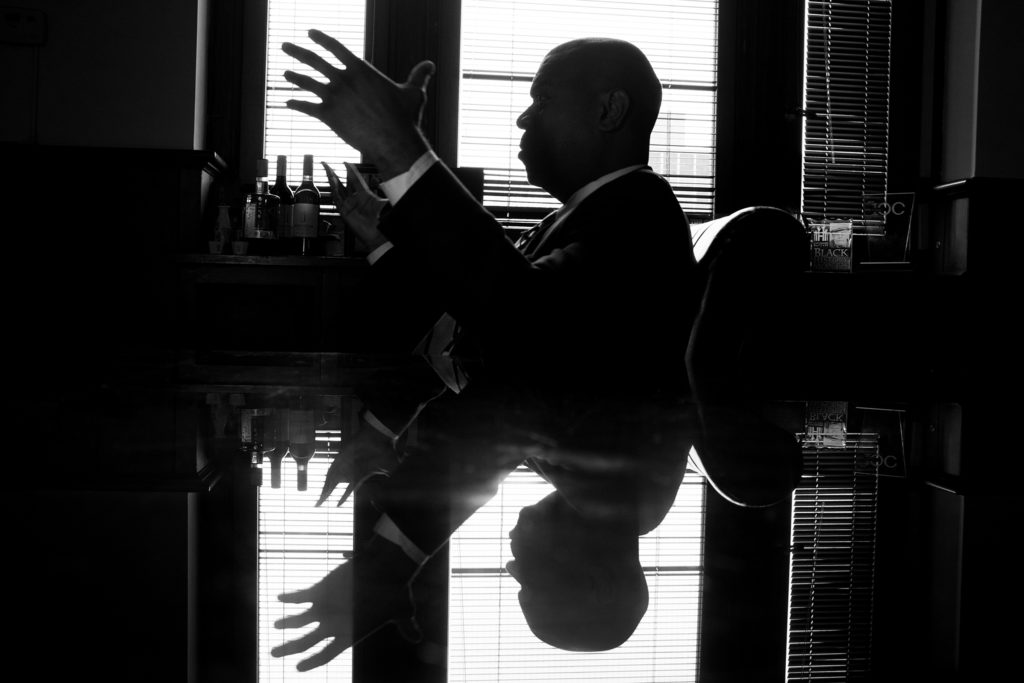
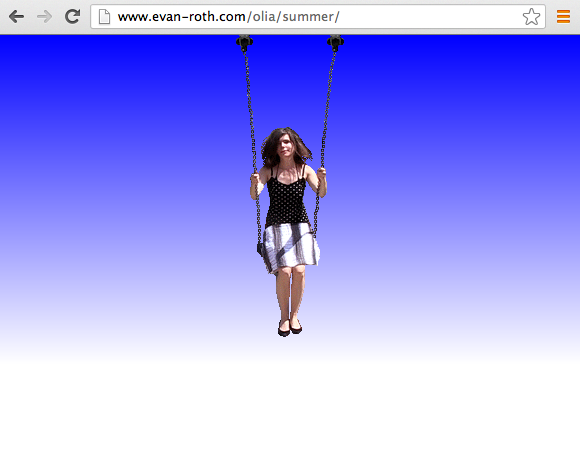
My Person is Olia Lialina, a net artist, archivist, and co-author ofDigital Folklore (2009) a book about various facets of amateur digital culture from meme’s to DIY electronics.
I first came across Lialina through a video interview in Quartz about early amateur websites from the 90’s. Lialina uses the Internet as a medium while at the same time analyzing the relationship between users and the changing digital landscape. Having a background in fine arts, I’m drawn to Lialina’s practice that blends the line between art and digital archiving. Sometimes labeled as a “net-crusader,” she advocates for the importance of early Internet culture. This includes examples of personal web pages in the 90’s and DIY websites before the rise of subscription site creators like Squarespace and Wix. By preserving these “amateur” websites, Lialina creates context for how the relationship between the user and the World Wide Web has evolved.
She co-created One Terabyte of Kilobyte Age, a Tumblr feed that posts screenshots of GeoCities websites every 20 minutes. The screenshots are sourced from one terabyte of GeoCitie sites archived by The Archive Team in 2009 when Yahoo announced it was no longer hosting the web service. This Tumblr feed is an image bank and resource for users to access the early internet through digital surrogates of GeoCities. It should be noted that Yahoo acquired Tumblr in 2013, bringing into question how long will Tumblr continue to be hosted?
Digital Folklore is composed of essays exploring digital vernacular and the evolution of the “user.” Lialina and co-author Dragan Espenschied define Digital Folklore as:
“[E]ncompassing the customs, traditions and elements of visual, textual and audio culture that emerged from users’ engagement with personal computer applications during the last decade of the 20th and the first decade of the 21st century.”
(Lialina 2009)
We’ve discussed in our Information Foundation class, the powerful role archivists have in determining our social memory and assigning value to what is preserved and what is not. Yahoo’s decision to no longer host GeoCities, potentially driven by the lack of economic profit, reflects a devaluing of early Internet culture. Without archivists like the Archives Team, acknowledging the cultural value of this niche Internet world, we as a culture would have lost evidence of how the early World Wide Web was utilized. Through her work and application of these digital archives, Lialina demonstrates similar tenants of archival theory to create diverse and inclusive collections.
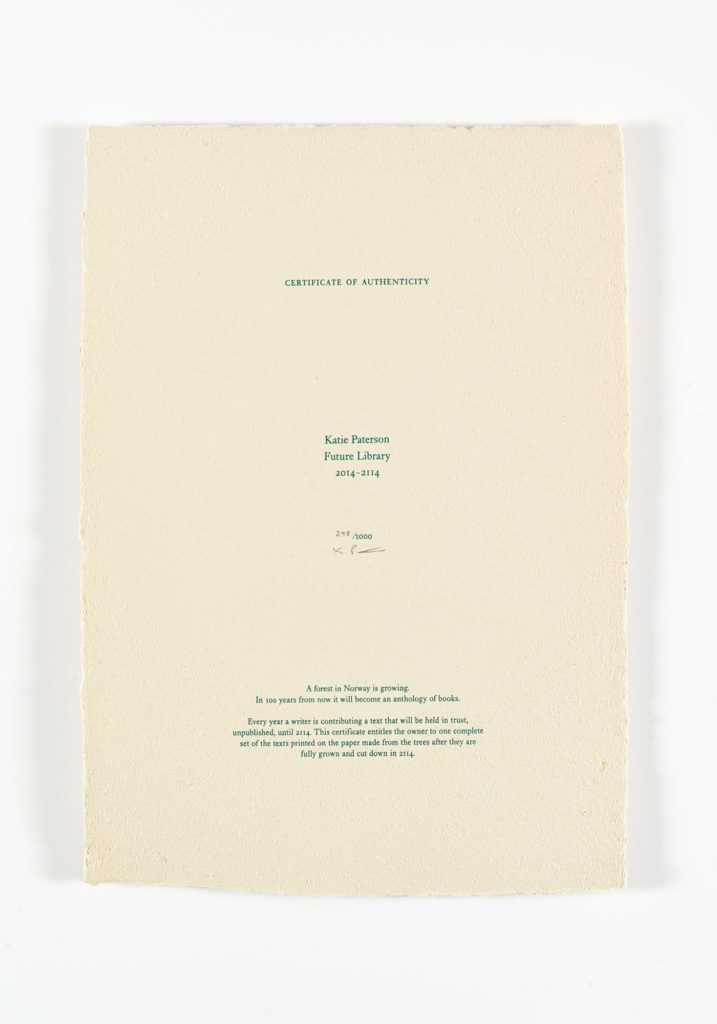
This work of art that will span one hundred years began with planting one thousand trees in a forest outside of Oslo, Norway in 2014. The forest “will supply paper for a special anthology of books to be printed in 100 years time. Between now and then, one writer every year will contribute a text, with the writings held in trust, unread and unpublished, until the year 2114” (Paterson). Patterson is known for creating works of art that utilize time as a material, creating tangible expressions of geological and deep time. Check out the The Fossil Necklace for another example.
An aspect of the information profession that intrigues me is the duality of information and time. Archivists try to determine methods of preserving documents for future users while simultaneously negotiating what documents a future user will want to access. This piece has created an archive of unknown contents where authors are writing manuscripts for an unknown audience. The manuscripts will be housed in the New Deichmanske Library, opening in 2020 in Bjorvika where “the authors’ names and titles of their works will be on display, but none of the manuscripts will be available for reading– until their publication in one century’s time” (Paterson). I keep thinking of Sue McKemmish’s quote, “records [are] always in a process of becoming” (Caswell 2016).
I wonder what guidelines or ethical “value” systems the Future Library Trust follows to nominate authors and how the charge reflects our information role to select, retain, record, archive, and promote. How will this project be passed along to the next generation of caregivers maintaining the forest and the stewards of this evolving library?
Olia, Lialina. Espenschied, Dragan. (2009). Preface: Do you believe in Users? Retrieved from https://digitalfolklore.org/
Quartz. (2019, July 18). The early internet is breaking – here’s how the World Wide Web from the 90s on will be saved. Retrieved from https://www.youtube.com/watch?v=2LzyRcLJdlg