Evaluating Impact in the “Forgotten Field” of Prison Librarianship[1]

Jay Rosen 

601 Research Paper

“There have been plenty of articles — too many, it seems sometimes — that describe prison libraries, say they are useful as rehabilitative tools, and stop there.” (Barone, 1977)

For decades, a number of prison librarians and researchers have decried the near-total lack of data in their field regarding the impact of prison libraries on incarcerated individuals. In spite of their critiques, the majority of prison library literature remains descriptive in nature and relies more on speculation than empirically valid claims when describing impact. This paper attempts to identify the main reasons why it is so difficult to adequately evaluate the impact of prison library services. Chief among these include the diminishment of prison library services in America following the Supreme Court’s 1995 Lewis v. Casey decision; professional divides and isolation within the field of prison librarianship; the uniquely complex challenges faced by inmates; difficulties inherent in evaluating impact; profound variations in the missions, resources, and institutional contexts of prison libraries; lack of attention towards impact evaluation in foundational prison library guideline documents; and generally inadequate and understaffed prison library facilities.  

Following an exploration of these issues, suggestions for strengthening impact evaluation in prison libraries are proposed, including enhanced advocacy efforts towards politicians, funders, and the public; increased partnerships with public libraries; an explicit adoption of the “public library model” by prison libraries; inclusion of library professionals in relevant policy discussions; improved communication between prison librarians and correctional staff; increased collaboration between re-entry efforts, prison education programs, and prison libraries; strengthening of administrative procedures; general clarification of prison library services; extension of relevant public library initiatives to prison libraries (for instance, the Public Library Association’s Project Outcome initiative); and the development of a more robust theoretical context on which to ground subsequent research.

In discussing the challenges prison libraries face, this paper will focus primarily on American state and federal adult correctional institutions with “full service” libraries. This paper will not consider prison law libraries, although many claims made concerning impact evaluation are likely applicable to those environments as well. Perspectives from Denmark, Norway, and elsewhere across the world are also included.

The Value of Evaluation

Given that most prison libraries are underfunded and understaffed, one can hardly fault prison librarians — often the only permanent, full-time, formally-trained staff member in their library — for prioritizing direct service over data collection. In light of this reality, it is at times tempting to ask why impact evaluation matters in the first place, particularly when resources are so scarce and prison librarians’ time so limited. However, impact evaluation shows great promise in regards to ameliorating these very issues. To name a few benefits, improved impact evaluation can help strengthen decision-making, resource allocation, delivery of services, and funding for prison libraries (Lithgow & Hepworth, 1993). While this paper will not attempt to exhaustively defend the importance of impact research, this section will serve to introduce some of its most significant benefits in this context. 

Connections have frequently been made between data collection and improved advocacy efforts. Vogel writes, “The odds of maintaining or even expanding the library can be increased by a librarian who represents the library program as a major contributor to the development of the reading and information skills of the entire incarcerated community” (Vogel, 2009). Data reflecting the connection between prison libraries and the development of desirable qualities and behaviors can go a long way in securing potential funding and portraying prison libraries as valuable institutions deserving of attention and support. Compelling reports can be “invaluable” in convincing prison administrators to approve requests for increased budgets and materials as well (ALA, 1992).   

In a similar manner, improved data collection helps to ground prison libraries in ongoing discussions and research on re-entry, inmate education, and prison reform more generally. As will be highlighted later, prison librarians likely have a great deal to contribute to these conversations, yet are almost entirely absent from them today.  

It is estimated that roughly half the world’s prison population — over 5 and a half million people — use prison libraries in some capacity (UNESCO, 2019). Better evaluating the impact of prison library services will not only provide information on how prison libraries are used today, but also offer opportunities for librarians and researchers to critically assess and refine services going forward. 

Most significant, though, is the largely unrealized role prison libraries might play in facilitating successful re-entry and reducing recidivism. The vast majority of inmates in America are ultimately released from prison back into society — some estimates put this figure as high as 95%.[2] This is likely to remain the case for the foreseeable future, as many people incarcerated during the so-called “War on Drugs” continue to be released, and as a growing number of prisons release inmates early in response to budget shortfalls (Stearns, 2004). Though most inmates in America will eventually be released, 43% of them will return to prison at least once (Pew Research Center, 2011)[3]. Better understanding the impact of prison libraries will enable librarians to strengthen their services in order to encourage positive outcomes and lower recidivism rates for this population. 

Moreover, improving prison library services will likely improve literacy and education rates for individuals re-entering society, thereby helping to reduce costs associated with higher crime, incarceration, and re-incarceration. These financial benefits would be matched only by the improvements in public safety that result from decreased crime. 

In short, improved impact evaluation will strengthen prison library services, thereby increasing their positive potential and providing compelling evidence for their continuation and expansion. 

The Mission and Purpose of Prison Libraries Today

Before delving into the particular challenges faced by prison libraries in regards to impact measurement, it is useful to first clarify their primary aims. Prison libraries first emerged in Europe and the United States throughout the 17th century as a means of providing “moral and religious education” to inmates (Garner, 2017). The first prison “librarians” were actually clergymen who dispensed religious books to prisoners in the hopes of encouraging their “spiritual and moral reading and training” (UNESCO, 2019). Under this arrangement, prison library collections consisted entirely of approved religious texts, with books that served primarily to entertain (novels for example) strictly forbidden. 

This model of prison libraries persisted through the early 20th century, until the idea of reading for “educational purposes and for emotional, personal and intellectual development” (UNESCO, 2019) began to gain traction. In fact, not until 1970 were prison libraries formally recognized in the United States as institutions promoting “wholesome recreation, direct and indirect education, and mental health” (Lehmann 2011). Today, prison libraries have largely adopted the public library philosophy of promoting information access as an unconditional human right, and have developed policies and collections intended to meet the diverse information needs of their patrons. Their mission has expanded tremendously beyond offering spiritually edifying materials to include providing contact to outside communities, supporting rehabilitative programs, offering information on vocational skills, providing informal educational programming, encouraging self-directed recreational reading, providing access to legal information and the courts, and attempting to generally prepare inmates for re-entry (ASGCLA 1992). 

Though the missions and resources of individual prison libraries vary depending on the needs of their patrons and the restrictions and allowances of the correctional facility they are embedded in, most can easily be placed into six of eight roles of public libraries as identified by the Public Library Association (PLA): these include Community Activity Center, Community Information Center, Formal Education Support Center, Independent Learning Center, Popular Materials Library, and Reference Library.  

A number of national and international documents guide and govern the development and implementation of prison library services around the world. Commonly cited guidelines include the American Library Association’s (ALA) Library Bill of Rights, Freedom to Read Statement, Freedom to View Statement, and Policy on Confidentiality of Library Records; the Association of Specialized and Cooperative Library Agencies’ (ASGCLA) Resolution on Prisoners’ Right to Read and Library Standards for Adult Correctional Institutions; the Council of Europe’s European Prison Rules; the United Nations’ Standard Minimum Rules for the Treatment of Prisoners; and the International Federation of Library Association and Institutions’ (IFLA) Charter for the Reader.

As the missions of prison libraries have expanded, so too have their intended outcomes. Common intended impacts of prison libraries include improved literacy skills, information literacy, and the development of “critical reasoning skills, self-confidence, self-esteem, empowerment, and changed perspectives” (Warr, 2016), as well as the strengthening of hope, motivation, social bonds, and mental health for inmates (Finlay & Bates 2018). 

A chief motivation for the expansion of purpose and intended impact in prison libraries is the apparent success of correctional education programs in reducing recidivism rates and promoting successful reentry (Wilhelmus, 1999). But despite a clearer articulation of their purpose and intended outcomes than perhaps ever before, most prison libraries around the world remain plagued by a lack of empirical data testifying to the actual impact of their services. The next section will review the many reasons this is so.  

Challenges in Evaluating Impact in Prison Libraries

Librarians and researchers have lamented the scarcity of empirical evidence on the impact of library services on incarcerated users for at least sixty years now. David M. Gillespie’s 1968 analysis of prison library literature describes a prevailing overreliance on description over evaluation of prison library services (Gillespie, 1968), and the American Friends Service Committee similarly declared in 1971 that prison library literature lacks “credible scientific data on the effectiveness of correctional treatment program” (Barone 1977), with most programs determining their effectiveness not through rigorous research but rather “speculation.” These early concerns appear to have been largely ignored, and most in the field have not yet heeded calls to provide empirical data to buttress claims of positive impact. The situation has so little improved that one can scarcely tell whether particular pleas for increased research and data collection were published fifty years ago or in 2018. 

Why has this remained such a pervasive and largely unaddressed issue? What barriers prevent librarians and researchers from evaluating the impact of prison library services on inmates? This section identifies a number of distinct but overlapping problem areas. 

Difficulties in Evaluating Impact 

Notwithstanding the particular challenges faced by prison libraries, it is notoriously difficult to compellingly demonstrate causal relationships between particular factors and particular outcomes. Because there are so many forces at play in any individual’s life in a given moment, it is incredibly difficult to isolate any one aspect and argue for its particular impact. This fact helps explain why so many accounts of prison library impact rely on anecdotal evidence and largely unsubstantiated claims. Though it is tempting to make connections between library use and improved outcomes for inmates based on sentiment and observation alone, “the reason for an inmate’s success or failure is probably more complicated, [and is] produced by many factors, including criminogenic needs, risk principles, and the complicated interaction between an inmate and their institutional environment” (Stearns, 2004). Were prison librarians and researchers to dramatically improve impact evaluation tomorrow, it would remain exceedingly difficult to make conclusive, causal claims about the impact of particular library resources on particular inmate outcomes. As the esteemed social scientist Raj Chetty puts it, “there are so many things data may be trying to say” (Cook, 2019). 

Both quantitative and qualitative data present particular challenges in regards to impact evaluation. Though quantitative data is typically more tangible and easily collected than qualitative information, it is frequently misleading and limited. Ratios of library materials to inmates were often cited as a measure of success for prison libraries, despite the fact that prison library collections were mostly “outdated, little used, and sometimes inaccessible” (LeDonne, 1977). Other “hard data” including circulation statistics, number of patron interactions, and library program attendance, for example, likewise say very little about the quality of a patron’s experience, and can inadvertently foster inaccurate narratives.  

A greater consensus exists these days regarding the importance of gathering qualitative data to demonstrate impact. However, qualitative data presents its own set of challenges. For one, it is generally difficult to assess phenomena related to behaviors, attitudes, and other aspects of “human experience and development” (Finlay & Bates, 2018). Though many advocate for prison libraries on behalf of their ability to provide solace and “generate a feeling of normalcy” (UNESCO, 2019) for their users, it is hard to capture these invisible characteristics through data collection. This is true of many of the other behaviors prison libraries seek to encourage, including improved self narratives, identity development, and increased confidence pursuing self-directed learning opportunities (Warr, 2016). Is it possible, though, to provide objective evidence of subjective changes? 

Impact evaluation research also suffers from conceptual, methodological, and management issues. Conceptual issues relate “to the definition of library effectiveness, to who judges effectiveness, and to the definition of information needs and uses” (Vanhouse, 1989). Methodological issues instead relate “to the data collection methods, sampling, and statistics” used, while managerial issues “address the appropriate use and interpretation of measurement data” (Vanhouse, 1989). These issues spur complex and ambiguous questions which lack a “single, operational definition” (Vanhouse, 1989).  

Other issues related to impact measurement in prison libraries include the fluidity of user needs, attempts by inmates to conform to the measures of particular studies, and the fact that most inmates are not followed up with by researchers after their release (Barone, 1977). 

Taken collectively, these factors encourage caution when gathering and assessing data in prison libraries: 

“While we may be able to construct abstract models of the relationship between library actions and output measures, in practice the complexity of the library and its environment interferes with attempts to understand and manipulate output measures…They should be used with caution and an understanding of their limitations” (Vanhouse, 1989). 

Recent research similarly testifies to the challenges of identifying “an appropriate means of measuring outcomes and evaluating change” (Behan, 2014) in as unique and complex an environment as prison. This is not to suggest that such attempts cannot and should not be made. Rather, one should be mindful of the specific limitations, challenges, and pitfalls inherent to evaluating impact. 

Lack of Research and Attention 

With few exceptions, documents offering policies and guidelines for prison libraries devote marginal attention to assessing and evaluating prison library services. IFLA’s Guidelines for Library Services to Prisoners provides one sentence on measuring impact following their 94 distinct recommendations, only suggesting that libraries should conduct performance evaluations every “3-5 years.” UNESCO’s Books Behind Bars report likewise contains only a few words on impact evaluation. The same is true of prison library literature more broadly. Clark and MacCreaigh’s Library Services to the Incarcerated offers only a two page appendix on “performance measures,” and many other works refer to data collection and performance measurement in passing or as a brief aside.  

That these otherwise comprehensive, thoughtful, and well-researched works offer only a few pages (or words) on impact evaluation is extremely telling of the lack of attention devoted to this issue. Impact evaluation is deserving of more than lip service, and organizations and individuals already invested in relevant research, advocacy efforts, and policy discussions have a role to play in more clearly articulating and developing guidelines on impact evaluation. 

A Highly Decentralized Field 

There exists a great deal of variation in regards to how individual prison libraries are established and embedded in particular correctional facilities. Some prison libraries belong to their institution’s education department, others exist within rehabilitation-centered departments, and still others exist independent of any formally defined correctional department. In addition, the degree of cooperation between prison libraries and nearby public library systems varies tremendously, with some libraries collaborating extensively with one another and others have no connection whatsoever. Every prison library, then, is unique in both its operation and relationship to relevant institutions. 

Unsurprisingly, prison libraries differ remarkably in regards to their missions as well. As a result, it is not uncommon for confusion and disagreement to arise regarding the purpose and structure of a prison library: Does the library exist primarily for recreation? To grant access to legal materials? To rehabilitate or “reform” inmates? To serve as a public library surrogate? 

Of course, variation amongst prison libraries is a natural reflection of their unique user groups, resources, and restrictions. However, this decentralization complicates efforts to create useful and widely applicable guidelines for impact evaluation in prison libraries. 

Diminishment of Prison libraries 

The precarious and diminished status of prison libraries in America is also central to understanding the general lack of research and data in this field.  

The Supreme Court’s 1995 Lewis v. Casey decision dealt a powerful blow to prison libraries across the United States. The decision affirmed prisoners’ constitutional right to access the courts, but further declared that this right is not violated when prisoners lack “legal research facilities or legal assistance” — so long as prisoners are not “substantially harmed” by their absence. Though this decision primarily affected prison law libraries, it was widely seen as a reflection of prison libraries’ diminished importance in the eyes of the courts (Vogel, 2009). 

Other factors undermining prison libraries in America include the embrace of high security “Supermax” facilities, a trend towards prison privatization, the economic recession of 2008 (leading to the freezing or elimination of many prison librarian and educator positions (Lehmann 2011)), the introduction of re-entry programs in isolation from prison library programs, and the continued funding of “faith based” initiatives that compete with prison libraries for limited funds (Vogel, 2009). 

 On a deeper level, prison libraries suffer from a punitive approach to incarceration on judicial and congressional levels. This approach — which emphasizes punishment over rehabilitation and desistance — also finds expression in the mass media, with the result that most Americans are “bombarded with fictionalized and docu-images of prison, prisoners, and prison life,” images which tend to represent incarcerated people as sinister, hyper-violent sociopaths (Vogel 2009). Significantly, these depictions often represent prison libraries as spaces where inmates become further radicalized, encounter dangerous ideas, or hatch criminal plans (Stearns, 2004). 

Lack of advocacy for prisoners and prison libraries both results from and exacerbates these caricaturized, negative portrayals. The ALA has come under fire for its insufficient lobbying efforts on behalf of incarcerated library patrons, with some arguing that the organization forgets — or refuses to acknowledge — “that prisoners are a library constituency too” (Vogel, 2009). In the absence of sustained public advocacy from larger library organizations, prison libraries are vulnerable to a lack of recognition and support from prison administrators, a situation that further contributes to their diminished state (Garner, 2017). 

 Further, prison libraries are neither guaranteed nor expressly prevented by any “federal laws, constitutional provisions, or Supreme Court decisions” (Vogel, 1997). As a result, prison libraries exist in a highly ambiguous legal gray area. Advocacy on behalf of increased legal protections for prison libraries might go a long way towards addressing the lack of empirical data in the field. 

Recent mainstream discussions about the devastating and disproportionate impacts of mass incarceration perhaps signal a change in our public attitudes towards prisons and their inhabitants. At the least, there seems a growing recognition that the majority of American prison conditions are not conducive to any form of rehabilitation (some research suggests the opposite, in fact). Nonetheless, the above examples demonstrate that hostile perceptions of prisoners and prison libraries lead to their diminishment and complicate efforts to evaluate their impact on one another. 

Inadequate and Understaffed Facilities 

The generally inadequate status of most prison libraries goes a long way in explaining the lack of substantive research in the field. Most accounts of prison libraries make reference to the financial challenges they face. “The library program is often the lowest in priority, usually lacking an adequate budget, facilities, personnel, and moral support from the administration and custodial staff” (Barone, 1977). More recent scholarship testifies to the persistence of these issues; “As a rule, prison libraries are insufficiently funded” (Šimunić, 2016) and remain “lowest on the priority list” of state library budgets (Vogel 1997).

Among other negative outcomes, the impoverished state of prison libraries results in extremely understaffed facilities. As previously mentioned, prison librarians are often the only permanent, professionally trained employee of their library, and are commonly assisted by inmates who work part-time or volunteer. Prison librarians are thus tasked with carrying out a wide range of tasks and frequently struggle to “develop user programs and activities beyond the very basic services” (UNESCO, 2019). It is worth noting, too, that these librarians often work in professional isolation and in a highly regulated, restricted, demanding, and sometimes stressful environment. Prisons further represent a particularly difficult and unfamiliar setting for most librarians by requiring “restricted access to information, high levels of censorship, and little to no access to information technology and other resources” (Finlay & Bates, 2018). 

As if these challenges were insufficient, prison librarians are charged with the near-Herculean task of meeting “the information and diverse reading needs of a large multicultural community whose members have involuntarily been forced to live together” (ALA, 1992). In an environment in which most librarians are simply trying to keep things afloat, it is easy to understand the near-complete absence of empirical data describing the impact of their services.[4] 

In addition, many prison libraries are staffed by correctional employees who lack expertise and training in delivering library services (Šimunić, 2016). Although the IFLA advocates staffing prison libraries with professionally trained librarians, there is little evidence of widespread adherence to this recommendation. It is therefore not uncommon for prison libraries to be managed entirely by prison officers and inmates, or at least for their day-to-day operations to fall under their purview. Of course, this arrangement is better than nothing, and is a reflection of the larger lack of care and support offered prison libraries today. Nonetheless, this arrangement represents a “major obstacle to future development and to the ultimate goal of building truly professional prison libraries” (Lehmann, 2011). 

Prison librarians also commonly lack computers and other technologies typically available in most other kinds of libraries. This complicates the tracking of basic internal operations and makes the systematic collection of empirical data immensely more difficult. In a similar vein, prison libraries are excluded from the Institute of Museum and Library Services’ (IMLS) Library Services and Technology Act, which allocates funds to be used for expanding services and accessing information resources (Lehmann, 2011). 

 Finally, prison librarians frequently lack autonomy and struggle for respect and understanding from other correctional staff. As Lehmann and Locke write, “in any profession that involves working with special populations, a narrow focus often develops in which the worker views that population only within the values and theories of that particular discipline” (Lehmann & Locke, 2005). It goes without saying that librarians and most other correctional employees operate under quite different and perhaps incompatible goals and principles. In the context of prison libraries, the “narrow focus” of each camp usually manifests in perceptions of librarians as naïve, easily manipulated “do-gooders” and correctional staff as apologists for a callous and oppressive system. It is important to note that neither view is “correct” or even useful; on the contrary, these perceptions prevent librarians and correctional staff from productively collaborating and understanding the other’s priorities and approaches. While this kind of relationship surely does not exist in every prison, it is a commonly referenced dynamic and a further obstacle to cultivating an atmosphere of trust, shared understanding, and mutual respect in prison libraries.  

In sum, disregard and lack of sufficient investment by library associations, politicians, funding institutions, and many correctional staff results in prison libraries that are often grossly underfunded and understaffed. This unfortunate reality makes the delivery of library services the primary aim of most prison librarians (quite reasonably so), and limits their ability to systematically evaluate the impact of their services.  

Professional Divides and Isolation 

Another factor contributing to the dearth of prison library research is the siloing of prison librarianship on multiple levels. Despite a surge of interest regarding inmate re-entry, relevant research and literature by and large fails to acknowledge the importance of skills encouraged by libraries (information literacy, for example) on the process of returning to society. Similarly, there is “an eerie lack of awareness about digital literacy and job preparation…in public policy guidelines” for re-entry programming” (Vogel, 2009). As a result, prison librarians are left “on the sideline” of most re-entry debates (Vogel, 2009). Librarians and library advocacy groups are similarly left out of most policy discussions regarding prisoners (UNESCO, 2019), who are themselves excluded from most education discourse (Vogel, 2009).  

A disconnect exists, too, amongst public and prison libraries. Though many public and prison libraries collaborate with one another to share staff and resources, no central guidelines exist to formalize this partnership. Initiatives developed by public libraries in regards to impact evaluation are therefore often not inclusive of prison libraries, or are never shared with them.[5] 

Finally, even if better communication between public and prison libraries was achieved, the LIS field itself has been called “isolated in considering the common problem of organizational effectiveness,” failing to draw on relevant research from the public and service sectors (Cameron & Whetten, 1983).

Seen in this light, prison libraries and prison librarians are isolated branches of an already isolated field. 

A Uniquely Challenging User-Group 

Though it is difficult to measure impact with any user group, it is perhaps more so with a population facing a disproportionate degree of personal, economic, educational, and social problems. On the whole, incarcerated individuals have lower levels of education and higher rates of illiteracy, suffer more from substance abuse and mental illness, and come from disadvantaged social and economic backgrounds at significantly higher rates than non-incarcerated populations. In addition, many incarcerated people in America struggle with technology and do not speak English as their first language (Lehmann, 2011). As a result of these disproportionate disadvantages, they are frequently considered a “unique user group with special needs” (Lehmann, 2011).
           

These problems disproportionately affect inmates even in countries with prison systems considered more modern and humane; Scandinavian inmates likewise experience the same personal, social, and economic problems at higher rates than most civilians in these countries (Ljødal, 2011). This fact raises broader questions about the links between membership in disadvantaged minority groups and incarceration. For the purpose of the paper, however, these examples are raised in order to demonstrate the difficulties prison librarians face in attempting to meet the diverse information needs of underserved individuals facing often immense challenges in a number of areas. 

Improving Impact Evaluation in Prison Libraries        

Given this multitude of challenges, what can be done to improve the measurement of prison library services?            

To begin, most prison libraries would do well to clarify and formalize their primary services and objectives. This clarification will help determine an initial sense of overall effectiveness, and will indicate which measures are important to track. “Once roles have been selected and programs developed to support those roles, measurement of the quality of the library service becomes more exact” (ALA, 1992). Clarifying services and objectives through written policies and informal discussions might also bring attention to previously unacknowledged funding sources.           

Dissolving professional and institutional barriers can also go a long way in empowering prison librarians to better measure the impact of their services. Unanimously adopting the “public library model” will help prison libraries align with “the professional standards and ethics of the wider library profession” (Finlay & Bates, 2018). This alignment has occurred in Denmark and other Scandanavian countries, resulting in enhanced cooperation and greater access to resources and support for prison librarians (Ljødal, 2011). Increased communication and support can also be sought out between LIS professionals, researchers, and correctional staff in order to reduce hostility and “produce empirical studies that not only help the library…but can enrich both the fields of librarianship and criminology” (Stearns, 2004).            

Prison libraries can also play an increased role in relevant policy discussions amongst stakeholders and the judicial system, and can seek to establish “national and regional prison library networks and associations” (UNESCO, 2019). This would result in the creation of policy documents and practical guidelines informed by prison librarians and reflective of their ongoing experiences. Consulting prison librarians throughout the prison construction process would also lead to the establishment of optimally designed and functional library facilities; Norway is one country which regularly consults library professionals when constructing and renovating prisons (Ljødal, 2011). All of these suggestions will serve to increase representations of prison librarians in valuable processes and discussions, contributing to the creation of an atmosphere more conducive to impact evaluation.            

Similarly, increased connections can be made between re-entry efforts and prison libraries. In recent years, many state prisons have introduced re-entry curricula that include classroom instruction and assignments related to personal development, education opportunities, and financial literacy, among others (Vogel, 1997). Prison libraries have a great deal to contribute to these programs and to the fields of re-entry research and inmate education more generally; “We argue for wider inclusion of the library in contemporary research on prisoners’ experiences of learning” (Finlay & Bates, 2018).            

Public library initiatives intended to improve impact evaluation can also be adapted and extended for prison libraries. PLA’s Project Outcome initiative offers standards and tools — including survey management options, data visualizations, training resources, and custom report builders — to be used in measuring the outcomes of public library services and programs. Furthermore, data generated through this project can be shared, viewed, and discussed online, allowing library professionals to see how their particular results compare to state and national averages. Since its introduction in 2015, Project Outcome has been widely praised and expanded for academic library settings. There is no apparent reason why this initiative cannot be tailored for prison libraries as well.            

The development of a more expansive and robust theoretical context for prison libraries will provide a strong foundation on which subsequent research and data collection can occur; “A larger body of empirical evidence, grounded in relevant theoretical constructs, is needed to truly understand the role of the library in the lives of prisoners” (Finlay & Bates, 2018).  The development of “sound ideas” regarding the function and goals of prison libraries will also provide clarity and a greater degree of autonomy to prison librarians. Holistic theoretical models for prison libraries have been proposed in recent years and center on desistance research, criminogenic factors, and insights from the fields of psychology, education, and medicine, among others (Finlay & Bates, 2018). Situating the theoretical context of prison librarianship in relevant adjacent fields will encourage “interdisciplinary examinations of inmates and how prison affects them” (Stearns, 2004), and offer insights that could not be gained in isolation.             

Finally, more aggressive and sustained advocacy can be pursued in order to improve the public perception and financial status of prison libraries. Successful advocacy efforts aid in creating a culture that recognizes prison libraries as “vital contributors to the field of corrections” (Stearns, 2004) and highlight their role in promoting “recreational pursuits, education, literacy improvement, and socialization” (Ljødal, 2011). As previously discussed, advocacy is also central to increasing visibility among funders, stakeholders, and others “responsible for increasing noncustodial budgets” (Vogel 2009). 

Conclusion            

Prison libraries face significant challenges in regards to evaluating the impact of their services. At the same time, numerous reforms can be pursued in the short and long term in order to begin enhancing and formalizing data collection processes. Improving the measurement of prison libraries services will benefit inmates, library and correctional staff, researchers looking to better understand the role prison libraries play in facilitating re-entry, and anyone seeking to convince funders, politicians, and the public of prison libraries’ largely unrealized value and potential.

Bibliography

American Correctional Association, & Freedman, E. I. (Eds.). (1950). Library manual for correctional institutions: A handbook of library standards and procedures for prisons, reformatories for men and women and other adult correctional institutions. New York.

Association of Specialized and Cooperative Library Agencies (Ed.). (1992). Library standards for adult correctional institutions, 1992. Chicago: ALA.

Barone, R. M. (1977). DeProgramming Prison Libraries. Special Libraries.

Behan, C. (2014). Learning to escape: prison education, rehabilitation and the potential for transformation. Journal of Prison Education and Reentry, 1(1), 20-31. http://dx.doi.org/10.15845/jper.v1i1.594

Books beyond bars: The transformative potential of prison libraries—UNESCO Digital Library. (n.d.). Retrieved November 14, 2019, from https://unesdoc.unesco.org/ark:/48223/pf0000369835

Clark, S., & MacCreaigh, E. (2006). Library services to the incarcerated: Applying the public library model in correctional facility libraries. Westport, Conn: Libraries Unlimited.

Collection Development and Circulation Policies in Prison Libraries: An Exploratory Survey of Librarians in Us Correctional Institutions. (2012). Library Quarterly, 82(4), 407–427. https://doi.org/10.1086/667435

Conrad, S. (2017). Prison librarianship policy and practice. McFarland & Company, Inc., Publishers.

Cook, G. (2019). Raj Chetty’s American Dream—The Atlantic. Retrieved October 20, 2019, from https://www.theatlantic.com/magazine/archive/2019/08/raj-chettys-american-dream/592804/

Coyle, W. (1987). Libraries in prisons: A blending of institutions. Greenwood Press.

Dalton, M. (2013). There is a Lack of Standardization in the Collection Development and Circulation Policies of Prison Library Services. Evidence Based Library and Information Practice, 8(2), 248–250. https://doi.org/10.18438/B8R611

Finlay, J., & Bates, J. (n.d.). What is the Role of the Prison Library? The Development of a Theoretical Foundation. 20.

Hughes, T. & Wilson, D.J. (2011). Reentry trends in the U.S. Retrieved November 25, 2019 fromhttps://www.bjs.gov/content/reentry/reentry.cfm

IFLA — Guidelines for Library Services to Prisoners. (n.d.). Retrieved November 21, 2019, from https://www.ifla.org/publications/ifla-professional-reports-92

LeDonne, M. (1977). Survey of Library and Informational Problems in Correctional Facilities: A Retrospective Review. LIBRARY TRENDS, 18.

Lehmann, V. (2003). Planning and Implementing Prison Libraries: Strategies and resources. Retrieved October 8, 2019, from https://journals.sagepub.com/doi/abs/10.1177/034003520302900406

Lehmann, V., & Locke, J. (2005). Guidelines for library services to prisoners (3rd ed). The Hague: IFLA Headquarters.

Lehmann, V. (2011). Challenges and Accomplishments in U.S. Prison Libraries. Library Trends, 59(3), 490–508. https://doi.org/10.1353/lib.2011.0001

Lehmann, V. (2011). Library and information services to incarcerated persons: Global perspectives. Baltimore, Md.: The Johns Hopkins Univ. Press.

Lewis v. Casey, 518 U.S. 343 (1996). (n.d.). Retrieved from https://supreme.ustia.com/cases/federal/us/518/343/.

Lithgow, S. D., & Hepworth, J. B. (1993). Performance measurement in prison libraries: Research methods, problems and perspectives. Journal of Librarianship and Information Science, 25(2), 61–69. https://doi.org/10.1177/096100069302500202

Ljødal, H. K., & Ra, E. (2011). Prison Libraries the Scandinavian Way: An Overview of the Development and Operation of Prison Library Services. Library Trends, 59(3), 473–489. https://doi.org/10.1353/lib.2011.0010

Rada Europy. (2006). European prison rules. Strasbourg: Council of Europe Publ.

Rubin, R. J., & Suvak, D. (1995). Libraries Inside: A Practical Guide for Prison Librarians. McFarland and Company, Inc.

Shofmann, F. (2016). Performance Measurement. Retrieved November 21, 2019, from Public Library Association (PLA) website: http://www.ala.org/pla/initiatives/performancemeasurement

Šimunić, Z., Tanacković, S. F., & Badurina, B. (2014). Library services for incarcerated persons: A survey of recent trends and challenges in prison libraries in Croatia. Journal of Librarianship and Information Science48(1), 72–89. doi: 10.1177/0961000614538481

State of Recidivism (n.d.). Retrieved from https://www.pewtrusts.org/en/research-and-analysis/reports/0001/01/01/state-of-recividism.

Stearns, R. (2004) The Prison Library: An Issue for Corrections, or a Correct Solution for Its Issues? Behavioral & Social Sciences Librarian, 23:1, 49-80.

UN Standard Minimum Rules for the Treatment of Prisoners. (n.d.). Retrieved from https://www.unodc.org/pdf/criminal_justice/UN_Standard_Minimum_Rules_for_the_Treatment_of_Prisoners.pdf

Vanhouse, N. (1989). Output Measures in Libraries. Library Trends, (38): 2. University of Illinois.

Vogel, B. (1997). Bailing out Prison Libraries: The Politics of Crime and Punishment Frame the Crisis in Prison Library Service. Library Journal, (19): 35.

Vogel, B. (2009). The prison library primer: A program for the twenty-first century. Scarecrow Press.

Warr, J. (2016). Transformative dialogues: (Re)privileging the informal in prison education. Prison Service Journal, 225, 18-25.

Whetten, D. A., & Cameron, K. S. (1991). Organizational effectiveness: a comparison of multiple models. San Diego (California): Academic Press.

Wilhelmus, D. W. (1999) A new emphasis for correctional facilities’ libraries. Journal of Academic Librarianship, 25(2), 114-120. https://doi.org/10.1016/S0099-1333(99)80009


[1] The term “forgotten field” was first used by Suzanna Conrad in her 2017 work, Prison librarianship policy and practice. Conrad, S. (2017). Prison librarianship policy and practice. McFarland & Company, Inc., Publishers.

[2] This according to the Bureau of Justice Statistics’ 2011 Reentry trends in the U.S. report. Hughes, T. & Wilson, D.J. (2011). Reentry trends in the U.S. Retrieved fromhttps://www.bjs.gov/content/reentry/reentry.cfm

[3] https://www.pewtrusts.org/en/research-and-analysis/reports/0001/01/01/state-of-recidivism

[4] It is worth noting, too, that many librarians have little to no training in statistics, data analysis, and performance measurement (Vanhouse, 1989). This presents somewhat of a catch-22, as outside researchers have been shown to influence behavior and shape experimental results in undesired ways (Lithgow & Hepworth, 1993).

[5] Take, for example, the Public Library Association’s (PLA) Output Measures for Public Libraries — a set of standards “widely used in the public library community” (Vanhouse, 1989) — as well as PLA’s more recent Project Outcome initiative. While the latter was recently expanded for academic library settings, there is no indication that the PLA has considered adapting these resources for prison libraries.

Bringing the Cloud Back Down to Earth

BY BLAIR TALBOT

On Sunday, October 20th I attended the Radical Networks conference and attended two talks: The Carbon Footprint of the Internet with Jasmine Soltani and Everything has a Resonant Frequency: Crystals, Networks, and Crystal Networks with Ingrid Burrington. Both talks covered a lot of ground (or rather, earth) on the sweeping topic of the environmental impact of the Internet and the manufacture of its physical infrastructure by two very broad thinkers whose research has forged ahead in areas where concrete data is hard to come by.  For clarity and concision, I will focus on my main takeaways from the first talk, the Carbon Footprint of the Internet.

Soltani began her talk by explaining the bottom-up approach she and other activists have taken to calculating the carbon footprint of the Internet in the absence of definitive, trustworthy sources: identify all the components and processes that make up the Internet, calculate the energy consumption of each, and identify the energy sources of each and convert that energy amount to the CO2 equivalent. To date there still exists no surefire way to calculate the carbon footprint of the Internet, and therefore estimates of the energy intensity of the Internet diverge by a factor of 20,000, which can in part be explained by different definitions of what the Internet is and what it includes (Hilty & Aebischer, 2015).

Current estimates state that the Internet accounts for about 3% of global greenhouse gas emissions (Belkhir & Elmeligi, 2018), which is both significantly less than what I would have predicted and still too abstract to comprehend.  For comparison, in Greenpeace’s suspiciously optimistic 2014 report on renewable energy and the Internet, Clicking Clean: How Companies are Creating the Green Internet, the authors state that if “the Cloud” were a country, it would be the 6th largest consumer of electricity on the planet (Cook et al., 2014).

One fact that is generally agreed upon is that the most energy consumptive element of the Internet is the manufacture and maintenance of its physical infrastructure, beginning with client devices (49%), Telecom infrastructure (37%), and data centers (14%; The Climate Group, 2008). For example, client devices, which refers to all of the devices we use to access the Internet (mobile phones, tablets, laptops, desktops, etc.) account for the highest proportion of energy consumption; depending on the study, estimates vary from 40% (Belkhir & Elmeligi, 2018) to 53% of the total energy consumption of the Internet (Raghavan & Ma, 2011).  Most of this energy consumption is due to the manufacturing phase of client devices (referred to variously as either Embodied Energy or Grey Energy) and accounts for 45-80% of the total device life cycle energy (Hischier et al., 2015). 

There are numerous complications with this measure and others like it because not all of these devices are used to access the Internet 100% of the time—someone can use a laptop to write a paper, for instance, without ever using the Internet, nor are device lifecycles consistent across all users—one person can use a phone for 6 months and another for 6 years. These are just some examples of the nuances that make definitive calculations about the carbon footprint of the Internet very difficult, if not impossible. (Ingrid Burrington touches on the difficulties these metrics pose in her article “The Environmental Toll of a Netflix Binge” in The Atlantic.)  I found Soltani’s research commendable because despite the scarcity of data available and the opacity of the data that does exist, she has forged ahead and brought attention to this timely topic.

What was also surprising about her talk—and where she differs substantially from Burrington—is she remains optimistic about the overall positive impact that the Internet could have in reducing net carbon emissions in other sectors despite the Internet’s own significant contributions to global greenhouse gas emissions. While she herself strays away from a techno-optimist stance, she does cite some suspiciously sanguine (and perhaps outmoded) views, such as those from an optimistic 2008 report by The Climate Group: “The scale of emissions reductions that could be enabled by the smart integration of ICT into new ways of operating, living, working, learning and traveling makes the sector a key player in the fight against climate change, despite its own growing carbon footprint,” (The Climate Group, 2008).  As an example of this, she mentioned that teleconferencing takes about 7% of the total energy cost that a face-to-face meeting would, taking into account factors like different modes of transportation, etc. (Ong et al., 2014).  

She does concede that other examples of the “dematerialization” of information, including the move from traditional modes of music and movie distribution to digital streaming platforms, have less of a positive environment impact: depending on the study, streaming video is either only slightly more efficient than DVD distribution (Shehabi et al., 2014), or has an even higher net energy impact that is still rapidly increasing (The Shift Project, 2019). Whatever the exact figure is, it is highly impactful due to the fact that video streaming accounts for 64% of all internet traffic (Ejembi & Bhatti 2015).

The onus of finding environmentally sustainable solutions to this predicament we are all in should undoubtedly lay with the tech companies and governments with the greatest carbon footprints, and not on individuals.  If one trusted the government to oversee the private sector, we could take inspiration from Paul Ford’s proposal to establish a government agency which he calls the Digital Environmental Protection Agency, responsible for protecting citizens in the event of repeated “data spills,” (Ford, 2018). How fitting, then, to also imagine tasking this hypothetical branch of a rotten bureaucracy with the additional task of disciplining the tech industry and cleaning up its messes.

Despite the absence of government legislation and private sector self-regulation, Soltani says that individual consumers can also take action.  Her suggestions include extending the life of your client devices, using ad blockers (online advertising is very energy consumptive), protecting your data privacy (the storing of your personal data is also energy consumptive), and “stream lower quality videos, I guess,” (Soltani, 2019).  All of these actions, save for electing to stream grainy YouTube videos, are all actions that have manifold benefits for consumers: less money spent on replacing devices and less personal data being collected, stored and sold to marketers and insurance companies at our citizenry’s expense. 

While these actions she suggests may benefit individual consumers and make a small environmental impact, they do nothing to challenge the structural logic of late techno-capitalism and its extractivist methodology.  Capitalism has always benefited from the dislocation of earth materials from Earth, the dematerialization of commodities and the invisibilization of labor. What is unprecedented at this stage of capitalism is that these existing abstractions of capitalist production have themselves become further abstracted and etherealized in the image of the Cloud. The semiotics of the Cloud further mystifies the terms of commodification and shrouds its mechanics in a blanket of mysticism. Divorcing the Internet from the materiality of the Internet in the image of the Cloud directly benefits the Internet’s profiteers and limits people’s ability to see the ideological machinery at work in their daily lives. 

To uncloak this mantle of mysticism surrounding the Cloud, Nathan Ensmenger proposes treating the Cloud as a “type of factory” and interrogating it as such:

[W]hat kind of a factory is it? Who works there, and what kind of work to they do, and how is it different from the type of work previously performed by factory workers? Where does it fit in a larger technological, labor, and environmental history of human industry? And perhaps most importantly, how did it come to be seen as categorically different? (Ensmenger, 2018, p. 20)

This historical-materialist critique of the Cloud is a promising start towards resituating the Internet in its material, political, social, and cultural context. Only by bringing the Cloud back down to Earth can we begin to imagine a more equitable distribution of power in our hyper-networked reality.

A Bolivian family at work at a salt mine
A Bolivian family at work at a salt mine by Robin Hammond for Daily Mail

POSTSCRIPT

This talk raised many questions I am still grappling with weeks later. As libraries and cultural centers move towards digitizing their assets and moving more and more services online, endeavors often hailed as universally beneficial and in line with our coupled missions to make information more accessible and to preserve it for posterity, we do so with little to no heed for how this impacts our shared environmental future. When environmental collapse comes to a head it won’t matter if our books are conserved in print format or preserved digitally. As long as the lifecycles of the hardware we’re using to preserve digital formats continue to physically deteriorate, and the software we use for the same mission continues to rapidly accelerate, information professionals are forced to continually endeavor on the perilous journey of continuous data migration, making us complicit in the whole system of filling the earth with toxic, obsolete electronic equipment and mining the same earth yet again for more rare minerals to inaugurate another terminally obsolete technological lifecycle, ad infinitum.  Infinite, that is, until we run out of minerals.

“Looking from the perspective of deep time,” Kate Crawford and Vladan Joler write in their essay on the human labor and planetary resources required to operate an Amazon Echo, “we are extracting Earth’s history to serve a split second of technological time, in order to build devices that are often designed to be used for no more than a few years,” (Crawford & Joler, 2018). All media is an extension of the earth, be it codices made of paper manufactured from trees which took hundreds to thousands of years to grow, or be it a PDF viewed on a laptop composed of lithium, cobalt, and silicon (and the 14 other rare earth minerals necessary to manufacture a single laptop or smartphone) that took billions of years for Earth to produce. Where we now differ from Gutenberg’s time is the dizzying rate of acceleration at which we are moving towards total depletion of the earth materials needed to produce the information communication technologies that are embedded in the infrastructure of every branch of daily life. 


REFERENCES

Belkhir, L., & Elmeligi, A. (2018). Assessing ICT global emissions footprint: Trends to 2040 & recommendations. Journal of Cleaner Production, 177, 448–463. https://doi.org/10.1016/j.jclepro.2017.12.239

Burrington, I. (2015, December 16). The Environmental Toll of a Netflix Binge. Retrieved from The Atlantic website: https://www.theatlantic.com/technology/archive/2015/12/there-are-no-clean-clouds/420744/

Cook, G., Dowdall, T., & Wang, Y. (2014). Clicking Clean: How Companies are Creating the Green Internet [Greenpeace USA report]. Retrieved from Greenpeace website: https://www.greenpeace.org/usa/wp-content/uploads/ legacy/Global/usa/planet3/PDFs/clickingclean.pdf.

Crawford, K., & Joler, V. (2018, September 7). Anatomy of an AI System. AI Now Institute and Share Lab. Retrieved from http://www.anatomyof.ai

Efoui-Hess, M. (2019). The Unsustainable Use of Online Video. Retrieved from https://theshiftproject.org/en/article/unsustainable-use-online-video/

Ejembi, O., & Bhatti, S. N. (2015). Client-Side Energy Costs of Video Streaming. 2015 IEEE International Conference on Data Science and Data Intensive Systems, 252–259. https://doi.org/10.1109/DSDIS.2015.49

Ensmenger, N. (2018). The environmental history of computing. Technology and Culture, 59(5), S7–S33.

Ford, P. (2018, March 21). Facebook Is Why We Need a Digital Protection Agency. Bloomberg Businessweek. Retrieved from https://www.bloomberg.com/news/articles/2018-03-21/paul-ford-facebook-is-why-we-need-a-digital-protection-agency

Hammond, R. (2009, April). In search of Lithium: The battle for the 3rd element. Retrieved from https://www.dailymail.co.uk/home/moslive/article-1166387/In-search-Lithium-The-battle-3rd-element.html

Hilty, L. M., & Aebischer, B. (2015). ICT for Sustainability: An Emerging Research Field. In L. M. Hilty & B. Aebischer (Eds.), ICT Innovations for Sustainability (pp. 3–36). https://doi.org/10.1007/978-3-319-09228-7

Ong, D., Moors, T., & Sivaraman, V. (2014). Comparison of the energy, carbon and time costs of videoconferencing and in-person meetings. Computer Communications, 50, 86–94. https://doi.org/10.1016/j.comcom.2014.02.009

Raghavan, B., & Ma, J. (2011). The energy and emergy of the Internet. Proceedings of the 10th ACM Workshop on Hot Topics in Networks, 9. ACM. https://doi.org/10.1145/2070562.2070571

Shehabi, A., Walker, B., & Masanet, E. (2014). The energy and greenhouse-gas implications of internet video streaming in the United States. Environmental Research Letters, 9(5), 054007. https://doi.org/10.1088/1748-9326/9/5/054007

Soltani, J. (2019, October). The Carbon Footprint of the Internet. Presented at the Radical Networks Conference 2019, New York, NY.

The Climate Group. (2008, June 30). Smart 2020: Enabling the low carbon economy in the information age (pp. 1–87). https://www.theclimategroup.org/sites/default/files/downloads/annual-report-2007-2008.pdf

Alternative Traces: Networks of Community, Care and Control at the Cybernetics Library

At the top of the stairs, in a nondescript building in Manhattan’s upper west side lives a library; chronicling the history and differing manifestations of a school of thought critical to the development of computation and the algorithmic culture we live in today. The building is Prime Produce, an artist, educator, and community organizing co-op and the collection is  The Cybernetics Library.

The “library” is perhaps best described as a “library of systems rather than a library of technology” says Sarah Hamerman, Project Cataloguing Specialist for Rare Books at Princeton University Libraries and Cybernetics Librarian. Through a physical and digital collection of books, zines, ephemera, articles, and guides the Library works to trace the history of cybernetics as a conceptual framework, unearth it’s influence on the history of computation and political organization, and make visitors and users aware that the questions we have today about how we might ethically and justly relate to each other, to non-human agencies, and deal with power in a mediated world are not new, but at the heart of the entangled history of society and technology in the broadest sense.

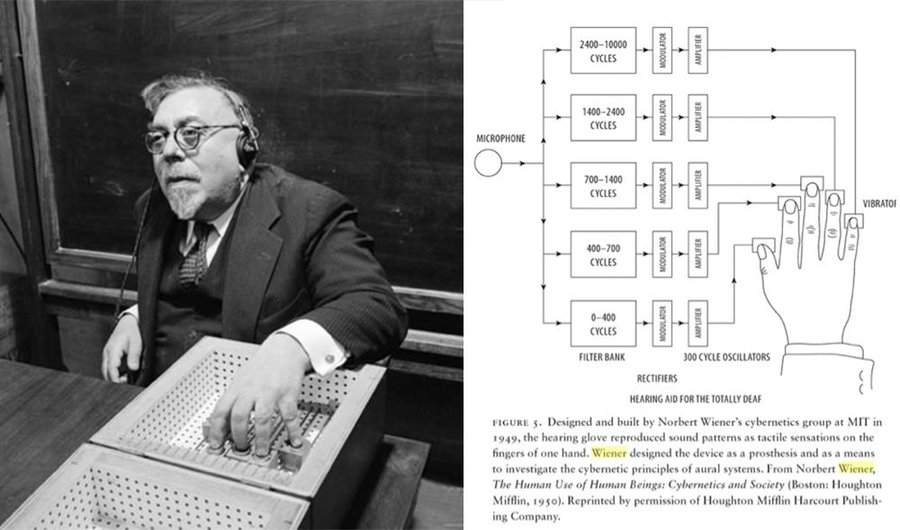
But what is cybernetics and why is it so important to computing? The word may sound familiar to anyone even adjacently related to computer science, information technologies or speculative fiction. “Cybernetics” is attributed to MIT mathematician, Norbert Weiner,  who articulated this “new science” in his 1948 publication of the same name (Kline, 2015). Weiner defined cybernetics as the study of “systems of communication and control in the animal and machine”. Synthesizing research done and observations made by several scientists and scholars including Claude Shannon (who published his “Mathematical Theory of Information that same year), anthropologist, Margaret Mead and John von Neumann and largely focused on optimizing information sharing in relation to the war effort, cybernetics suggested that the mechanisms of feedback, or the movement of outputs and inputs within a complex system, that were being applied to the design of machines could be applied to mapping, understanding, and by extension, influencing biological life (human and non-human) as well (Kline, 2015).

Looking at the history of Cybernetics is also looking at the history of the development of computation in service of military apparatus; charting a lineage of influences from Weiner and Shannon, to Jay Forrester and the development of the missile defense system during the Cold War and eventually to the ARPANET, whose development was commissioned and funded by DARPA (Defense Advanced Research Projects Agency) and would lead directly to the internet. But the use and application of cybernetics is complex and muti-faceted. When I asked Sarah to define Cybernetics she made sure to situate it’s birth within this military context while pointing to alternative interpretations that were also critical to the birth of Silicon Valley:

“Cybernetics is a kind of trans-disciplinary set of ideas that emerged in the 40s and 50s. It’s a way of looking at how social, technical and engineered systems operate and how mechanisms of feedback alter the functioning of the system…This set of theories was quite important in the early development of computation, which did come out of a military context. But then on the other side of things, this way of developing a dynamic and systemic approach to thinking about the flows of information, the flows of power, and the flows of energy within mechanical systems became interpreted within the social sphere as a way of looking at how society could be organized through mechanisms that were more dynamic, non-hierarchical, in-flux and potentially [more] egalitarian than the kind of very hierarchical systems of order that had operated until this 1960s growth of social consciousness in the West.

So on the one hand [Cybernetics] has been used by existing structures of power to kind of optimize systems and is often talked about in this more technocratic way; in terms of control. But then on this counter-cultural side [Cybernetics] was thought of as ways to engineer these more fluid and open and dynamic systems; ecologically, socially, politically, what have you.”

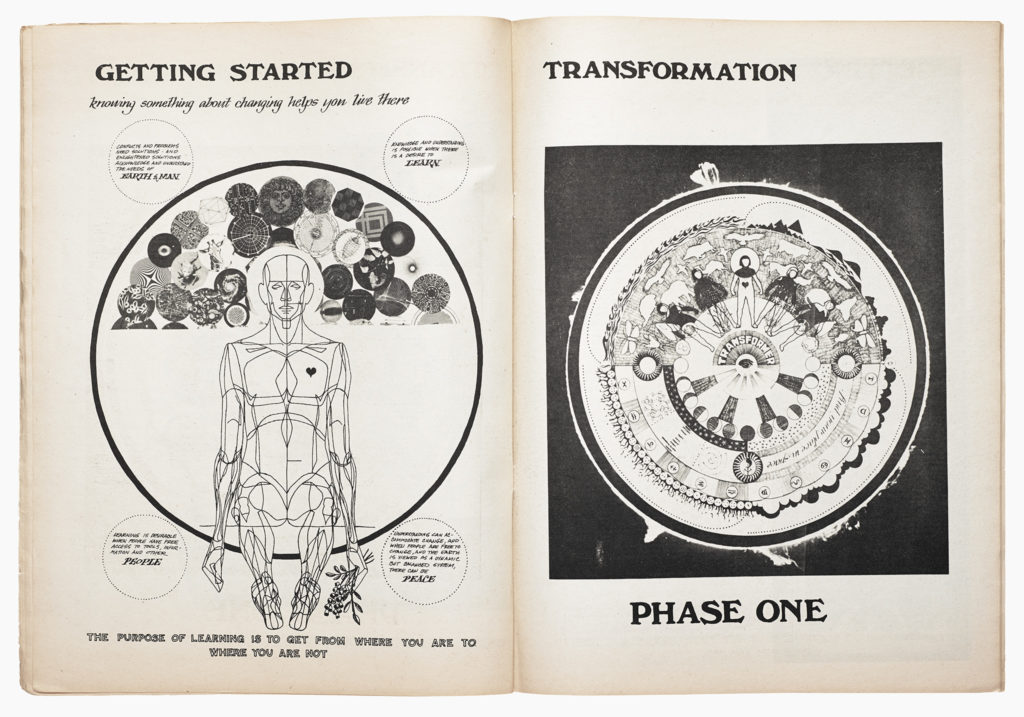
One example of the counter cultural history of cybernetics is in the influence of the Whole Earth Catalog, a counter culture magazine founded by Stewart Brand and published in California in the late 60s. As Sarah explained, “the magazine was very much a catalog of resources for building a “back to the land” communalist lifestyle detached from the urban capitalist social formations”. This proposed social ordering was widely distributed and influential with the mass migration of young Americans to communes in the 60s, but was imagined as connected to technology as it was to the “natural world”.

All of the books, manuals and different resources for building stuff were positioned as tools through the rhetoric of Brand and the Whole Earth Catalog. The Whole Earth Catalog ended up being really inspiring to a lot of the initial founders of Silicon Valley companies and what has become the modern big tech industry. This logic of the tool you can see having this throughline from the counter-cultural usage of the WEC to the technocratic of the term tool.

Every kind of program, digital system or app is talked about by these designers and developers as a tool…the ultimate goal of technology is to be these tools to make getting access to information and goods easier for this imagined urban white male consumer and to make invisible the systems of energy and labor that go into the construction of these tools to smoothly optimize or facilitate this access to information.

There is an easier relationship with something that is “just a tool”. The logic of “technology as tool” shifts responsibility for all possible outcomes (and avoiding them) to the user; it obscures and blocks interrogation of the various economic, social, and environmental agents and formations that go into the construction of said “tools”. We should think critically about the behaviors made possible by what is optimized for in a design and what is not. This perspective, the neutrality of the tool, flows into our contemporary moment where machine learning and other forms of algorithmic decision making are positioned as inherently unbiased because they are technological constructs and are therefore objective. Further, as danah boyd and Kate Crawford speak to in “Critical Questions for Big Data”, the supposed objectivity of the big data paradigm obscures the messiness at every level of the process from procedures of collection to interpretation.

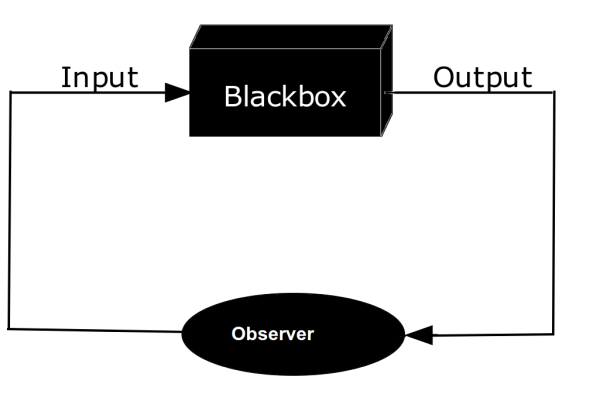
Unnamed Diagram, Cybernetics Library Image Collection

“I think as a group, as the Library, we want to make visible the real political complexity of what cybernetics is and how the use of this method of thinking can go wrong, while also thinking about how we can consider it as a methodology to be more aware of our social environment and to build these not necessarily technical but, also, social tools of inclusion.”

This complexity Sarah was speaking to starts in interrogating the lineage of cybernetics. Norbert Weiner to Sillicon valley is one story of this. But this narrative nests within the mythology the development of personal computing as a group of ruggedly individual geniuses tinkering in the proto-maker spaces of their home garages. But if we understand cybernetics as a way of thinking about how and where phenomena, human or otherwise link and are linked to one another, relate and are related to one another and move between and are moved between one another then cybernetic thinking existed long before personal computing, or post-war information theory knowledge , or human ways of knowing at all.

We might look at Project Cybersyn; a proposal for a computer system that would be used to manage newly nationalized industries in 1970s Chile is part of this cybernetic lineage. The fungal networks of mycelium (the root networks of fungi) that weave throughout the roots of trees in forests moving food and chemical signals (read: information) between individuals and colloquially referred to by biologists as “the internet of trees” are cybernetics. Patricia Hill-Collins’s articulation of the matrix of domination through which benefits and harms are distributed throughout populations based on race, class, gender, ability and many other constructed identities is also a type of cybernetics. Justice facilitator and community organizer, Adrienne Maree Browne’s articulation of an “emergent strategy for building complex webs of care and change that scale the transformations social movements work towards”, highly inspired by the work of Detroit based community organizers Grace Lee Boggs and James Boggs is a also a type of cybernetics (Brown, 2017). The usefulness of this thinking as a framework is not in translating various phenomena into “cybernetic manifestations”, but as a lens through which we might look at the relatedness of systems of knowing, sharing, being, and making on their own terms.

“As far as technology goes, I think that [the Library] as a group like to think of technologies as things that aren’t necessarily computational or aren’t necessarily engineered or mechanical systems. Different social protocols or ways of passing on information from person to person, sharing food, or constructing rituals can also be technologies that have a very important social function; allowing communities to survive and thrive or allowing relations to be measured in some way. 

Framing technology as something that operates beyond the logic of the computational is a way for me of bringing in practices that are developed by women, communities of color, or Indigenous communities as always already technological or giving value to practices that operate outside these very strict Western Patriarchal logic of technology”

Inspired by the non-hierarchical and decentralized nature of cybernetics, the library is run not as a formal organization but as a collective. As Sarah describes, “Everyone contributes based on their abilities and availabilities and interests and skills for each project”. Where the six primary members (Charles Eppley, Sarah Hamerman, Sam Hart, David Hecht, Melanie Hoff, Dan Taeyoung) work together with a network of collaborators to organize the books and creating searchable records using LibraryThing. The books are almost all donations from private collections, or donated works from fans, scholars, users, and collaborators. Though Sarah notes that additions are also bought by the group, particularly to expand the voices and practices represented within the collection.

While the physical library is browsible primarily by request, engagement can take many forms, as Sarah describes: “Our activities are centered around pop-up libraries and workshops that either interface with other organizations and the public in certain ways or draw out specific themes of the library in different ways”. Past activities include the Cybernetics Conference (for which the collection originally began) and building a selection of titles investigating the cybernetics of sex for a workshop at the School for Poetic Computation, where faculty member (and cybernetics library co-founder, Melanie Hoff) was investigating gender, sexuality, the body and embodiment beyond the human.

Cybernetics, at least in the ways the Library would like users and visitors to think of it, asks us to consider the questions we have about technology today, the worlds we build with and through it are not new, but the newest iteration of our struggles around how we relate to each other, how we relate to the world, how power operates, and how we might reshuffle the pieces of a system to move us toward radical new ends. It’s a potentially critical framework for learning to live in a world where those with the privilege of being technology creators increasingly optimize for (read: shape and influence, explicitly and implicitly) particular formations of community and society. On the one hand we must look at the history of technology and computing as one directly connected to state driven innovations meant to intercede in feedback and shape systems towards militaristic and commercial ends. The Cybernetics Library would like us to consider what other networks we can and have built.

In light of this drive there’s an alternative story we can tell to the one that opened this article. In an artist/organizer co-op on Manhattan’s upper west side live a Library. But the library doesn’t only live there. It’s integrally linked to a community of users around the world, to the work of thinkers, artists, activists, and beings (human and otherwise). Talking to one another and working in around “technology”, whether that manifests in human or non-human agencies, digitally or analog. Wherever communication exists or becomes noise (which itself also communicates), wherever we might consider relationships of power, wherever we are thinking about how coalition and community are formed and maintained, cybernetic phenomena are happening.

As Sarah described at the end of our interview, “I want people to walk away from this collection considering how communities can work together to build systems and technologies that are rooted in an ethic of solidarity and care and that are developed to think more expansively and outside of capitalist solutionist logic of the things that technologies can do. I think that we can begin to imagine differently, informed by how technologies have been implemented already.”

Works Cited:

boyd,  danah, & Crawford, K. (2012). Critical Questions for Big Data. Information, Communication & Society, 15(5), 662–679. https://doi.org/10.1080/1369118X.2012.678878

Brown, A. M. (2017). Emergent strategy: Shaping change, changing worlds. Chico, CA : AK Press,.

Kline, R. R. (2015). The cybernetics moment: Or why we call our age the information age. Retrieved from http://www.h-net.org/reviews/showrev.php?id=46341

Wiener, N. (1948). Cybernetics; or, Control and communications in the animal and the machine. Paris,: Hermann;

Interview: UX & its social concerns

I recently had the opportunity to interview Nina Mistry, the co-founder, and chief product officer of Artistic License Creative. She has been connected to the UX filed for more than two decades and my interview goal is to gain insights about what drives this profession today and her understanding of technology within our social realm. Artistic License Creative is a start-up that is driven by social change and innovation through the medium of digital technology. While the company is based in Toronto we met on her recent visit to New York where she shared her views on the UX field and social concerns surrounding it. 

I had prepared a set of questions to structure the interview and almost all areas of interest were covered. It started with sharing details about herself and how she landed in the UX field. She is originally from Mumbai, India where she completed her undergraduate education in textile design. She graduated in the year 1999, a year where the internet had landed in most of our households. She believes that it was the internet that helped people become entrepreneurs overnight. “It made the whole world become your market,” says Nina. Her first job was as a designer at a small scale e-commerce company in India. After this, she went on to work with the software development team of interactive television that revolutionized live voting in India. She has also contributed to the design of the Target app and continues worked on many such projects even today.

Nina believes the whole idea of UX truly came to life when Apple launched its iPhone. She believes that the Iphone’s scroll user experience with the pinch and scroll and embedded keyboard scroll were game-changers in the field of technology. This is when design moved beyond its aesthetic principals and become an interactive experience. Her company Artistic License Creative (url in references) emphasizes on delivering content and experience(i.e. ways the content is consumed. Her company collaborates with people and works on projects that are driven by a cause. Whether it’s making documentaries, e-learning platforms websites or mobile applications they are driven by the purpose of making a difference. 

Nina believes that it’s her curiosity and love for simplicity that makes her a relevant UX designer today. She thrives on the fulfillment derived by watching users use, react and cherish her designs. “Watching my vision materialize into an experience is the best feeling ever,” says Nina. The field design experience today seems to be divided into two distinct fields the User Research and User Experience field. When asked about this categorization she expressed that the main goal of a designer should seek solutions and there should be no distinct dividing lines in the process. The research process builds curiosity and sets a solid foundation for the design process.

Her research process mainly includes interviews and observations. Nina says “Sony conducted a focus group for their boom box. When asked about the color preference 70% picked black with 30% picked yellow. At the end of the session, participants were given the boom box as a gift for their participation and had to pick it up on their way out. All participants picked the black one. When people are observed they behave differently. It’s usually not what they say.” This relates to McGrath, “Methodology matters” reading which discusses the limitations of research. The article talks about how the limitation of one method can be covered by another and how using more than one research method would help in more realistic insights. For example, Sony’s interview flaw was coved by observing the audience making a realistic choice in person. 

Furthermore, her design process is driven by the AGILE method which involves quick sketching, user testing and validation followed by multiple iterations. She says “more than a design process, it’s a co-creating process. It’s not just about user opinions but you think like the user.” We then moved on to discuss any specific experience or innovation that has caught her eye in recent times, she stated that a big influencer to determining this is how ethically the product is made and functions. When further asked about unethical innovations of technology today she discussed the emotional impact of Instagram’s need for maximum likes for validation leading to anxiety to FaceBook’s “fake news” targeted at psychological warfare. This connects to our discussion on Vaidhyanathan’s, “Anti-Social Media” which suggests only a limited online newsfeed for it’s its user. Nina re-iterated Vaidhyanathan’s take on users being oblivious to counterclaims taking away the reality of the situation. 

She states Aza Raskin, the creator of the infinite scroll says that he “regrets creating it in the first place.” Elaborating more on the infinite scroll she states the user is targeted with ads  and news aimed to change their opinion. And the common user is taken for granted and exploited for their lack of awareness. Nina states Google having all our information from our bank accounts to our heath records is unethical. And stresses that the “I agree to the terms and conditions check-box that people check is the biggest lie, as if you read the terms you would probably not agree.” This again connects to Shoshana Zuboff’s “surveillance capitalism and the prospects of an information civilization” which discusses our lack of privacy as a price we pay or collateral damage for using technology.

When asked about threats associated with design in the future Nina mentioned that the biggest threat with artificial intelligence and machine learning replacing human jobs. What kind of jobs would humans do it machines do most of what we do today? How will we adapt to this change? Would third world countries even have the infrastructure to adapt? She predicts that there will come a time where there will be no jobs leading eventually leading to an economic setback.

To conclude, speaking to Nina was a great way to validate all our class discussions associated with technology and social concerns. Nina was open and thrilled to answer all the questions. She made it a fun discussion where we both were sharing our views and adding on to each other’s arguments. Overall, she concluded with saying as a young aspiring design professional one should always have the wonder and curiosity along with seeking ethical solutions. “Be less motivated by monetary gains and more motivated by social good.” She concluded.

References

  • Vaidhyanathan, Siva. Antisocial media: How Facebook disconnects us and undermines democracy. Oxford University Press, 2018.
  • Zuboff, Shoshana. “Big other: surveillance capitalism and the prospects of an information civilization.” Journal of Information Technology 30, no. 1 (2015): 75-89.
  • McGrath, Joseph E. “Methodology matters: Doing research in the behavioral and social sciences.” In Readings in Human–Computer Interaction, pp. 152-169. Morgan Kaufmann, 1995
  • Artistic License Creative. Accessed November 19, 2019. https://artisticlicensecreative.com/.

Impact of Social Media on the Youth

INTRODUCTION

Social Media has become an important part of our society that it is impossible to imagine our lives without it. Every other person is part of one or many social media platforms, some of the most popular ones being, Facebook, Twitter, Snapchat, Instagram, WhatsApp, and YouTube. People, especially youth prefer to socialize through these platforms where you can interact with people from different parts of the world by just a click of the button. From giving us new ways to come together and stay connected to the world around us, to providing an outlet for expression, social media has fundamentally changed the way we initiate, build and maintain our relationships. As the popularity of social media is spreading all over the world, there have been mixed feelings about these networking sites.

My quest on how and to what extent social media is impacting the youth, led me to conduct a survey as well as an interview targeting an audience of 17 to 24 years.

I was able to conduct a detailed questionnaire which was responded by 12 participants along with an interview with two persons. The participants’ occupations were mixed – both professionals, as well as students, were part of the research process.

FINDINGS

From the research, I was able to gather, that most of my participants used social media networks such as WhatsApp, YouTube, Instagram, and Facebook.

There are both positive as well as negative impacts of using social media. It is necessary to talk about both sides of social media in order to get an overall idea of the research findings. First, let’s discuss some positive impacts followed by the negative impacts that were found based on the analysis of the results of the research.

POSITIVE IMPACTS

  • Exposure

People can interact with other people around the world through social media networks which, empower them in many ways. Social Media becomes a platform where people can showcase their ideas or talents, learn new skills and acquire knowledge through social media.

  • Finding friends

Social media is also able to connect people by using algorithms in a way that normally wouldn’t happen in the real world. The role of algorithms in filtering our results based on our history, location, interests and other details are explained in “The Relevance of Algorithm” by Tarleton Gillespie, the reading that was discussed in class. This reading speaks in detail of the “algorithmic identity” of a person and how this helps in filtering the results to provide us with the best suitable results based on our location, likes/ interests and our profile information. The high possibility of finding long lost friends has been pointed out as an important factor in expanding the social life of these young people.

  • Mental Health

A large number of people mentioned feelings of motivation and inspiration while using social media. Using Facebook, WhatsApp and other apps help in increasing the friendship quality and network size.

  • Interaction

Also, many people who are not comfortable talking face to face feel safe and less intimidated by chatting with a person online. The growth of mass self-communication, the communication that reaches a global audience through p2p networks and internet connection has been talked about in “The Rise of Network Society” by Manuel Castells.

NEGATIVE IMPACTS

On the flip side, social media has some negative impacts as well.

  • Usage

Also, a large number of people used social networks when they are bored, as soon as they wake up in the morning or before sleeping with more or less no goals to achieve. Most of the people registered using social media for 1 to 5 hours daily. This increased time consumption by using social media may affect their productivity and cause addiction.

  • Physical Interaction

Though social media is widely used for its socializing abilities, it is also criticized for reduced physical socializing capabilities. The impact of Social Media has changed the manner in which we see ourselves, the manner in which we see our personal relationships, plus it has also affected the manner in which we connect with our general surroundings. Most of the participants recorded having a huge number of friends online compared to the limited few who were their actual friends in real life. This may also be due to the fact that many of the youth accept strangers as on social media, making themselves prone to exposing their personal details to a group of strangers.

  • Mental Health

Many young people complained of mental breakdowns. These people are also found to be obsessed with the likes and comments they receive on social media as they mentioned constantly checking and keeping track of the likes they received to account for their popularity. Many youngsters also confirmed how they compared themselves to others on social media by stalking their aesthetically perfect Instagram photos or staying up to date with their relationship status on Facebook. This causes an increase in unrealistic expectations, self-doubt as well as feelings of jealousy

  • Physical Health

There are lots of unhealthy physical effects of social media usage. A large number of people indicated poor posture and eye strain as some of the physical impacts they experienced. One can get eyestrain from staring at screens for too long. Fatigue by staying up too late posting on social media was also an issue found among the youth using social media.

CONCLUSION

From this survey, I can conclude that most young people are aware of the risks and dangers of social media, yet they do not intend to quit these, as our lives are intertwined with it. Social Media usage, if constantly checked and kept under control, it can outweigh its negative impacts to make the social media platforms a better and effective means of communication. One of the ways of doing this can be by limiting the usage duration by having apps to track your usage and lock you out of your phones for a certain amount of time. Taking some breathing time away from these media can help bring back our conscience to the physical world and create a balance in our lives.

Observation of The NYPL Stephen A. Schwarzman Research Library

The Stephen A. Schwarzman Building, located on Fifth Avenue between Forty-Second and Fortieth Street, stands as a centerpiece for the New York Public Library. It is a grand marble building that has remained a spectacle since 1911. Few things have been changed in the library, beyond modern updates and fixes, and most people want it to stay that way. But what about what goes on inside the marble? 

Are the librarians the same people that checked out the first books?

Have librarian practices remained the same?  

Is information still circulated through the same stacks that were built in 1911?

Do people still use the research library?

What type of people actually participate in library offerings?

Just how old is this library? 

To catch a glimpse at the answers to these questions, I spent a day observing researchers and patrons at the New York Public Library Stephen A. Schwarzman Building, as well as interviewing library staff.

Setting

I decided to spend most of my time in a smaller research room instead of the main Rose Reading Room for multiple reasons. First, tourists flock to the Rose Reading Room, and they are not the focus of my inquiries. Second, the Local History and Genealogy Milstein Division where I took up shop, allowed me to view researchers, librarians, and staff all at the same time. Third, this division of the library was broader than some of the other research rooms and as a result I would be able to observe a wider range of questions, requests, and interactions.

Observation

From the start I notice that everyone who enters the research room has one two reactions. They either straighten up and constantly check with the librarian visually to make sure they are not breaking any rules (similar to how people react to seeing a police officer), or they smile and say hello as if they feel welcomed. Both reactions indicate that librarians on title alone have a level of respect from the general public. It is for this reason that they have a certain code of ethics and an obligation to their community to keep the information in the library safe. It is also why diversity among library staff, and inclusion for all is so important in a library. As respected figures, librarians set a standard for others. 

Staff & Diversity

It is not difficult to see that the New York Public Library places value on diversifying their staff. The Local History and Genealogy division (LHG) in particular represents varying races, sexes, languages, genders, ages, and sexual orientations. The library publicly puts valuable information into all types of people’s hands, which I believe is an effort to normalize the idea that information professionals can be anyone.

Interestingly, I also noticed that most of the librarians in LHG were male. In my personal experience it has often been that most librarians are women. Despite this, I noticed, unsurprisingly, that there was no change in how the librarians interacted with patrons or researchers, or how their work got done. Overall, based on the ALA Manual definition of diversity- “race, age, sex, sexual orientation, gender identity, gender expression, creed, color, religious background, national origin, language of origin or disability”, the NYPL has kept up with ethical and responsible hiring standards. 

Patrons

If the librarians are the brain of the library, and the books are the lungs, the patrons are the heart. Without the people that wander the stacks looking for information, nothing would be read or investigated. The librarians would be out of job, and the books would be useless. It is for this reason that I found it interesting that not everyone has equal access to the library.

The key to everything NYPL has to offer is a library card. It is a simple plastic thing with a barcode number that can reveal a world of opportunity. Want to check out a book? Better grab your library card. What if you want to browse the internet for a bit? Got to use your library card. It seems the only thing you can do without a library card is stare out the window and enjoy the climate controlled building. 

To get a library card you need two things: an address, and an ID with that address on it. For most people that come to the NYPL this isn’t an issue. Even if your ID has a different address on it, you can pull up a bill or a piece of mail with your name and place of residence on it and they’ll welcome you to the club.

For a smaller, but still very relevant group of visitors, however, having an address is not easy. According to the Coalition for the Homeless, there are 62,391 people without permanent homes in New York City. That is 62,391 people who cannot use the library to find jobs on the computer, or check out a book to develop marketable skills. This exclusion of a group of people that would benefit significantly from library services is definitely a flaw in the NYPL system. 

Interview

After spending some time observing in LHG, I sat down with one of the librarians so that I could learn about the things I couldn’t see. Contrary to stereotypes, he had a demanding voice and stature and I felt compelled to listen to him.  

Information Overload

One of the more important topics revolving around librarianship, in my opinion, is how these professionals handle data or information overload. Not long ago librarians often had to fight against having too little information available to them. With the internet, digitization of thousands and thousands of records and collections, as well as increased patron contributions, librarians have an overwhelming amount of resources. When asked about this, the LHG librarian explained that he had to learn how to research more effectively. Databases have helped narrow down search results, but he mostly relies on his own ability to filter out the extra stuff. He also mentioned that in the research libraries in particular, patrons use the online catalog and databases to find their own materials before bringing it to him for assistance. This means, however, that his job also now includes teaching patrons how to use the library website, its databases, catalog, and other little overly complicated bits. 

With all of this new digital content and information floating along above our heads in the cloud, an important question is; Who owns it, and why do libraries have it? The librarian had a quick answer to this, which was if the library had to own everything it circulated, no one would know anything of importance. He pointed out a feature of LHG that was pretty popular with researchers; a file system of researcher-created records of families, places, and things. The library doesn’t necessarily own any of the findings in those files, but it keeps them and cares for them because it’s the library’s obligation to to do so. 

Burnout

Naturally our conversation concerning piles and piles of information lead straight into my next question. Did he ever feel burnout? Was he ever tired of his job and did he ever feel like the work wasn’t worth the punishment? He had been quick to respond before, but was slower this time. Yes, he did sometimes feel the effects of burnout, but not in a way that made him feel like his work wasn’t worth it. Rather, he felt that sometimes the institution thought his contribution was less than what it was in reality, and that was the frustrating part, reasonably. I found this interesting considering I had previous overheard two librarians gossiping about how the people making important organizational decisions knew nothing about the system. The conclusion from this is that the NYPL administration may not fully consider the insight of those who work in the very trenches they are redesigning. 

Politics, Neutrality & Librarianship

I managed to end my inquiry on the most difficult topic; Librarianship and neutrality. The librarian I spoke to had little trouble forming an opinion, ironically. He suggested that librarians can be neutral until there is a political or ideological thought that threatens the overall well-being of the library’s patrons or the collection. Generally, politics can’t play a part in researching a topic for someone, because that could limit what information you can give. Same goes for controversial ideas. He did mention at the end of our talk that he believes that it’s impossible to stifle your own beliefs completely, and that its the responsibility of the person to control how those beliefs come out. 

Conclusion

As I learned about the ins and outs of the library during my observation and conversation, I found the answer to my biggest question. Despite being old on the outside, most of the inside of the library was young and new. The librarians were informed and up to date on the pressing matters of their profession. The staff was diverse and welcoming. The exclusion of some groups in the city needed some work, but I feel as if the library is aware of this issue and is working on solutions. Overall, the NYPL Stephen A. Schwarzman Building is blazing into 2020 as a leader of library practices. 

References

Birdsall, William F. “A Political Economy of Librarianship?” Progressive Librarian, no. 18.

Cope, Jonathan. “Neoliberalism and Library & Information Science Using Karl Polanyi’s Fictitious Commodity as an Alternative to Neoliberal Conceptions of Information.” pp. 67–80.

Gehner, John. “Libraries, Low-Income People, and Social Exclusion.” Public Library Quarterly, vol. 29, 15 Mar. 2010, pp. 39–47., http://dx.doi.org/10.1080/01616840903562976.

Nauratil, Marcia J. “The Alienated Librarian.” New Directions In Information Management, vol. 20, 1989.

Rosenzweig, Mark. “POLITICS AND ANTI-POLITICS IN LIBRARIANSHIP.” Progressive Librarian, no. 3, 1991.

Rosenzweig, Roy. “Scarcity or Abundance? Preserving the Past in a Digital Era.” The American Historical Review, vol. 108, no. 3, June 2003, pp. 735–762., doi:10.1086/529596.

Vinopal, Jennifer. “THE QUEST FOR DIVERSITY IN LIBRARY STAFFING: FROM AWARENESS TO ACTION.” In The Library With The Lead Pipe, 13 Jan. 2016.

Memory and Community: Person, Place, and Thing

Person: Cynthia Cruz

Cynthia Cruz is a poet of German and Mexican descent, born in Germany but raised in northern California. Her work reads like a scrapbook, image after image placed on top of one another. Her third book Wunderkammer translates to “a cabinet of curiosities”. Each poem heavy with German history, German artists, and fragments of the personal. Each image is locked in a multi-leveled vitrine for the reader’s consumption. The poet’s mother was a hoarder, the poet is obsessed with archiving, the need to “collect, assemble, and name”.

In 2018 I attended Cynthia Cruz’s craft talk at the Poet’s House entitled “The Archive as Resistance”. In 2010, as a Hodder fellow at Princeton, Cruz scoured through archives to research for Wunderkammer. She drew inspiration from German visual artists: Hanna Darboven, Gerard Rictor, and Rosemary Trockel. As well as great German writer and thinkers Aby Warburg and Walter Benjamin. Throughout her collection, she created “totems and objects that carry memory or meaning”. She describes the poems in Wunderkammer as dense, long lines, and no space, a type of claustrophobia”.

Wunderkammer is an exploration of trauma and how trauma informs and changes people. A part of her research involved reading about the building of the Jewish Museum in Berlin.

The creation of a museum that houses artifacts and relics of Berlin Jews chronologically create a sense of closure as if the Holocaust was now in the past. When in fact that past has not passed. Questions of how it could have happened and it’s impact are felt throughout and informs contemporary Germany, Berlin, and the world.

In conversation with Sharon Macdonald’s “Is Difficult Heritage Still Difficult?”, Cruz’s work remains personal (fictional or not), her use of German history is through her lens (girlhood, failure, and mental illness). Macdonald’s piece deals with the right way to present such a dark past: facts versus emotions, how much of the horror to show, heritage versus nationalism, and etc. Through the poems in Wunderkammer, Cynthia Cruz takes fragments of her past, her mixed cultures and works from people from her native country to make a sort of collage.

Place: The Historic New Orleans Collection

In 1938, General L Kemper and Leila Williams purchased two properties in the French Quarter—The Merieult House and a late 19th century residence on Toulouse Street. Throughout their lives they gathered a hefty amount of important Louisiana artifacts. After the couple passed, their home became the Historic New Orleans Collection.

The Historic New Orleans Collection – Merieult House. 533 Royal St., New Orleans, LA 70130.

In 2016, during my first trip to New Orleans, I got to witness the award winning and traveling Purchased Lives: The American Slave Trade from 1808 to 1865 exhibit at the Historic New Orleans Collection. I walked in with two childhood friends and my one friend’s aunt, we moved separately, sometimes we regrouped but we never spoke. From what I recall, you could hear a pin drop, it seemed like every visitor was busy absorbing the information to say anything of value.

Historian Erin M. Greenwald curated the exhibit which includes period broadsides, paintings, and prints illustrating the domestic slave trade, interactive displays, historical records by tracking the shipment of more than 70,000 people to New Orleans. While there were interactive components, most affective, was the “Lost Friends” ads placed after the Civil War by newly freed people attempting to locate family members. The preservation of those ads made everything so three dimensional. In Cloonan’s “W(H)ITHER Preservation”, she writes, Preservation allows for the continuity of the past with the present and the future”. I was there on vacation, steps away from Bourbon street, filled with tourists and bachelorette parties, but on a ground drenched in history and blood. The presentation of the ads-from floor to ceiling- daughters looking for mothers they had not seen in 30 years, gave the memory institution have a pulse.

Thing: Little Free Library (Take A Book, Share A Book)

A small wooden box full of books, where neighbors are encouraged to take a book and leave a book. Little Free Library is a non-profit whose mission is to increase access to books for readers of all ages and backgrounds. The organization boasts 90,000 street libraries in 90 countries. Those who want to start a Little Free Library can order a kit through their website or build their own. Their website also has a map where the user can type in their zip code and find the Little Free Library nearest to them. There are two in walking distance from my apartment in Bushwick. I think the idea is adorable and promotes community building.

This reminds me of Chatman’s four concepts in “The Impoverished Life-World of Outsiders”. She names deception, risk-taking, secrecy, and situational relevancy as reasons “information outsiders” remain on the outside. But with something like the Little Free Library, it’s open to everyone, there need not be any sharing of personal information or personal stories. There is a freedom, no need to sign up for a library card, or fees for lateness, it is almost encouraged for it to be anonymous. The only concern is not enough people knowing about such a uniting program.

-Herbert Duran

Resources

2018: The Archive as Resistance: A Craft Talk with Cynthia Cruz. (n.d.). Retrieved November 7, 2019, from Poets House website: https://poetshouse.org/audio/2018-the-archive-as-resistance-a-craft-talk-with-cynthia-cruz/

Chatman, E. A. (n.d.). The Impoverished Life-World of Outsiders. 15.

Chatman—The Impoverished Life-World of Outsiders.pdf. (n.d.). Retrieved from https://lms.pratt.edu/pluginfile.php/924614/mod_resource/content/1/Chatham-Information%20Povertyt.pdf

Cloonan, M. V. (2001). W(H)ITHER Preservation? The Library Quarterly: Information, Community, Policy, 71(2), 231–242.

Cloonan—2001—W(H)ITHER Preservation.pdf. (n.d.). Retrieved from https://lms.pratt.edu/pluginfile.php/924550/mod_resource/content/1/Cloonan_2004.pdf

Cruz, C. (2014). Wunderkammer. New York: Four Way Books.

Exhibition – Purchased Lives: New Orleans And The Domestic Slave Trade, 18081865 – New Orleans, LA. (n.d.). Retrieved November 7, 2019, from http://www.americantowns.com/news/exhibition-purchased-lives-new-orleans-and-the-domestic-slave-trade-1808aeur1865-22900958-new-orleans-la.html

Macdonald, S. (2015). Is ‘Difficult Heritage’ Still ‘Difficult’?: Why Public Acknowledgment of Past Perpetration May No Longer Be So Unsettling to Collective Identities. Museum International, 67(1–4), 6–22. https://doi.org/10.1111/muse.12078

Macdonald—2015—Is ‘Difficult Heritage’ Still ‘Difficult’ Why Pu.pdf. (n.d.). Retrieved from https://lms.pratt.edu/pluginfile.php/924553/mod_resource/content/1/MacDonald_2015.pdf

Purchased Lives Exhibit Opens At The National Civil Rights Museum. (2018, January 25). Retrieved November 7, 2019, from Black Then website: blackthen.com/purchased-lives-exhibit-opens-national-civil-rights-museum/

What We Do. (n.d.). Retrieved November 7, 2019, from Street Books website: http://streetbooks.org/what-we-do-1

Event Review: AI Now 2019 Symposium

On October 2nd, 2019 the AI Now Institute hosted its 4th annual symposium. Titled “The Growing Pushback Against Harmful AI,” the symposium brought together lawyers, professors, community advocates, and organizers to discuss the ways that Artificial Intelligence has negatively affected their communities, their work, and their lives. The AI Now Institute is an interdisciplinary research institute based at New York University that focuses on the social implications of current and emerging AI technology. The AI Now Institute brings experts across fields, professions, and communities together to identify and respond to the growing ubiquity of AI technology, and the harmful effects it is proving to have.

Co-Founders and Co-Directors Kate Crawford and Meredith Whittaker introduced the symposium by doing a “Year in Review,” highlighting some of the major events involving AI in the past year, including San Francisco’s ban on facial recognition technology and Amazon abandoning its HQ2 in New York City. The symposium was then divided into four panels, which explored topics such as the use of AI technology by the police and border patrol agents, the pushback by tenants in an apartment building in Brooklyn who are fighting against facial recognition technology, a class-action lawsuit against the state of Michigan for using an algorithm that falsely flagged over 20,000 Michigan residents of employment fraud, and lastly the methods, successes, and goals of organizing tech workers across platforms to win gains in the workplace.

The first panel of the symposium, “AI and the Police State,” was chaired by Andrea Nill Sánchez, incoming Executive Director of AI Now. This panel spoke with Marisa Franco, Director and Co-Founder of Mijente; Ruha Benjamin, Professor of African American Studies at Princeton University; and Kristian Lum, Lead Statistician of the Human Rights Data Analysis Group. The panelists dove right into the ways that AI systems, technology, and information practices are used by border patrol agents and local police departments to target undocumented and marginalized people. On the same day as this panel, the New York Times published an article detailing how Donald Trump suggested border police “shoot migrants in the leg” (Shear and Hirschfield Davis) if they threw rocks at border agents, a chilling backdrop for the discussion. 

Franco spoke to the fact that Immigrations and Customs Enforcement (I.C.E.) relies on local police and contracts with technology companies to meet their arrest and deportation goals. Amazon’s “Ring” and the Palantir’s “FALCON Tipline” have been specifically exposed as aiding police departments and I.C.E in locating people who are undocumented for arrest and deportation. Franco directly pointed to Amazon and Palantir as targets of Mijente’s strategizing against the use of tech companies profiting off of deportations (using the hashtag #NoTechForICE on social media). 

Benjamin and Lum spoke to the use of AI and various algorithms to criminalize and target marginalized communities. Benjamin highlighted the specific threats that automated risk assessment technology pose to already vilified communities. Municipalities are increasingly turning to pre-trial risk assessment algorithms to determine a defendant’s risk of committing a future crime, a process that is deeply embedded with racial stereotypes and highly questionable, racially biased data. These algorithms serve to perpetuate racist stereotypes and the criminalization of poverty by drawing from data in a deeply racist, sexist, and classist society. Benjamin powerfully spoke to how these algorithms aren’t actually “flawed,” they are working exactly as intended for police departments, to legitimize racially targeted policing by pointing to algorithms that are described as neutral and objective, when they are anything but neutral or objective.

As outlined by Safiya Noble in her 2016 PDF talk titled “Challenging the Algorithms of Oppression,” she makes it is clear that technology and algorithms reflect and produce the racism and prejudices of the society they are created in. These algorithms serve to maintain and continue racist stereotypes because of the perception that technology, data, and algorithms can be objective. The question becomes, how do we challenge both the racist society that produces the data the algorithms used, and how do we prevent algorithms from perpetuating racism in our virtual and physical lives?

Amid the sea of examples of the ways that facial recognition technology is being used to target, criminalize, and further marginalize already vulnerable populations, the second panel focussed on AI technology used to monitor tenants in the Atlantic Towers in Brownsville, Brooklyn. The panel “Tenants Against Facial Recognition” included two Community Activists from the Atlantic Towers Tenants Association, Tranae Moran and Fabian Rogers. Along with Mona Patel, an attorney from Brooklyn Legal Services, they both spoke of the Tenants Association’s case against their landlord for attempting to install facial recognition software in their building without informing or acquiring consent from the tenants. Their case highlights how there is no precedent for legislation on facial recognition technology in housing units. This case will be an important milestone in the fight against surveillance and attacks on privacy, and speaks to the new ways that people will have to fight back against invasions of their privacy and the collection of their data.

The session “Automating Judgement” was a conversation between Jennifer Lord, a lawyer from Michigan, and Kate Crawford. They discussed the automation system MiDAS, which ultimately upended over 20,000 people’s lives by falsely accusing them of employment fraud. Sparking the question, when algorithms fail, who is responsible? Lord spoke to the dangers of outsourcing fraud detection work, as well as outsourcing any social benefit dispersal programs, to machines and algorithms. 

These three sessions highlighted that when algorithms both work as intended or fail at their task, they have the ability to ruin people’s lives. These panels demonstrated that when these technologies do work, they pose serious threats to marginalized communities by drawing from data sets imbued with racist histories and stereotypes, and also act as unwanted tools of surveillance in marginalized communities. When algorithms don’t work as intended they are able to act as the most brutal bureaucrat and withhold necessary services to citizens and flag them as criminals.

The final session, “Organizing Tech,” brought together organizers from the Awood Center and the New York Taxi Workers Alliance (Abdirahman Muse and Bhairavi Desai, respectively), and Veena Dubal, a lawyer focussed on technological and social issues, in conversation with Meredith Whittaker. This panel highlighted the need for tech workers to connect with workers across both sector and class to make demands of employers. Groups have emerged such as the Tech Workers Coalition which aims to connect various tech related labor, social, and economic movements as a result of the widespread struggles that tech workers have been experiencing. 

This symposium brought together key figures in ongoing struggles with AI. However these issues are just the tip of the iceberg. As AI becomes more ubiquitous in our culture, and the business model of tech companies continues to exploit both workers and the consumers of their products, the need to hold AI and tech companies accountable will become ever more important. Whittaker and Crawford concluded the symposium with calls to continue to challenge the ways that AI can be used to discriminate, exploit, and cause harm to individuals and communities and to do so by centering the voices and experiences of those who are most affected by these systems.

Works referenced 

AI Now Institute. https://ainowinstitute.org/about.html

Felton, Ryan. 2016. “Michigan unemployment agency made 20,000 false fraud accusations – report.” The Guardian. Accessed October 2019. https://www.theguardian.com/us-news/2016/dec/18/michigan-unemployment-agency-fraud-accusations

Michael Shear and Julie Hirschfield Davis. 2019. “Shoot Migrants’ Legs, Build Alligator Moat: Behind Trump’s Ideas for Border.” The New York Times. Accessed October 2019. https://www.nytimes.com/2019/10/01/us/politics/trump-border-wars.html

Noble, Safiya. 2016. “Challenging the Algorithms of Oppression.” PDF 2016 Talk. https://www.youtube.com/watch?v=iRVZozEEWlE

Observation: Visitors, artwork, and technology at the Museum of Modern Art

In 2013 the Guggenheim hosted a James Turrell’s retrospective that transformed the iconic rotunda of the Guggenheim into Aten Reign, a large scale and site specific work using light, changing colors, air and space, and the curves of the museum itself. Turrell transformed the Guggenheim into a site for artful reflection for all who entered the space. Rather than an object to look at or a subject to contemplate, the experience of being in this transformed space was the work of art. “A lot of it is the idea of seeing yourself seeing, and how we perceive” Turrell has said of his work that lacks image, object, or “one place of focus” (Guggenheim).

During the length of this exhibition, there was no art on the walls of the Guggenheim’s spiraled hallway. Visitors were encouraged to lay on the ground of the lobby and gaze at the ceiling, which, using light and color, had been transformed into overlapping ovals of bright fluorescent hues. It was ethereal, magical, meditative, sublime. In an attempt to preserve the sense of bliss and encourage quiet, unmediated reflection, no photography was allowed in the space. 

Something I can say with complete certainty is that hearing a security guard shout into an echoing rotunda “NO PHOTOGRAPHY” every two minutes was not conducive to an ethereal, magical, meditative, or sublime experience. Something I learned during my visit to the Guggenheim that day was that visitors will do whatever they want. They will get the validation of their experience that they expect. They will share their experience no matter what.

This experience, six years ago, has stuck with me and prompted me to think about how the relationship between people and their smartphones has affected the experience of viewing art in a museum gallery setting. This experience, among others, has largely influenced my interest in museum studies, digital media, and tech theory. 

Background

I used to always bring a journal into a gallery and take notes on the works I liked, the artists, themes, books I should follow up with. Now I take photos of wall texts, books I want to look into, and of other people taking photos in the galleries. Sometimes I feel weary and critical of my own increased use of technology in galleries, but recognize that people, including myself, want to personalize, document, and share their experiences. In Finding Augusta, Cooley discusses Michel Foucault’s conception of “speaking the self,” and that often “much of what we document of ourselves transpires at the nonconscious level of the proto-self, at the level of impulse” (Cooley, 2014). This interest in “speaking the self” extends into many, if not all, facets of our digitally connected world.

Prompted by this assignment to conduct an observation relating to information studies and our personal interests, I decided to do an observation at the Museum of Modern Art. My intention was to observe specifically how people use technology, specifically smartphones, in a museum gallery setting. 

Perspective, or, guiding questions for assignment

General questions to guide my inquiry:

  1. How do people engage with art in a museum gallery setting?
  2. How do people engage with technology  in a museum gallery setting (both their own devices or provided by the museum)?
  3. How does technology, specifically the use of personal devices, mediate a viewer’s experience with art in a museum gallery setting?
  4. What do people do with their personal devices? Social media, digital scrapbooks, text messaging, etc?
  5. How does the use of technology by others affect an individuals experience in a museum gallery setting?

Specific questions for observations:

  1. How many people who walked through the gallery used a photo to take a photo of a work of art?
  2. How many people used their phone for non-art related purposes, namely, communication?
  3. What other phone use did people engage in?
  4. How many people used a camera to take a photo of a work of art or the gallery?
  5. What other technology was used (either personal devices or provided by museum)

Observations and data

I sat between rooms 205 and 206 (marked on Fig 1) within an exhibition titled “1970’s-Present.” Immediately upon entering this exhibition space on the second floor of the museum, there were large paintings by Keith Haring, Jenny Holzer, and Basquiat. Further into the gallery I found a place to sit, where I could observe visitors walking through the gallery in either direction. My focus was on visitors who walked into room 205 and then through rooms 205 and 206. 

Fig 1. Area I was observing marked in pen.

I used a worksheet to tally how people took photos of artwork in these gallery rooms with a smartphone, camera, or other device. Using a tally system I recorded how many people used their phone for communication (in some cases I couldn’t tell, in some cases I could see that people were texting, snapchatting, emailing, on Instagram, etc.). When I could, I recorded when people were using their phone for non communication or photographic purposes. The accuracy of these recordings were to the best of my observations as someone casually sitting on a bench in the gallery (I did not walk up to people or move to try to see anyone’s screens).

Fig 2. Worksheet/observations

Breakdown of tally (from Fig 2):

Phones used to take pictures33
Phones used for communication22
Other phone use5
Cameras used to take photos5
Other tech* seen
*Airpods, iPads, earpods
8

I realized while taking these observations that I did not include a section for audio guides. I added a section on my worksheet, but studying and observing audio guide use in the galleries could be an entirely separate set of observations and data that could easily include analytics from the devices.

A few things that stood out to me during these observations and while reflecting on the data:

  1. Within the scope of half an hour I had collected more data and notes than expected. I had intended to stay in the gallery for one hour but decided to end observing at half an hour.
  1. Almost as many visitors used their phones to communicate as take photos of the works, although visitors mostly used their phones to take photos.
  1. It was noticeable how many people idly held their phones in their hands. Rather than reaching for a phone from a pocket or bag to take a picture or send a text, the phone was constantly ready to be used. 

This last phenomena of visitors constantly holding their phone also points directly to our class discussion around Steve Jobs saying of the iPhone that it “fits beautifully in the palm of your hand.” This also relates to Foucault’s conception of “speaking the self” mentioned earlier, where we, as visitors in a cultural institution, see something that we react to (either emotionally, aesthetically, personally, etc) and find ourselves compelled to document and/or share. By focusing on cell phone use within the space of the gallery, I was in a unique position to notice a seemingly small detail that could have interesting implications in understanding how people connect to their technology in a museum setting.

Further research

Further research may include doing similar observations near works of art that are of higher profile. Had there been a place to sit and observe unobtrusively, I may have chosen to sit in the room with the Haring, Holzer, and Basquiat works. Immediately upon entering the 1970’s-Present exhibition, visitors are confronted with large scale, recognizable, and graphically engaging works by artists that are more recognizable than in the rest of the gallery. I am confident that different observations would have been recorded in that space given those particular works of art.

Further research that would be fruitful would be to understand what visitors do with their photos after they’re taken. If asked, “what are you going to do with that photo you just took?” Answers could range from, “I want to post it to my Facebook page,” to “I want to save this memory,” to “I am sending it to my friend who loves this artist,” to “I am working on a research paper.” I am interested in what the actual responses would be and their frequency. 

Conclusion

The conversation about technology in art and museum spaces is continuing to unfold as our lives and relationships become more and more mediated by technology. Much thought is being put into how museums and cultural institutions should relate to users and their lifestyles, many institutions have dramatically changed their photography policies in the past decade (Gilbert 2016), a direct result of the ubiquity of smartphones and visitors interest (and adamance) in documenting their experiences. As technology changes and evolves in ways that affect habits and our attachment to convenience and accessibility of social media, public institutions will need to grapple with how these developments affect their mission, rules, and expectations of visitors. 

Works referenced

Cooley, Heidi Rae. Finding Augusta: Habits of Mobility and Governance in the Digital Era. Hanover: Dartmouth College Press, 2014.

Gilbert, Sophie. 2016. “Please Turn On Your Phone in the Museum.” The Atlantic. Accessed October 2019. https://www.theatlantic.com/magazine/archive/2016/10/please-turn-on-your-phone-in-the-museum/497525/ 

“Introduction to James Turrell.” The Guggenheim Museum. Accessed October 2019. https://www.guggenheim.org/video/introduction-to-james-turrell

Person, Place, Thing: A Lion, a Witch and a Wardrobe

The public library has played the role of a site of respite for my family, dependably familiar and inviting for us and countless others. This space, the children’s section of the library in particular, has inspired my venture into the study of information science. By entering the library, children and their caregivers are able to enter into a safe and cost-free place to engage and begin to form a relationship with literacy and community. 

My budding interest in information science enticed me to return to this city that I adore, New York, to study libraries and information science. An unfortunate but temporary consequence of this transition is that the vast children’s book collection we have accrued and weeded over the course of my daughter’s young life is currently spread out between three different storage locations for the time being. Even had we been physically close to our beloved books, my daughter and I our simply huge fans of browsing and borrowing to our hearts’ content, a habit we formed early on and continue to nurture. Since our very recent arrival to the city, we have slowly begun to explore a handful of libraries throughout the five boroughs. 

One of the contenders for a favorite children’s section is the marvelous and massive Main Branch in Manhattan, or, as it’s known by my daughter, “the library with the lion flag.” She’s not wrong. A single stone lion is, in fact, the library’s official mascot, and I have become very acquainted with this lion. What follows is a brief chronicling of my relationship to the NYPL children’s section: a lion, a witch, and a wardrobe.

A Lion

Patience, the lion, care of the NYPL website on the library lions

One lion accompanied by another, a pair of huge, imposing lions carved out of stone, oversee the masses below on New York’s Fifth Avenue, seemingly standing guard at the building’s scenic East-side entrance. A mirror image of the two felines is also replicated inside the children’s section, composed entirely of slate gray Legos. 

In my eyes, even their Lego incantations seem to emit an aura of nobility. Interestingly enough, they were given virtuous names, Patience and Fortitude, by Mayor Fiorello La Guardia amidst the Great Depression. The mayor’s reasoning was that these symbolic statues might inspire these qualities in the struggling citizenry during this challenging era. Today, visitors travel from far and wide to catch a glimpse or even a photo alongside this notable duo.

A Witch

The witch in this case uses her powers for good. Her role is more akin to that of Glenda of Wizard of Oz fame than that of the Wicked Witch or icy villain of Narnia. She is a public librarian. Like Glenda, the public librarian gently guides library patrons by listening to and interpreting their needs and providing a nudge in the right direction. Patience and fortitude are just as necessary for the librarian to embody as much as the next person. 

Librarians do not stand guard at the doors of the library as the large and lofty lions do, but they are also like guardians in many ways, for civic service is no easy feat. Often librarians today find themselves playing the roles of counselors, social workers, advisors, and are assumed to be experts on any number of bodies of knowledge. Though they are not human computers, they are rather exceptional figures in their own way. 

On a given day, the children’s librarian at any branch in the NYPL system could be leading a preschool story time for kids aged 3-5, which includes reading books, leading the group in song, engaging the crowd in some sort of hands-on crafting exercise, and otherwise expertly facilitating a bustling room full of toddlers and their caregivers, all within the span of an hour or so. Librarians plan programs, provide services, teach, listen, and so much more. How they manage to fit this all into one person’s job is as close to magic as something could get! 

The same, of course, could be said for librarians all over the country, from branches big and small. Their communities, however, are unique and individualized, and each library branch has their own special charms. I just happen to especially adore the NYPL Main Branch and its magical and benevolent witches, as have countless others before me. 

A Wardrobe

In a tiny corner of the children’s library in the central NYPL branch is a miniature puppet show station. With free play, the children can choose to alternate between the roles of puppet master and audience member as they please. The liminal spaces of the library provide a gateway to magical experiences, indeed, for people of all ages. In the first C.S. Lewis tale with its introduction to Narnia, the wardrobe functioned as a portal into a different world. It could also be said that books, in their many forms, can open up a gateway into new dimensions for anyone who takes the time to engage with them. 

Books can certainly be enjoyed from the comfort of one’s home, but there is something magnificent in the ordinary children’s room of a public library. From a child’s perspective, one can only imagine the magic and wonder that are evoked from hearing an entrancing story told by someone other than their guardian. The librarian themself might be just the point of entry needed to transport a child into the world of literacy. Their children’s room, when all works as planned, serves to act as a kind of magic wardrobe, transfixing and transporting young minds to new and thrilling environments.

Or so I would like to believe! As I have only begun my studies, I have much to learn, but if there’s one thing I am sure of, it is that we could all stand to use a little magic, patience, and fortitude in our lives. And thus concludes the short chronicles of NYPL kid’s services: a lion, a witch, and a wardrobe, as told by a mother and aspiring public librarian.