Person, place, thing: When old meets new

Thing:  The Evening World Newspaper

Last weekend my family were making repairs to our shed in the backyard. As they took down some of the old wood from the wall, they discovered a piece of an old newspaper.  The paper was wet from the condensation in wall and they placed it on a flat surface covered by a black plastic bag to give it time to dry, and protect it from light.  Two days passed.  I was afraid to damage the paper but, finally I gained the courage to remove the bag to try to inspect what was underneath.  It was a newspaper called the Evening World dated Wednesday, June 12, 1907!  I was shocked and intrigued.  The newspaper was so fragile.  I practically came apart in hands, but I managed to get some pictures. 
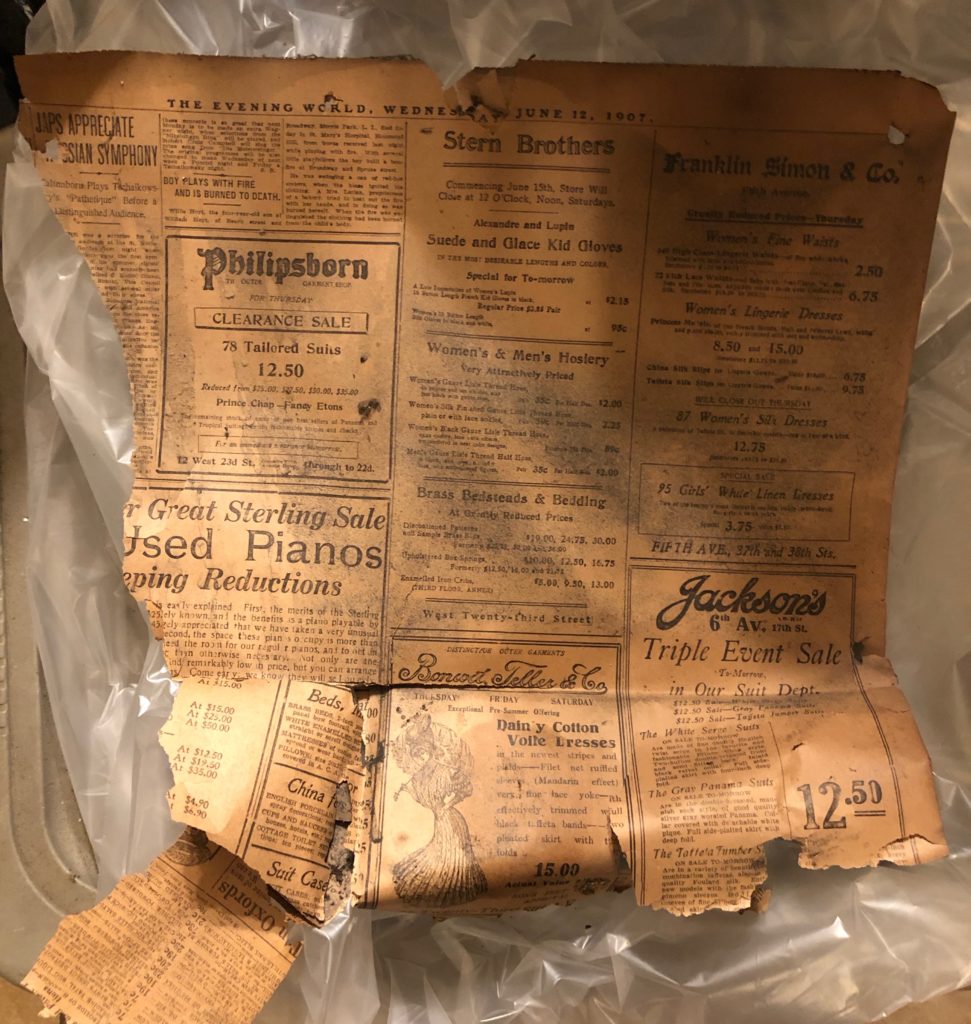
The Evening World Newspaper, Wednesday, June 12, 1907 Photo: Leslie Campos

It was amazing to see the types of advertisements for lawyers, dressmakers, medicines, and tinctures.  I marveled at the low prices.  The biggest story on one of the pages was about roller skaters.  It was an article talking about what the New York City Streets would come to if the these “crazed” young people were allowed to take over with roller skates.  I mused to myself wondering what the people of that time would think now if the saw all the young folks today on skateboards!  I’ve always had an avid curiosity about the past.  I’ve read countless stories about the lives of people from different eras.  And I was excited to have an actual 112-year-old newspaper in my hands.

Person:  Michele Valerie Cloonan

I recently read an article by Michele Valerie Cloonan entitled “W(h)ither Preservation?” Cloonan is a Professor and Dean Emerita at Simmons College.  She is also the editor of Preservation, Digital Technology and Culture. 

In her article she takes issue with the disappearance of preservation departments in lieu of digital initiatives at various institutions, and she puts forth the question: “Whither we (preservationists) should be going rather than letting these programs die” (Cloonan, 2001). As we move further into the digital era there have been many developments in technology that have allowed new methods of preservation to emerge.  But with the new technology there are new concerns.  In libraries there are concerns about whether an object should be retained or just the digitized information (Cloonan, 2001).  Due to the nature of digitized data, there are also questions about the altering of documents that have been reformatted, as well as, questions with regard to security.  Ensuring access points for all this digital information is also an issue that causes some trepidation (Cloonan, 2001). 

Place:  Museum of the City Of New York                                
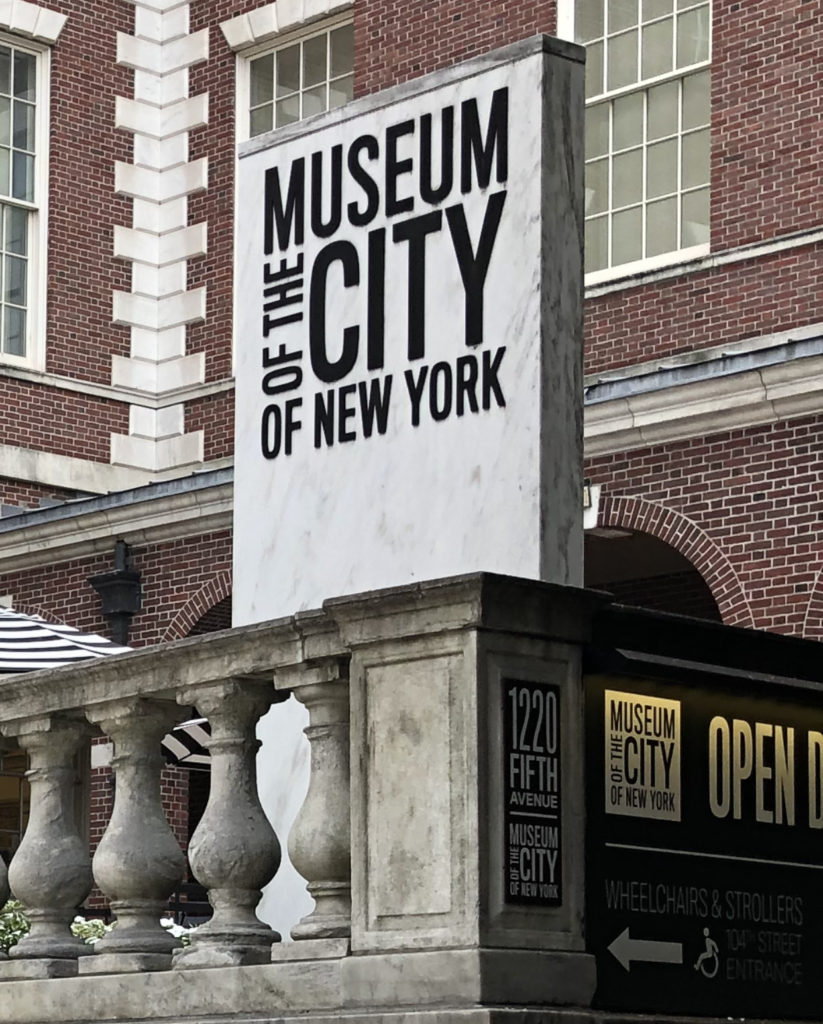
Museum of the City of New York Photo: Leslie Campos

With all these concepts floating around in my head along with my fascinating newspaper discovery, I decided to take a trip to the Museum of the City of New York.  I wasn’t sure what I was looking for, but when I arrived, I was pleasantly surprised.  I noticed that there was an amazing array of Exhibits that seemed to combine both the tractional museum model of artifact and description combined with new media.  There were two exhibits in particular that had lasting effect on me.  New York at its Core World City, and the Voice of the Village Exhibit. 

NY City at its Core consisted of three presentations:  Port City 1609-1898, World City 1898-2012, and Future Lab.  The Port city Exhibit was particularly interesting.  It was a small display in a darkened room with a series of various interactive displays and digitized maps throughout. In particular there was a virtual display of Mulberry Street.  The interactive component allowed the viewer to investigate the photo in great detail.  The display allowed you to zoom in on the digitized photo to highlight sections, as well as, find out additional details.  The convergence of media to create such a display added to the user experience, and gave what would have been a simple photograph new life.

The Voice of the Village Exhibit was a more traditional exhibit highlighting photographs and print chronicling historic moments in New York City’s history.  In light of my recent find, it was poignant to see how the impact of a newspaper could affect how we contextualize events that contribute to how we think about history.  The use of the actual newspaper as part of the exhibit also spoke to the importance of using both new technology alongside physical artifacts. 
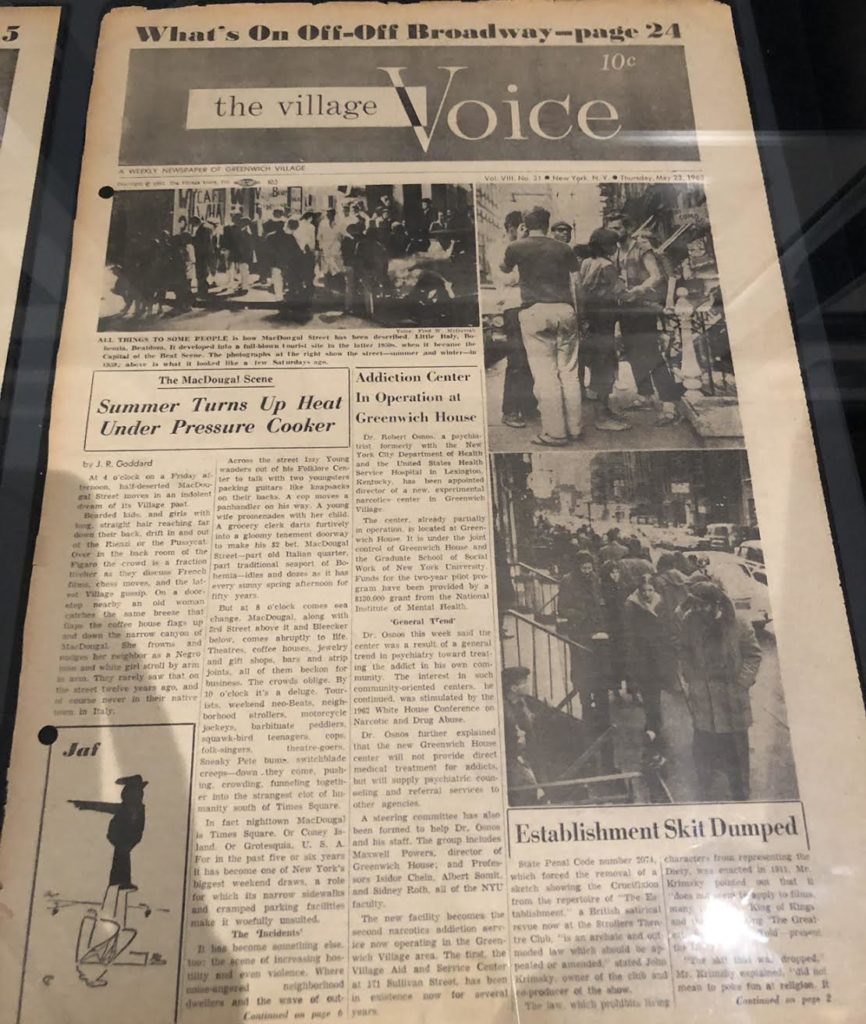
Village Voice Covers, May 23, 1963, Newsprint, Collection of the Estate of Fred W. McDarrah

Overall my visit to the Museum of the City of New York was enlightening.  I chose this museum specifically to get a better sense of what New York was like during the period the, June 12, 1907, Evening World Newspaper issue was published.  It helped me to gain a deeper understanding of the environment, and the factors that lead to what was considered the news for the day.  It had been a while since I visited a museum, and I was captivated by the new methods used in the presentation of historical content.  These exhibits were a vibrant integration of both the established methods of cultural preservation with leading edge technologies.  I found them to be engaging and thought provoking.   Cloonan writes: “…we must confront the fact that the experience of using digital documents will be different with each new generation of use” (Cloonan, 2001).  While this is true, I believe it is part of the process.  Each generation should and will project their own set of values and interpretations onto preserved history to give it broader context.  We see this trend happening now in our quest to restructure our own institutions in an effort to become more transparent and inclusive.  Furthermore, the digitization of documents will give an extended life to antiquities when they are no longer physically present.  Hopefully, with continued interdisciplinary discourse we will find ways to ensure greater security and continued access to these treasures that will engage the public. 

In closing, sadly it was too late to save the newspaper we found in the wall.  In just a short time of being exposed to the elements it fell apart, but at least (as I stated above) I managed to get some good pictures.  I was also able to find a digitized copy of the Evening World through the Library of Congress Website. Interestingly two of the pages I have are not present in the digitized copy.  To View the digitized copy click here.


Citations:

Cloonan, M. V. (2001). W(H)ITHER Preservation? The Library Quarterly: Information, Community, Policy, 71(2), 231-242. Retrieved from http://www.jstor.org.ezproxy.pratt.edu:2048/stable/4309507

Library of Congress, June, 12, 1907, Evening World, [Newspaper] Chronicling America:  Historic Newspapers, Library of Congress Retrieved from  https://chroniclingamerica.loc.gov/lccn/sn83030193/1907-06-12/ed-1/

McDarrah, F.W. (1926-2007), Village Voice Covers, May 23, 1963, Newsprint, Collection of the Estate of Fred W. McDarrah

Person, Place, and Thing: An Architect, an Airport, and a Tesla

Person: Richard Saul Wurman

Although formally trained in architecture, Richad Saul Wurman has been credited with the term “information architecture” as he applied his architectural background to help shape the field.

Wurman initially never thought of himself as an information architect or even thought that his ideas would contribute significantly to the field. Instead, he simply saw a problem with the increasing amount of information that was available and wanted to find a way to organize it. The following excerpt from Resmini and Rosati’s (2011) article captures the parallels he saw between architecture and information architecture:

Wurman’s maintained that as much as architects are expected to create structure and order in the world through planning and building, information architects were expected to draw lines and derive some kind of order in dataspace, their primary task being to make this information simpler, more direct, and ultimately more comprehensible.

He addresses the problem of increasing information by proposing design solutions. Because of his background and the angle that he approached information architecture, much of what Wurman presented mainly concerns the visual aspects of presenting large amounts of information. Nevertheless, his contributions are significant as his perspective has changed the way information professionals view, manage, and present information.

Indeed, Wurman’s most significant contribution to the information profession is that he introduced principles of information design and how all aspects of the field can implement design solutions. As Wurman was concerned with “deriving some kind of order in dataspace,” the aesthetics and visual impact of information is just as important as, say, a database itself. The information within it needs to be easily accessible, understandable and effective. Thus, many information professionals now also consider this approach when designing new systems and databases, or when presenting any form of information. As the amount of available information continues to increase, Wurman’s approach to information architecture seems very much necessary to create structure, order, and comprehension.

Place: Changi Airport

The Changi Airport in Singapore is consistently ranked as one of the best airports in the world. With world-class dining, shopping, gardens, and art installations, it’s an attraction in it of itself rather than a mere layover. The amenities and layout of the airport truly make it an exceptional experience and is an example of what happens when user-centered research and design is utilized in a public space.

In designing the airport, the placement of chairs was an important factor. Kenneth Ho, Senior Manager of Airport Facilities, explains that in providing a comfortable and luxurious experience, “single seaters spaced far apart are available for travellers seeking solitude, while clusters of comfortable lounge seats are designed for bigger groups like families” (Changi Journeys, 2016). “Snooze chairs” are also provided with outlets so flyers can charge their devices while resting comfortably (Changi Journeys, 2016).

In addition to providing comfortable seating, the airport also recognized the importance of its layout and how it can influence human behavior. For example, high-traffic areas have no seats to ensure a clear passageway while chairs in public areas “have arm rests to deter people from lying across it” (Changi Journeys, 2016). It is often the little things, like arm rests on chairs, that most people often overlook but can make a big difference.

This idea of strategically placing and designing chairs reminded me of Don Norman’s (1988) discussion of doors in his book, The Design of Everyday Things. A well-designed door is one that you automatically know how to use. A poorly designed door is one where you end up trying to push it open when you should be pulling it open. Ultimately, good design is something that you don’t notice because you don’t need instructions telling you how to conduct something because it has been designed with the user in mind.

Just as user-centered design can help with the flow of airport foot traffic, it can also help in crafting a better information experience. The application of user-centered design may be even more imperative now as information is rapidly becoming digitized and people now have numerous options to consume it. While doors and airports may seem completely unrelated to the field of information, the goal remains the same, which is to provide a better and improved experience for the user.

Thing: Tesla Vehicles

Some say Tesla has revived and revolutionized the electric vehicle industry. Surely, the vehicles arrived at a prime time when climate change is a pressing topic for politicians and more renewable energy options are available, but environmental consciousness is not the only reason for crediting Telsa with revolutionizing an industry.

Sit down in a Tesla and the first thing you notice is the absence of buttons, knobs, dials, and other gadgets that are usually associated with a vehicle’s dashboard. Instead, a large touchscreen sits in the middle, where such buttons and dials would have been. This touchscreen essentially controls everything in the car, from air conditioning to music. What’s even more noticeable about this touchscreen is that it can be customizable. You can input your name and then create settings to your preference so whenever you get in the car and tap on your name, the car is catered towards your experience. This idea of creating a catered experience for the user is closely related to Heidi Cooley’s discussion of the iPhone in Finding Augusta: Habits of Mobility and Governance in the Digital Era. In referring to Lev Manovich’s note about “playing the iPhone,” Cooley states that this marks a shift from “the principally utilitarian functionality attributable to jog knobs, buttons, and keys that defined earlier mobile devices” (Cooley, 2014, p. 32) What Tesla did for electric vehicles is similar to what Apple did for smartphones in that both companies rejected traditional, or “utilitarian,” views of what their products should look like and instead reimagined how it could be.

By replacing the traditional dashboard with a touchscreen, Tesla achieves a more fluid interaction between driver and vehicle. Cooley even goes on to state how “this idea of human-device interaction as skin-on-skin contact discloses something profound about ourselves as well as our devices” (Cooley, 2014, p. 36). Perhaps this “skin-on-skin contact” that is evident in both the iPhone and now a Tesla is necessary for facilitating such a unique user experience. Ultimately, Tesla revolutionized the electric vehicle industry by reimagining the user experience of the automobile. There has not been a car like a Tesla before and it certainly is the first luxury electric vehicle of its kind.

References:

Cooley, H. R. (2014). Finding augusta: Habits of mobility and governance in the digital era. Hanover: Dartmouth College Press.

Designing the changi experience. (2016). Changi Journeys. Retrieved from http://www.changiairport.com/corporate/media-centre/resources/publication/issue-2/designing-the-changi-experience.html

Resmini, A. & Rosati, L. (2012). A brief history of information architecture. Journal of Information Architecture. Vol. 3, No. 2. Retrieved from http://journalofia.org/volume3/issue2/03-resmini/

Miss Manhattan

Across New York City, there is a woman in various states of undress, so baked into the architecture that she is barely noticed. At the intersection of 59th and 5th, she stands atop a fountain. In front of the Merchant’s gate of Central Park, she considers the pigeons perched on her arms. On 107th and Broadway, she reclines on a bed; And on top of the Manhattan Municipal Building, she stands tall, cast in gold. She was my constant companion as I explored this city, from the financial district to the Metropolitan Museum of Art. This post explores three aspects of her identity- as a person, a place, and a thing.

Place

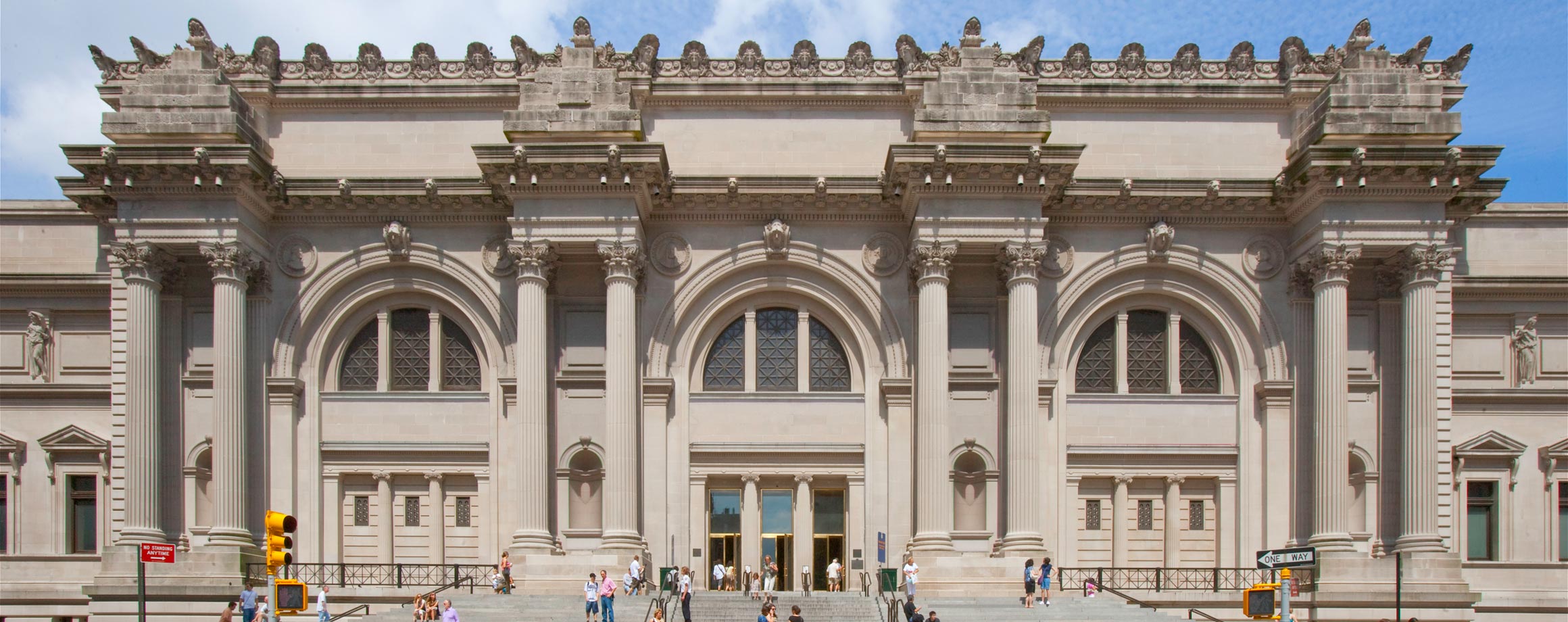
image from www.metmuseum.org

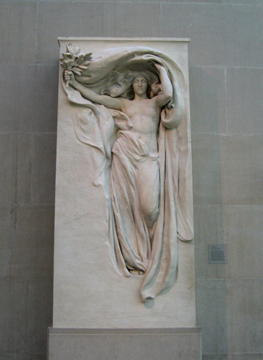
The Metropolitan Museum of Art, also known as the Met, is one of the largest art galleries in the world. If you enter from 82nd street, past the great hall, taking a right at medieval art and through European sculpture, you arrive at the American Wing. Here, she appears as one of the very first works you encounter as the Victory Mourning. A copy of the original statue present at the Melvin Memorial, a tribute to 3 brothers lost at the battlefront by the fourth survivor, she bears the weight of a hard-won triumph. The museum is a place where the sculptures are given a chance to talk, placed among their contemporaries, prefaced with a bit of context, lovingly maintained by staff, and visited by thousands upon thousands of travellers. 

Victory Mourning

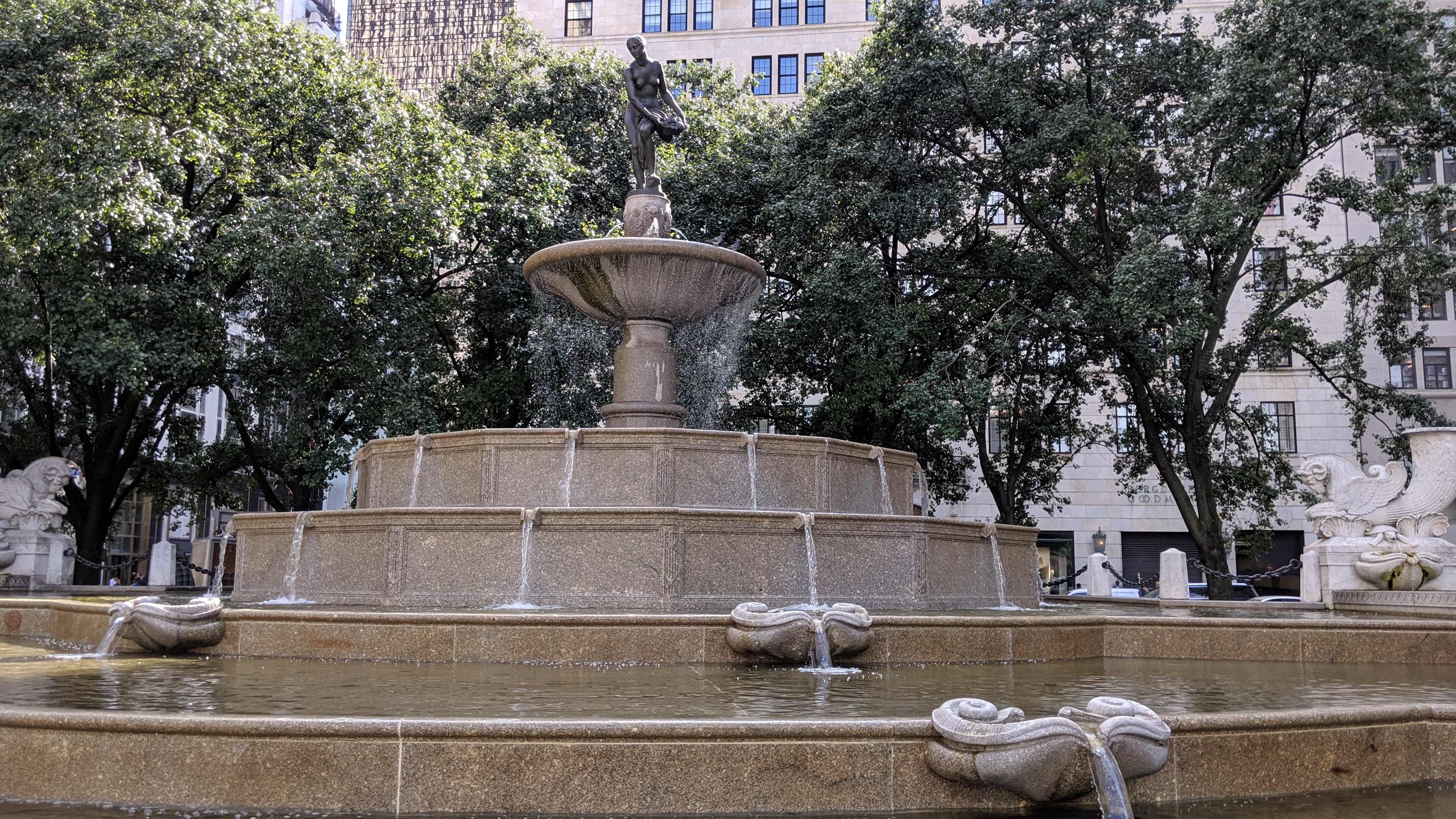
A few blocks away, she stands as Pomona, the goddess of abundance. Recently in the news because of political discourse involving her refurbishment, she isn’t given the time of day by the busy citizens rushing about their day. Sometimes, a penny is dropped into the fountain for a fleeting wish. It reminded me of the enormous power over memory and identity, over the fundamental ways in which society seeks evidence of what its core values are and have been (Schwartz, 2002) that is enshrined within the profession of information. The fountain itself is known as the Pulitzer fountain, after the man who commissioned it. It is sometimes referred to as Pomona or The Abundance, after the image the artist intended to evoke. But atop the fountain, we see a woman and she had no name to offer.

Thing

In stone and bronze a humble human shape, sculpted to represent glory, power, unity, memory, peace, purity, virtue… as it was seeking form in the public architecture of an emerging metropolis.

Andrea Geyer, This Site of Memory: Audrey Munson

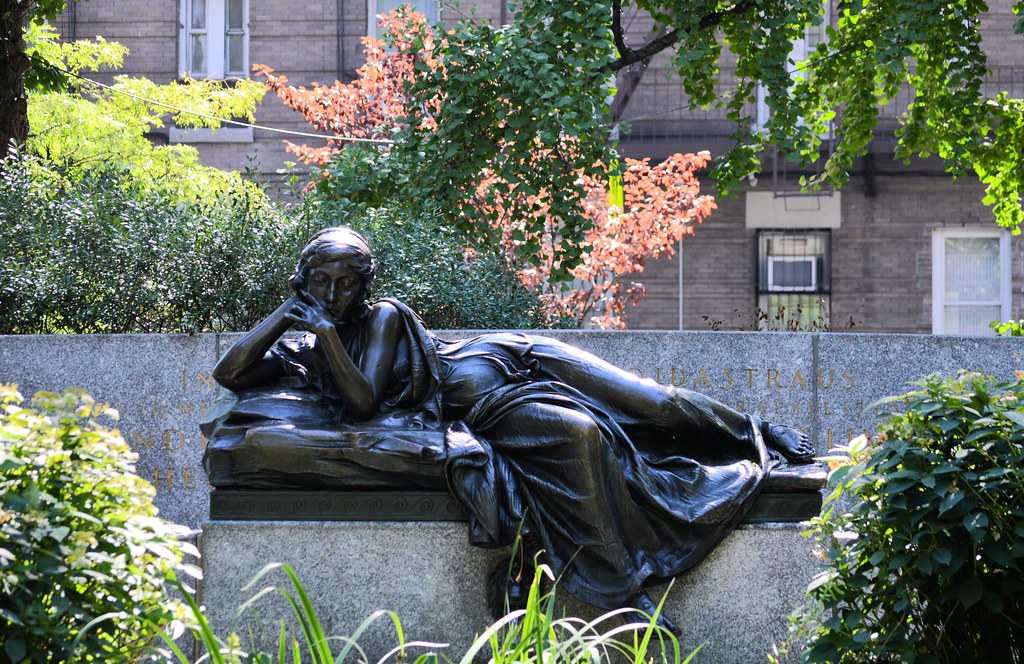
The statues posed by Miss Manhattan are all across the city, around 20 in number. Similar to Scott Nixon documenting the Augustas, the moment you look for her, you seem to see her everywhere. On West 106th street between Broadway and West End Avenue, she reclines on a bench. She’s meditative, relaxed, one foot dangling. Her eyes are lowered, her head is supported by one hand and the other hand holds her chin. She looks down into a pool, rather than out at the street or the pages of a book. She seems to be thinking of something or someone who isn’t present. 

She is Memory, a monument dedicated to Ida and Isidor Straus, a wealthy philanthropist couple who tragically passed away on the maiden voyage of the Titanic. It is believed that Ida refused to board the lifeboat without her husband, and Isidor refused to board the lifeboat until all the women and children were safely aboard. Survivors reported seeing the pair on deck, arms around each others’ waists, in the hours before the Titanic went down. In 1995, a park renovation effort replaced the reflecting pool with an easier-to-maintain garden, citing a lack of funds.

Person

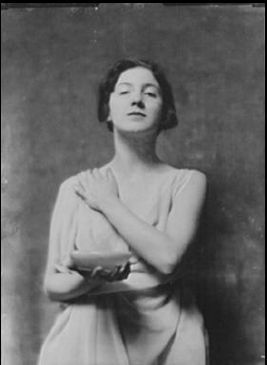
Audrey Munson, 1915

She has gone by several aliases: Priestess of Culture, Mourning Victory, Star Maiden, and Niche Figure. Her real name is Audrey Munson, once the most famous artist’s models in the United States and the world’s first “Supermodel”. In 1909 she moved to New York City with her mother, who was recently divorced and in search of work. Young Audrey wanted to study music and dance. Walking down 5th Avenue, her desire to be seen was paired with the coincidence of “being discovered” by a photographer. Upon his invitation, Audrey, still a teenager, dared to step first in front of a camera, then in front of an artist, then in the nude. She quickly became part of a scene of influential sculptors, artists, and their financial backers. 

Her story follows an all-too-familiar path: meteoric rise, sudden fall and quiet conclusion. In 1915, she was a household name. In 1920, she was penniless. In 1930, she was forgotten. This doesn’t paint the whole picture, however. 

In the city’s directory of 1909, she lists herself as an actress. After 1915 she will call herself, in this same directory, an artist.

Andrea Geyer, This Site of Memory: Audrey Munson

She was a writer who spoke of the artist’s studio as a marketplace of vanity, a strong advocate for women of her profession, a supporter of the suffragette movement. By the time Munson turned 30, her career was blighted by a media frenzy that speculated that her ex-landlord killed his wife for love of her. She spent the last 65 years of her life in a mental hospital after a failed suicide attempt.

Munson, in many ways, was a living archive of the city. Her likeness catalogues the dominance of the Beaux-Arts movement in the early 20th century, her career spans the rise of new professions that have since developed into a global enterprise, and her life is an unpleasant mirror to the struggles of women for agency, respect, and fair compensation over the past century. In 1921, she wrote about the need for artist’s models to be seen as co-creators of the art presented to the public. In 1922, she spoke of the perils of employment when rejecting the advances of men who held power in the industry. In many ways, things have changed since Audrey Munson was launched into the spotlight, and in many ways, they haven’t. One thing is clear, however: she deserved to be remembered, not just as marble, brass, and concrete, but as a person, flesh and bone.

References

Design is Storytelling

Person: Ellen Lupton

The person for this post is Ellen Lupton. She is a graphic designer, author and curator and is currently working as the curator of contemporary design at Cooper-Hewitt, National Design Museum in New York City. Her book Design Is Storytelling truly inspired me. Through this book Lupton uses real world examples inspired by fictional characters to depict how designers can harness the power of storytelling to create memorable experiences. I never really thought of designing as a way of telling stories. Even as a User Experience Designer, I believed that my job was to design interfaces that are intuitive and easy. “Good design is invisible”— was a motto I lived by until I came across Design is Storytelling. 

The first thing that caught my eye in the book was the phenomenology of paths. Lupton mentions various examples about how our eyes keep searching for a path (A google search for a forest will give you various results of  forests with some kind of path leading to somewhere). Another concept she talks about in her book is a Hero Story. A Hero Story is a tale about a protagonist (could be a person or a thing) that gets a call to adventure from the ordinary world to enter a new world, experiences hurdles, learns something new and then returns to the ordinary world.  Even rudimentary tasks like buying groceries or going for a jog involves a hero story and everyone desires it . A hero story creates delight. The way we design an interface or a space like organising the home page for a website or curating an exhibition can invoke a hero story for people who interact with it. Combining the two concepts here, as designers who create paths for people to navigate, to what degree do we provide infinite paths or to what degree do we limit them? Finding the right balance based on context such that it doesn’t affect the user’s hero story is how we become good designers. 

The third and most intriguing concept she talks about is that products can also have character. A product’s character could be centered around gender or age or profession and designers should use it to their advantage. For example when we think of Amazon, we associate it with quick delivery or Spirit airlines with cheap but awful flight experience. Similarly all products have some adjective associated with it and these adjectives make up their character. My favorite  aspect of reading this book was its pictorial nature. Even though the book is filled with illustrations, they are not random and meaningless. Each illustration relates to a theme Lupton tries to highlight. They all tell a story. Lupton through her book Design Is Storytelling taught me that good design is not invisible. As designers we must create products that take the user on a journey, provide them with a hero story such that their experience is memorable. Even a bad design is better than an ambiguous design. Therefore we should strive to create good experiences that are memorable.

Place : New York City Subway

Lupton’s Hero Story inspired me to select a place that resonated with this idea. That is why I chose  the NYC subway. Since I’m new to the city, traversing the subway system has been ,for the most part, a memorable experience. Even with the release of the MTA app to help you create your schedule based on the train timings, the subway has never ceased to surprise me and take me on an emotional journey. 

Atlantic Avenue Barclays Center
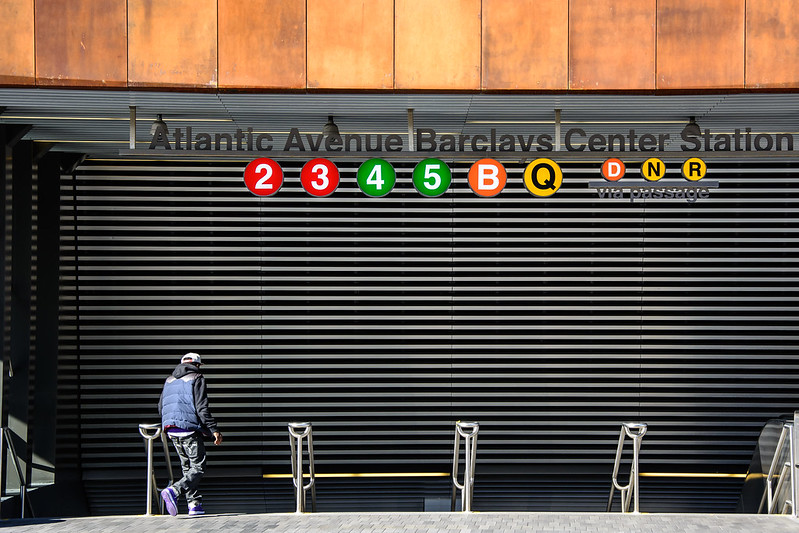
Atlantic Avenue Barclays Center Station

Last week my brother invited me to cook some traditional malayali food since I’ve been craving home food for a really long time. So I agreed to meet him at 11:00 am so that we’d finish cooking right on time for lunch. I checked the MTA app to see how long my commute would be and what transfers I would have to take and prepared myself to leave. As soon as I reached the station, I realised I did not have balance on my metrocard. When I tried to recharge, the metrocard recharge machine was only accepting cash in denominations of $20 or less and I had a $50 on me. I ran to a Deli store nearby to get change and finally managed to refill my metrocard but by the time I reached the platform, the train I wanted to take had left and the next one was scheduled to come in 12 minutes. This frustrated me. My next hurdle was transferring at Atlantic Avenue Barclays Center Station. I had not realised how extensive the station was and anticipated navigating through it would be difficult. On the contrary the signboards were very clear and I found my platform in less than a minute. My train immediately arrived and I was delighted by how easy that experience was. In a way I felt like a hero. Another aspect of the NYC subway that always catches my eye is the artwork at various stations. It’s also something that people keep talking about. As a matter of fact, I know people who use it to navigate. When my brother was giving me directions to his apartment, he told me to take the exit close to the mosaic of a woman in a saree. 

2nd Avenue Subway, 72nd Street Station
Exit close to the woman in a saree

The NYC subway is a great example for a good design system. Just as Lupton mentions in her book, the NYC subway system enables its commuters to create memorable experiences by taking them on an emotional journey. It helps them navigate to the path of their desire as well as provide them with a hero story. 

Thing: Nintendo Switch

For my Thing, I chose the Nintendo Switch. The Switch is both a handheld and a home console with exceptional graphics for its size and motion controls to elevate your gaming experience. The reason I love the Switch is because of how simple and interactive it is. The Switch was the first gaming console I used and even as a novice, it was extremely easy to navigate. My favourite part of the Switch are the Joy-Cons. Everytime I attach the Joy-Cons to the grip it produces a click sound which is very satisfying. As a matter of fact, the animation for the Nintendo Switch logo includes the click. In Lupton’s book, Design is Storytelling she talks about how products have character. The click sound is the character for the Nintendo Switch. Every action you perform on the Switch includes the click. 

Another thing I love about the Switch is how easily navigable the homepage is. The first thing you see are the games you have on your system below which are the menu items. The icons designed for the Switch, according to me, are well researched because even without reading the labels you can still understand what they try to convey. 

Switch homepage

The Switch includes a touch-screen interface and Joy-Cons with inbuilt gyroscopes, IR sensors and motors which create a rumble effect while playing games. The first few games I played on the Switch were Super Mario Odyssey and Okami HD, both of which used the motion detection and the rumble features. I love the rumble effect because it never ceases to amuse me. It was designed to induce delight

Nintendo Switch

Design is about creating memorable experiences and the design for the Nintendo Switch is exactly that. It caters to both seasoned gamers as well as amateurs like me. I tried using other gaming consoles like the PS4 but the interface was overwhelming. Nintendo’s user base is vast and to create something that accommodates them all is an exceptional feat. The Switch’s interface does not look extraordinary nor is it overloaded with features. What makes the Switch beautiful is that even though its design is intuitive and simple it’s not invisible and that’s the reason I chose the Nintendo Switch as my Thing. 

References

Ellen Lupton, (2017) Design is Storytelling published by Cooper Hewitt, Smithsonian Design Museum; 1 edition.

Ellen Lupton, <http://elupton.com/>

The Nintendo Switch Is the Future of Gadget Design,<https://www.wired.com/story/nintendo-switch-review/>

Nintendo Switch Technical Specifications, <https://www.nintendo.com/switch/tech-specs/>

The information of cryptography in people, places, and things

Place: Spyscape Museum

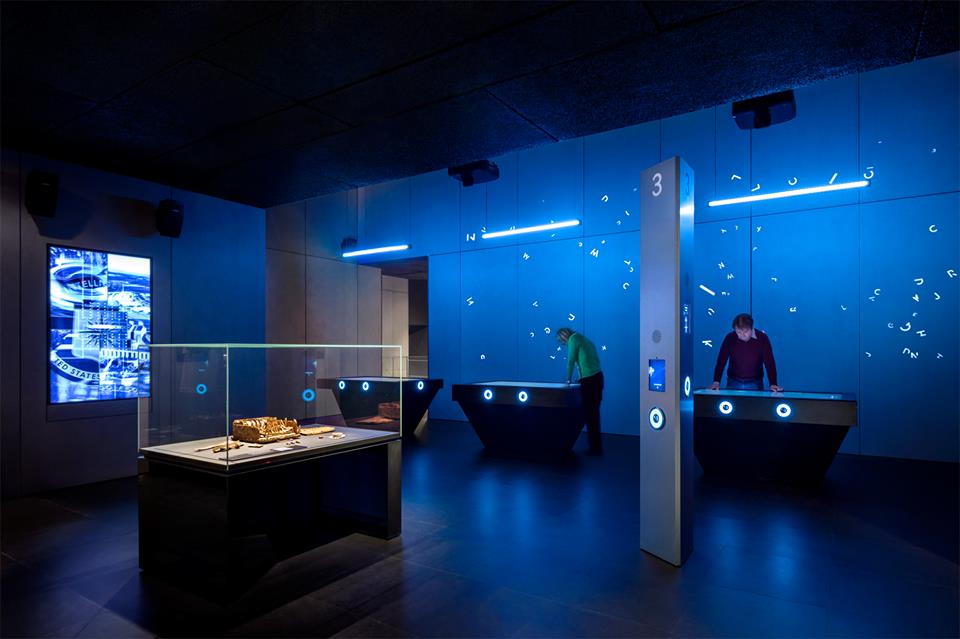
This summer, I visited the Spyscape Museum in Manhattan. It’s at once a museum and an activity: while it has exhibits about counterintelligence operations, cryptography, and other “spy”-related topics from across history, it also comes with a significant interactive component, leading visitors through quizzes and games.

Photo: Spyscape

The whole museum is centered around a challenge of sorts, geared towards discovering what sorts of skills you have that could be relevant to various professions related to spying, including field operators, handlers, researchers, and codebreakers, among other roles.

Beyond being a fun way to spend a few hours away from the summer heat, the Spyscape Museum actually made me curious about many of the things I learned there, such as the Anonymous movement, cryptography’s legacy in the digital age, and the role of covert operators across history.

As a museum, Spyscape is an institute of information, cataloguing and preserving different histories of covert operations. Spyscape, like many museums, teaches by a method called interpretation.

“Interpretation relies heavily on sensory perception—sight, hearing, smell, taste, touch, and the kinetic muscle sense—to enable the museum-goer emotionally to experience objects.”

(Alexander, 2008)

With visual and audio components to its exhibits, plus touch screens that allow visitors to play games and answer questions, Spyscape certainly makes use of the full sensory experience.

The subjects of the museum, cryptography and covert operations, also deal heavily in information: protecting it, freeing it, and controlling who has access to it.

“Nations go to great lengths to gain [information] by using the time-honored tools of espionage and codebreaking to gather information secretly. … Codebreaking evolved from the ancient art of pencil-and-paper puzzle solving to the science of cryptanalysis.”

(Gannon, 2001)

This evolution in cryptography mirrors the journey of the information field, from the simplest of roots to the complex webs of information we have today in the digital age. It’s this evolution that the Spyscape Museum catalogues, interprets, and shares for its visitors.

Person: Alan Turing

One of the most important people in the history of cryptography, whose story was given great focus in one of Spyscape’s exhibits, was Alan Turing. He’s famous for leading the World War II-era British counterintelligence team that beat the German Enigma machine, which encrypted messages according to regularly-changing ciphers that were difficult to crack. But he had a hand in many other information-related operations during and after World War II, and his life itself is a study in how information can have an impact on a personal level.

Turing’s claim to fame was his work for British counterintelligence on the Enigma problem.

“The science of numbers and symbols was in Turing’s genes … [He] ignored the intimidating numbers and put his trust in what he knew—mathematical logic.”

(Gannon, 2001)

Having an eccentric manner but an undeniably genius brain, he gained respect from his colleagues and managed to find a solution that reliably broke the codes created by Enigma machines.

Even after the war, Turing continued to work in information-related fields, going on to lay “the foundations for computer technology and artificial intelligence” (Spencer, 2009). His work, in large part, has been the starting point from which much of the digital age has sprung: computers, machine learning, and data analysis, in their modern iterations, have all been influenced by Turing’s work.

Of course, the sensitivity of Turing’s projects during World War II meant that he wasn’t publicly recognized for his contributions to ending the war; he had to keep his work a secret from even his family.

“Turing’s oldest niece, Inagh Payne … recalls sitting on his knee asking him repeatedly what he did at the office. Turing remained quiet about his work for the war effort.”

(Spencer, 2009)

And this wasn’t the only part of his life he had to keep a secret: his homosexuality, for which he was eventually criminally prosecuted, was another large piece of information about him that could not see the light of day.

It is this juxtaposition between his work and his life that strikes me most about Alan Turing. His life’s work, the achievement for which he is most recognized, is that of freeing information, revealing secrets, and saving lives by being able to break codes and open lines of communication. But in his personal life, neither recognition for his incredible deeds in the service of his country, nor the simple liberty of being able to love freely, were granted to him. Exposing and withholding information are two sides of the same coin; perhaps no one knew that coin as well as Alan Turing.

Thing: Cryptex

While I was at the Spyscape Museum, I couldn’t help but reflect back on one of the first books that ignited my interest in cryptography: The Da Vinci Code. Though I haven’t read it in a long time, a few of the concepts from the book have really stuck with me. One of the things that has always intrigued me is an object called a cryptex.

“A portable container that could safeguard letters, maps, diagrams, anything at all. Once information was sealed inside the cryptex, only the individual with the proper password could access it.”

(Brown, 2003)

This device struck me as a genius invention when I first encountered it — appropriately, it was credited to Leonardo Da Vinci in the story. For a while, I believed that was its origin, but actually, it was invented by Dan Brown, The Da Vinci Code’s author.

The cryptex itself is obviously linked with information: namely, it’s designed to protect information from everyone but its intended recipient. But the real-life story of this fictional object also has a lot to do with the way we interact with information, especially when it can be used for profit.

A year after the publication of The Da Vinci Code in 2003, a fan of the book named Justin Nevins created the first physical replica of the cryptex. Shortly thereafter, he trademarked it — which led to a dispute between Nevins and Columbia Pictures when The Da Vinci Code was adapted into a movie. Nevins wrote out his side of the story many years later on a forum website (Nevins, 2017).

As Nevins tells it, Dan Brown didn’t have a problem with him holding the trademark for the cryptex at first. But when The Da Vinci Code‘s movie was in production, Columbia Pictures wanted to make their own replicas for the movie, and wanted Nevins to drop the trademark. Nevins and Columbia Pictures eventually settled out of court: the movie was allowed to use the word “cryptex,” but Nevins was allowed to keep his trademark. He still sells cryptices online.

This part of the story is, understandably, not as well known as the cryptex itself; but it brings this device from a fictional object to a technology of the real world. Copyrights and trademarks are a big part of regulating how information can be used and received in the world, which echoes the original purpose of the cryptex itself: keeping information from certain parties, and revealing it to others.

The cryptex’s journey from fiction to reality illustrates the importance of information: the creativity that can happen when it’s shared with the world, and the monopolization that might ensue when it’s kept safeguarded in just a few, powerful hands.

References

Alexander, E. P., & Alexander, M. (2008). Museums in Motion: An Introduction to the History and Functions of Museums. Lanham, MD: Rowman et Littlefield Publishers, Inc.

Brown, D. (2003). The Da Vinci Code. New York: Doubleday.

Gannon, J. (2001). Stealing Secrets, Telling Lies: How Spies and Codebreakers Helped Shape the Twentieth Century. Washington, D.C.: Brasseys.

Nevins, J. (2017). The history of the Cryptex. Retrieved from https://forum.thecodex.ca/t/the-history-of-the-cryptex-r/70.

Spencer, C. (2009). Profile: Alan Turing. Retrieved from http://news.bbc.co.uk/2/hi/uk_news/8250592.stm.

Spyscape Museum. Retrieved from https://spyscape.com/.