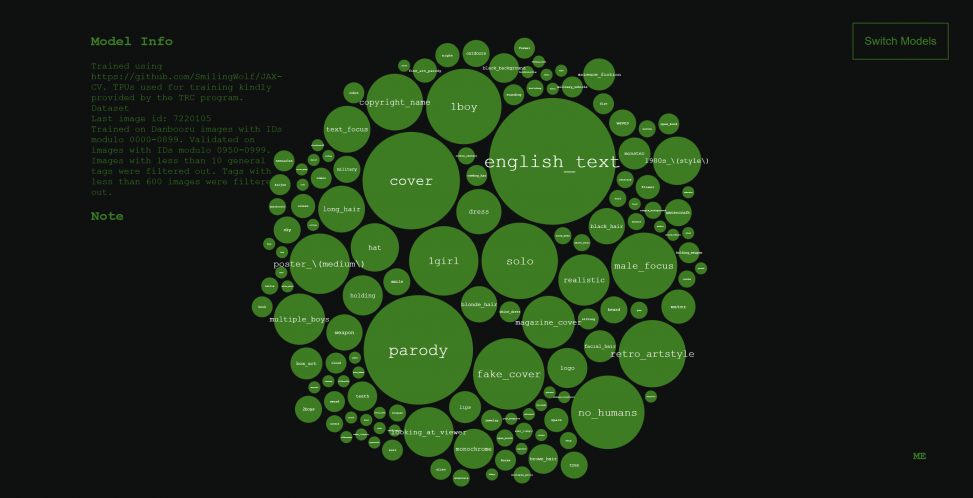
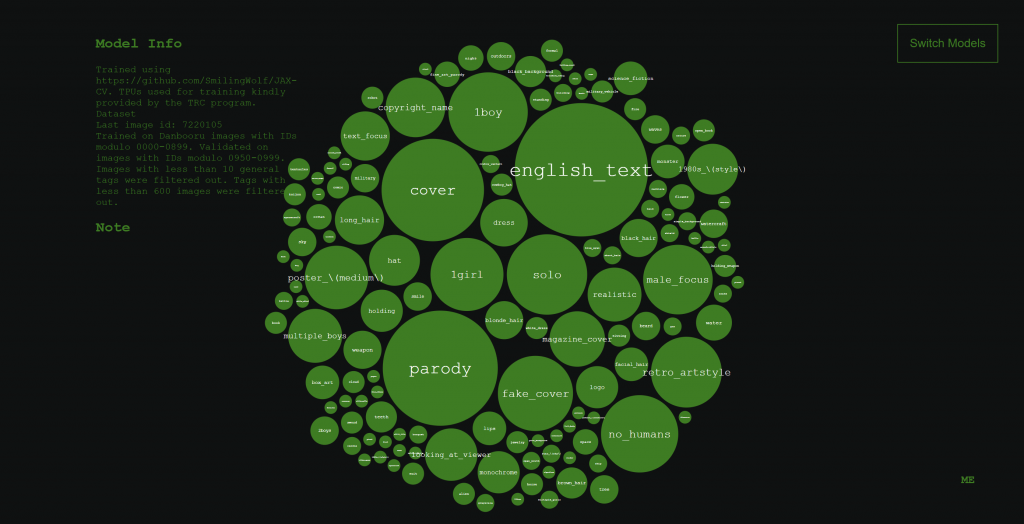
For this project, I am creating an interactive website that allows users to explore how different AI vision models classify visual information. The site features data visualizations of generated phrases from various image-classification or image-captioning models.
Clicking on each phrase displays the corresponding image sets, which are derived from pulp magazine covers from the 1920s to the 1950s.
By examining the phrases the AI extracts from these images and then analyzing the images themselves, I aim to offer users an exploratory experience. This allows them to firsthand investigate the inaccuracies, biases, and, quite frankly, how crappy AI vision models are in terms of capturing the nuance of visual resources.
The website also provides detailed information about each model, including their possible data sources and potential use cases. This contextual information highlights the “lens” through which each model interprets the world, underscoring the argument that the characteristics of the training data and the positionality of its creators are amplified in every aspect of the model’s output.
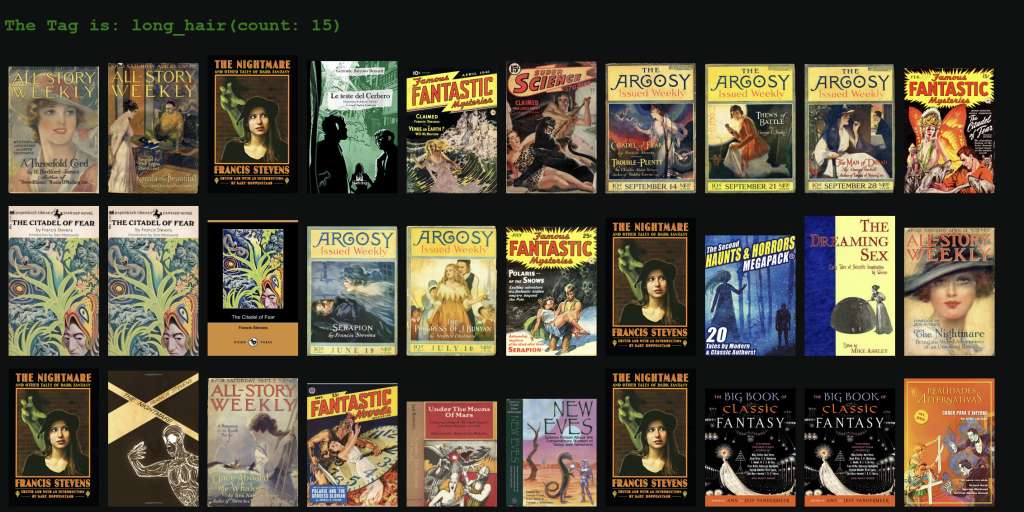
The image samples are drawn from pulp magazine cover art in speculative fiction from the 1920s to the 1950s. Among these artifacts lies a hidden movement of women artists and writers who subtly pushed against traditional norms through their contributions to pulp magazines. This set of images is particularly well-suited for the investigation because of its nuanced and ironic history—and because it is just problematic enough to expose the flaws of these AI models.
Pulp fiction is often dismissed as lowbrow entertainment. However, it frequently tackled risqué themes of its time, including taboo subjects like murder and sexuality. The genre is also known for being overtly sexual—and sexist. Female characters were typically portrayed as either innocent damsels or dangerous seductresses. Yet, the lack of censorship and the profit-driven model of pulp publications also gave writers and artists opportunities to explore subversive creative directions, as long as their work sold. Female writers and artists in speculative fiction often used this creative freedom to challenge gender norms and represent more nuanced female experiences.
The pulp magazine cover art of speculative fiction from this era offers a fascinating snapshot of this mix of constraint and rebellion. For example, when illustrator Margaret Brundage took over the covers of Weird Tales magazine, her work remained centered on the female form but subtly shifted the magazine’s visual style. While her art adhered to colonial Gothic aesthetics and occasionally depicted women as vulnerable damsels threatened by nonwhite figures, Brundage also infused her characters with agency and personality.
The images themselves are filled with contradictions and complexities, which makes the AI models’ attempts to decode them almost comical. Some models completely ignore the raunchiness of these cover arts, while others apply a suggestive lens to every image. The captions reveal surprisingly little about the cover art while exposing much about the models.
Ultimately, I leave you with this question: if I were to fine-tune a model specifically for this set of pulp magazine covers, would more curated captions enable the model to “understand” the subtle meanings within the images? Or would it merely echo my interpretations, like a zombie mimicking the arguments I’ve made about women science fiction artists of this period?
Leave a Reply