Project Description
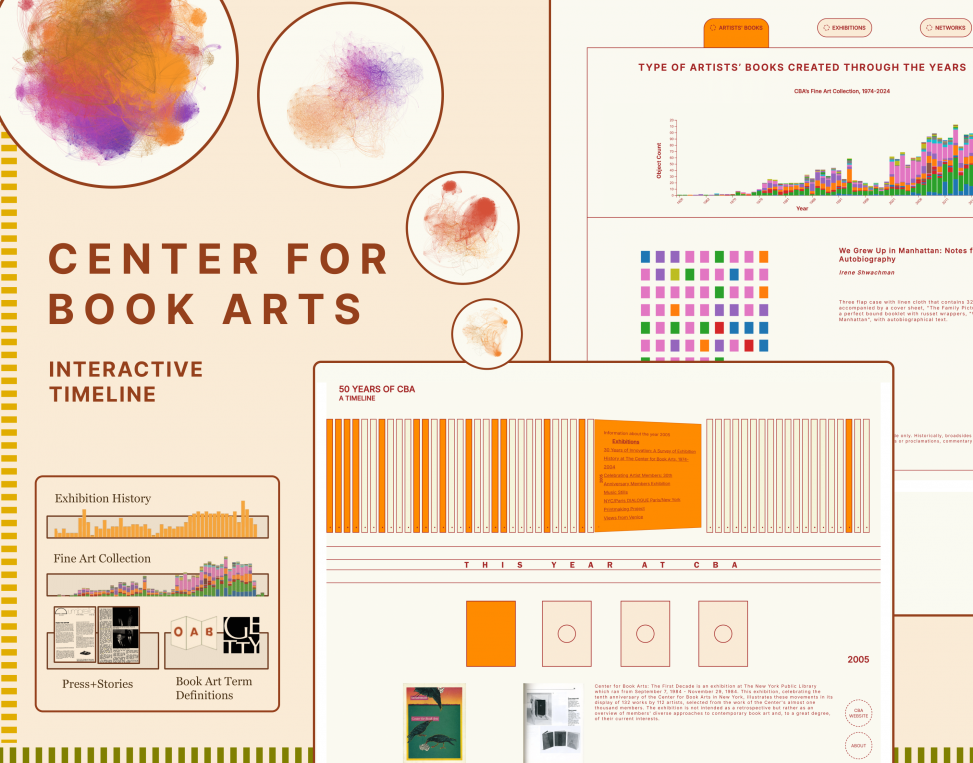
This project presents the history of the Center for Book Arts through an interactive data timeline that charts the institution’s evolution over fifty years.
Data Source: Center for Book Arts Exhibition and Collection data
Tools: Python, HTML, CSS, d3.js, javascript, tableau
The Project Cluster
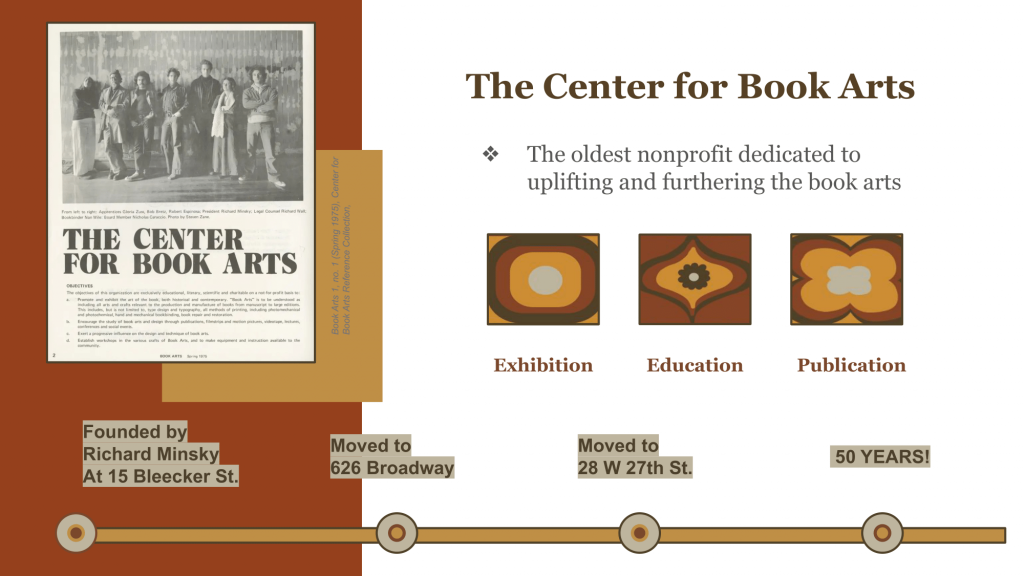
In partnership with New York City’s Center for Book Arts (CBA), the Fall 2024 Advanced Projects in Digital Humanities course at Pratt Institute’s School of Information is developing a constellation of data-driven projects that explore the CBA’s collection and the field of artists’ books. Our goal is to spotlight the CBA to cultivate interest in its collections and in books as art. Given the CBA’s role as a museum, archive, and working studio, this project aims to connect with people across its community. Books as Art, Art as Data embraces digital humanities methodologies to further the CBA’s mission of democratizing the powerful medium of the book.
Books as Art, Art as Data will be housed in a website that will serve as a portal to all of the elements of our project. We are creating a timeline of the CBA’s exhibition history; an exploration of the relationships between the collection items; a narrative exploring the institution’s history in NYC as it has moved; and a network exploring book arts methods and terms. In addition, the project will provide resources for students and scholars looking to do further research, including a map of other artists’ book collections, the underlying data from the project, and documentation of our process.
The Timeline
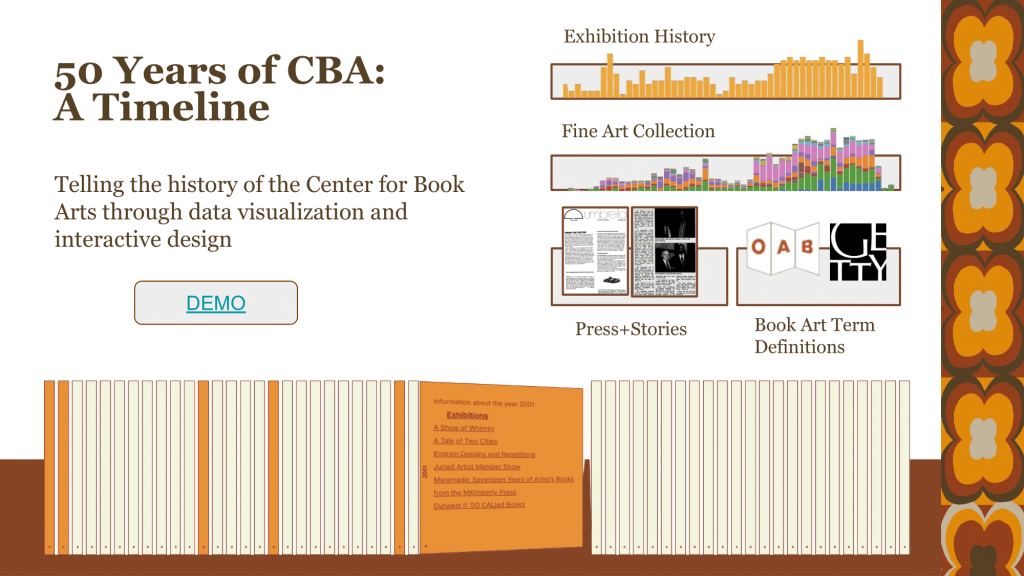
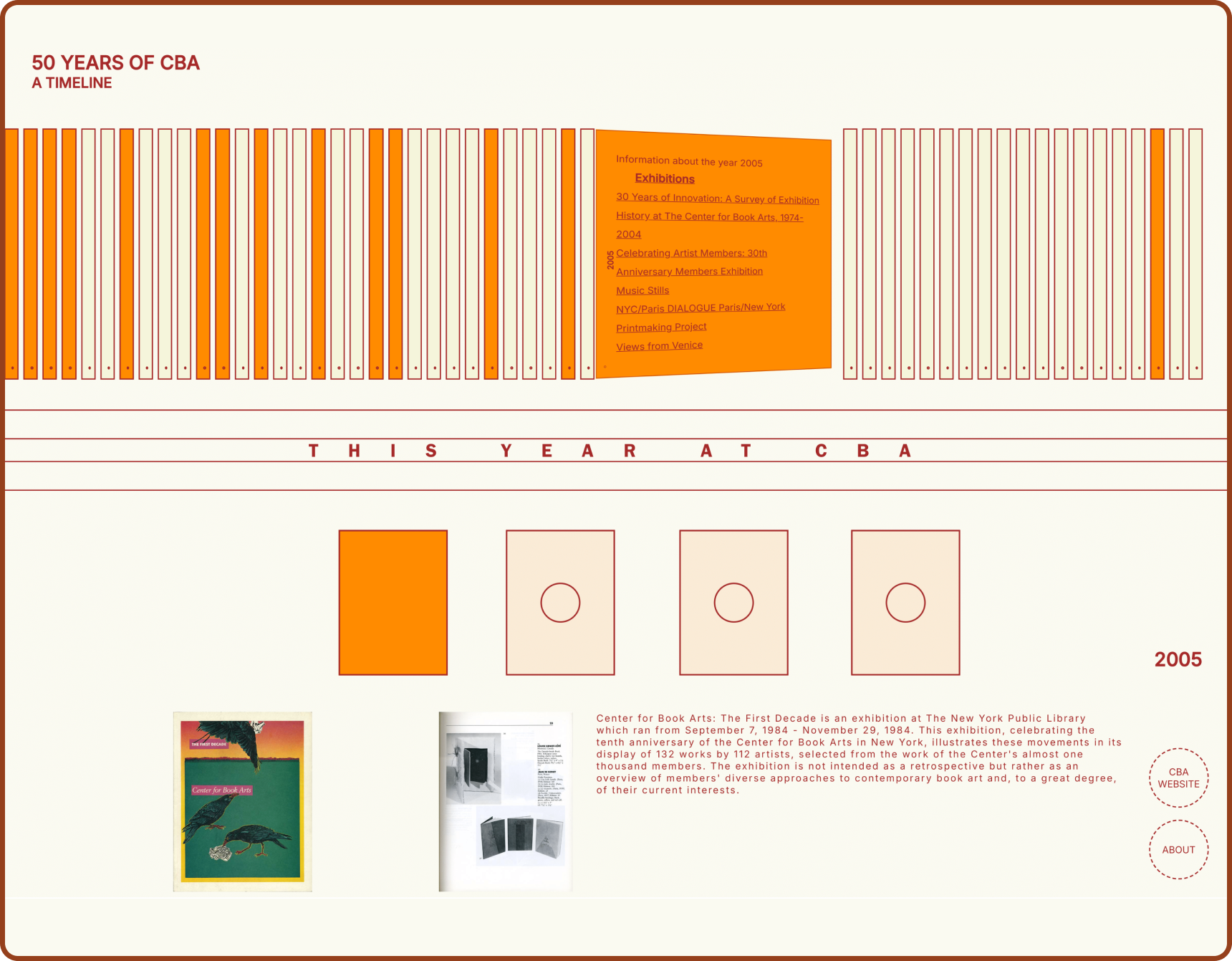
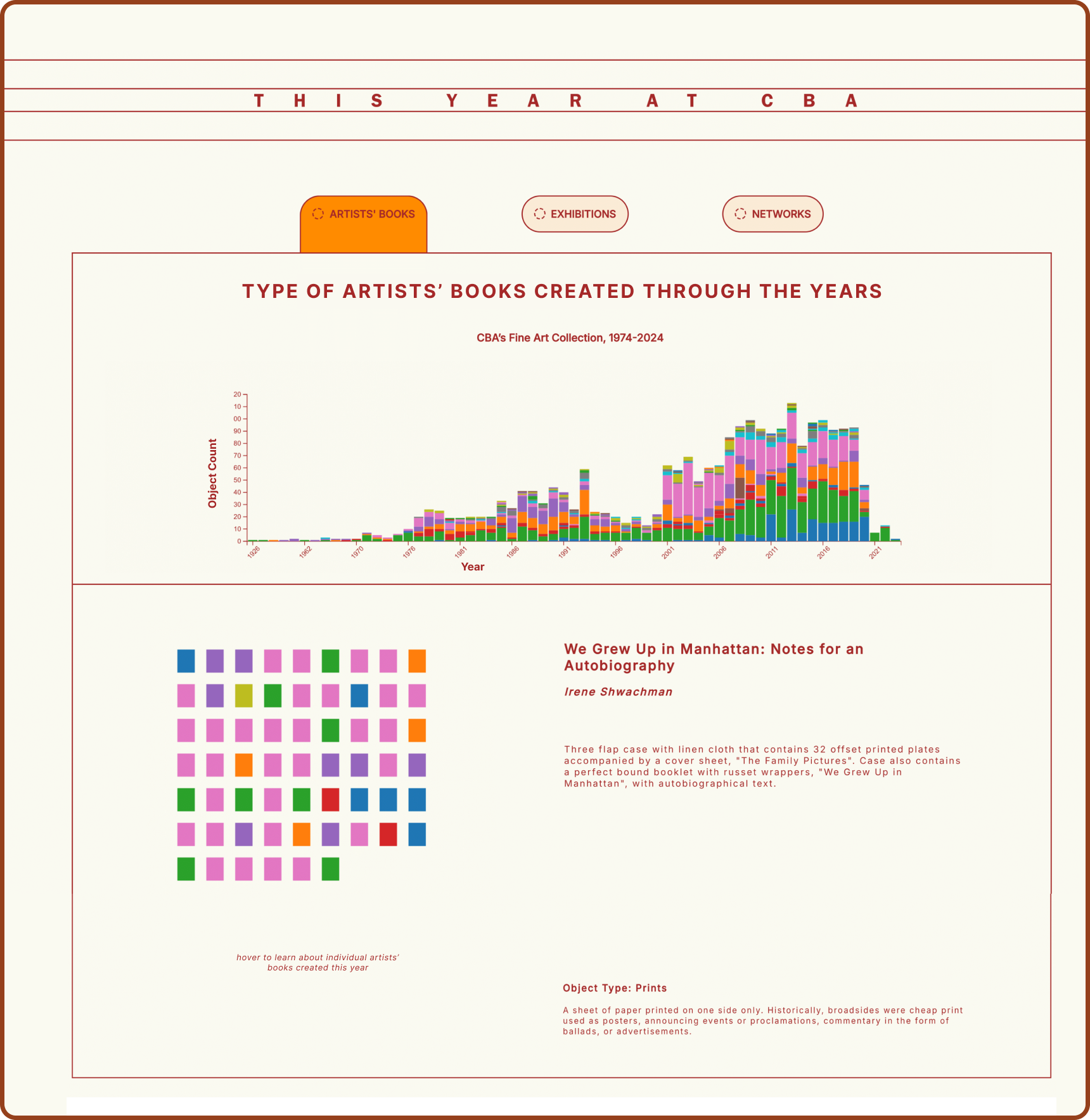
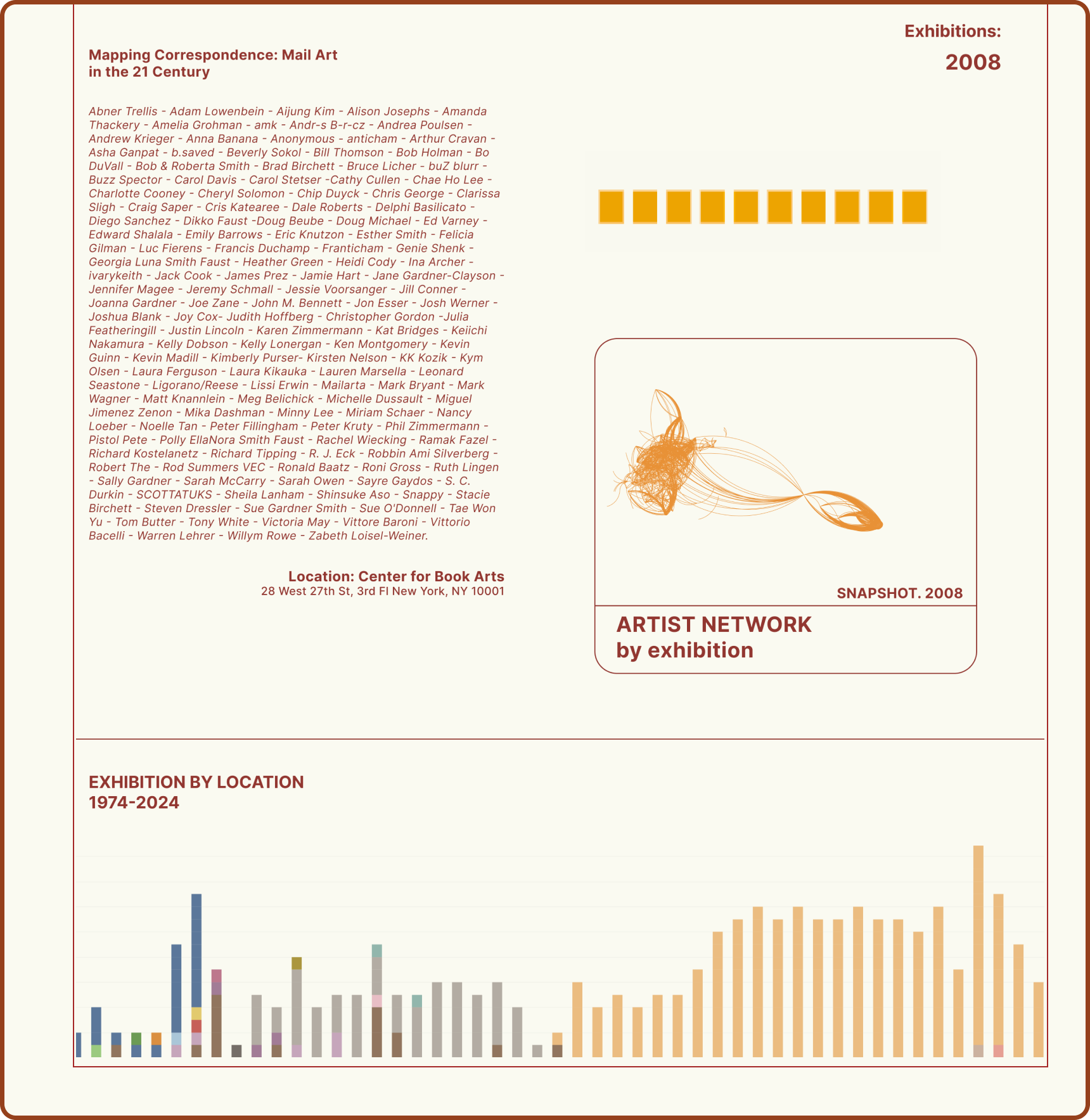
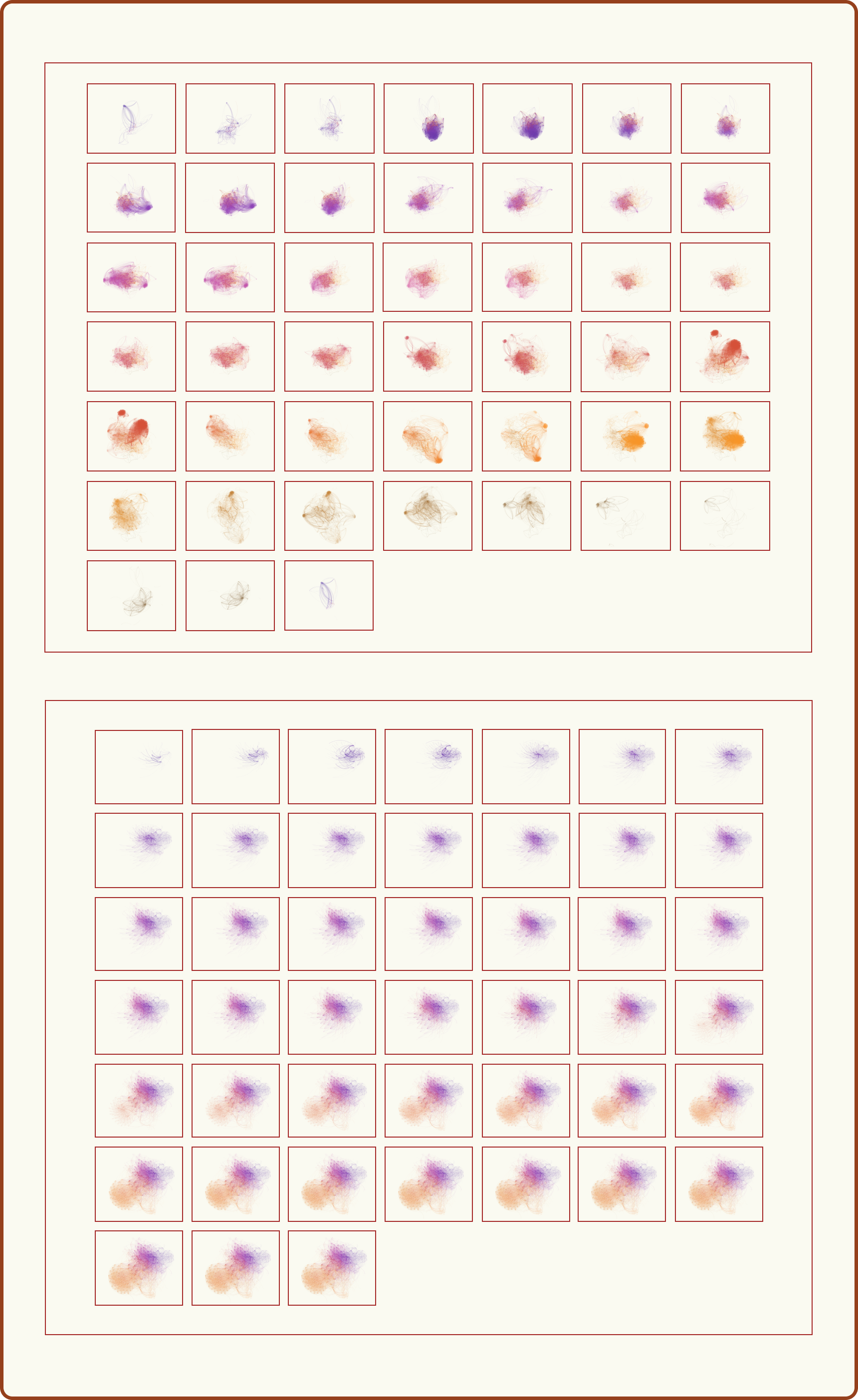
This project presents the history of the Center for Book Arts through an interactive data timeline that charts the institution’s evolution over fifty years. By chaining together visualizations at different levels of detail, the timeline site provides both a holistic view of CBA’s exhibition and collection item trends over time and an invitation to playful, non-linear explorations. Much like the experience of browsing at an art book fair, the interaction design encourages visitors to unfurl and uncover details about the CBA’s key historical events, collection items, and exhibitions through steps of interactions.
The data used in this project include CBA’s exhibition history and fine art collection data, and object term definitions compiled by Stephanie Naut from Opening Artist’ Books and Getty’s Art & Architecture Thesaurus, supplemented by press sources such as Art Monthly, the Umbrella, and The Brooklyn Rail.
Leave a Reply