
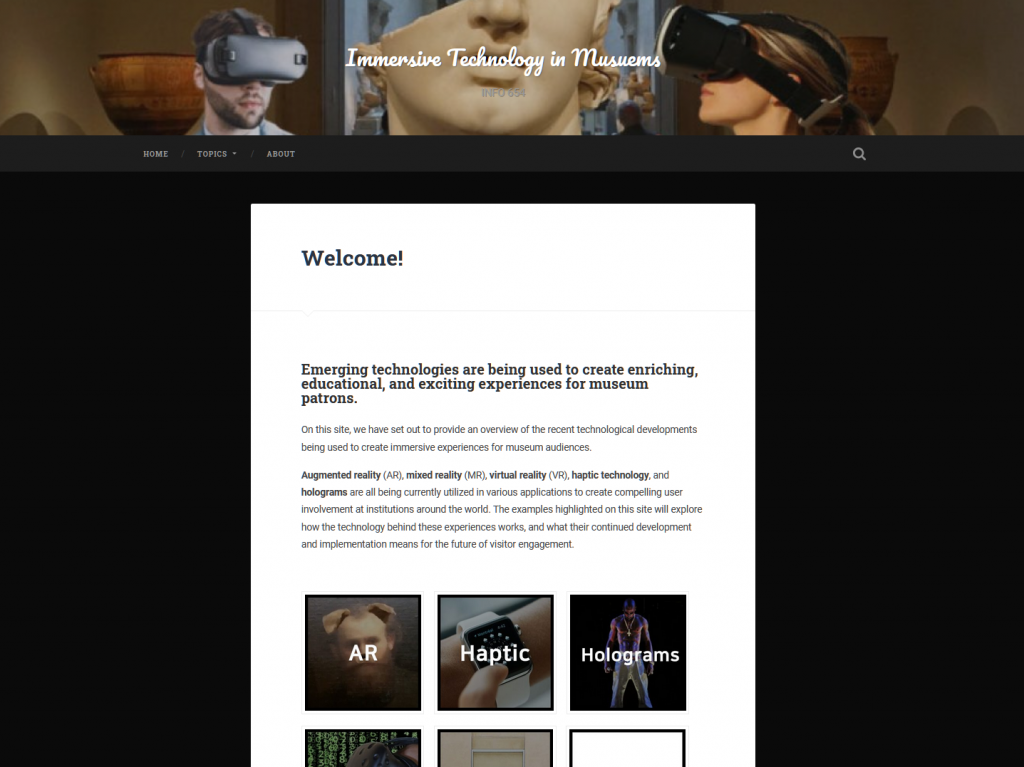
Description:
This project was undertaken in my first semester, with the collaboration of four other classmates. We were tasked with creating a website which highlighted emerging technology, and our team decided to explore the new advances being made in immersive museum experiences through the use of Virtual Reality (VR), Augmented Reality (AR), Haptic Feedback Technology, and other related innovations. Our site can be explored further, here.
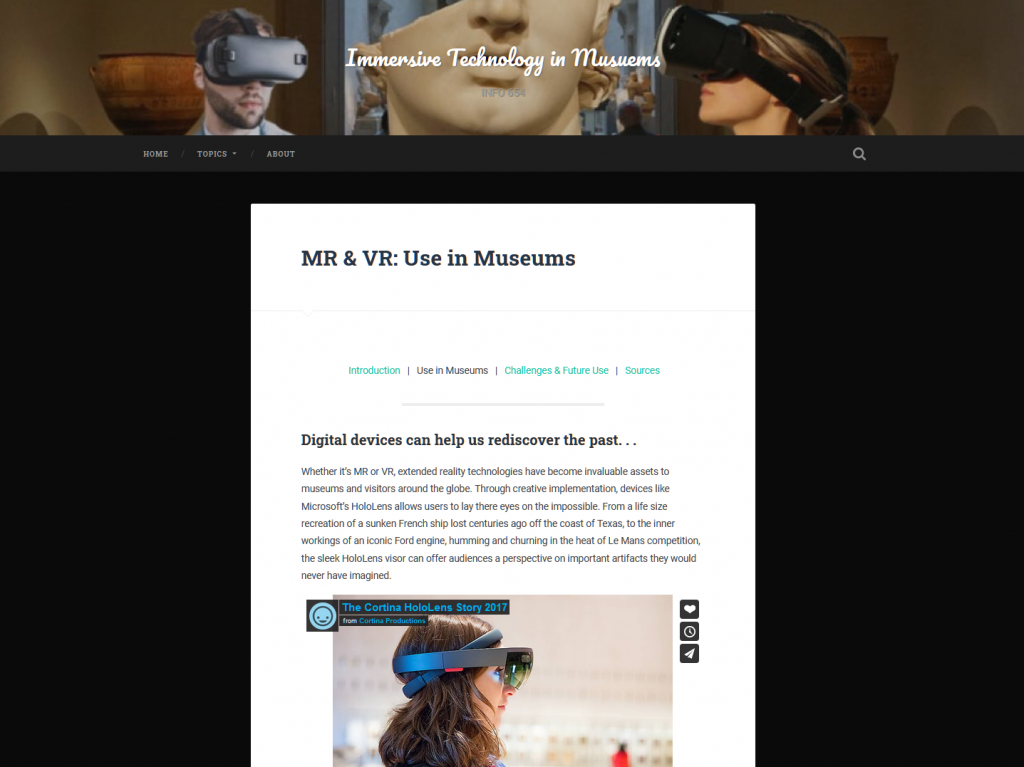
My Role:
In working with my teammates, my responsibilities were to research and document current uses of Virtual Reality and Mixed Reality in museums. I was able to find some promising uses of both Microsoft’s HoloLens visor and the HTC Vive system, as well as the Bridge platform from Occipital that is now unfortunately no longer supported. Each page had to be formatted and edited in line with our established style guide in order to maintain consistency and ease of navigation across the website.
Methods:
Research and write-ups were done independently, and collaboration was carried out through group email threads as well as shared access to a WordPress dashboard. Our instructor for the course, Associate Professor Monica Maceli, PhD, provided guidance and advice when needed while we built out our custom website.
Rationale:
This project particularly articulates the role and function of information and digital technologies in shaping the evolving social role and practice of museums and related cultural heritage institutions. By highlighting several emerging methods for immersing audiences into dynamic and engaging digital museum experiences, while also looking ahead to the challenges and benefits of these technologies, I believe my work as part of this talented team demonstrates well the facets of the Foundations of Museums & Digital Culture Student Learning Outcome.